

Archive · 23 Sep 2026
Scientists Grow Brainstem Cells in Petri Dishes for First Time
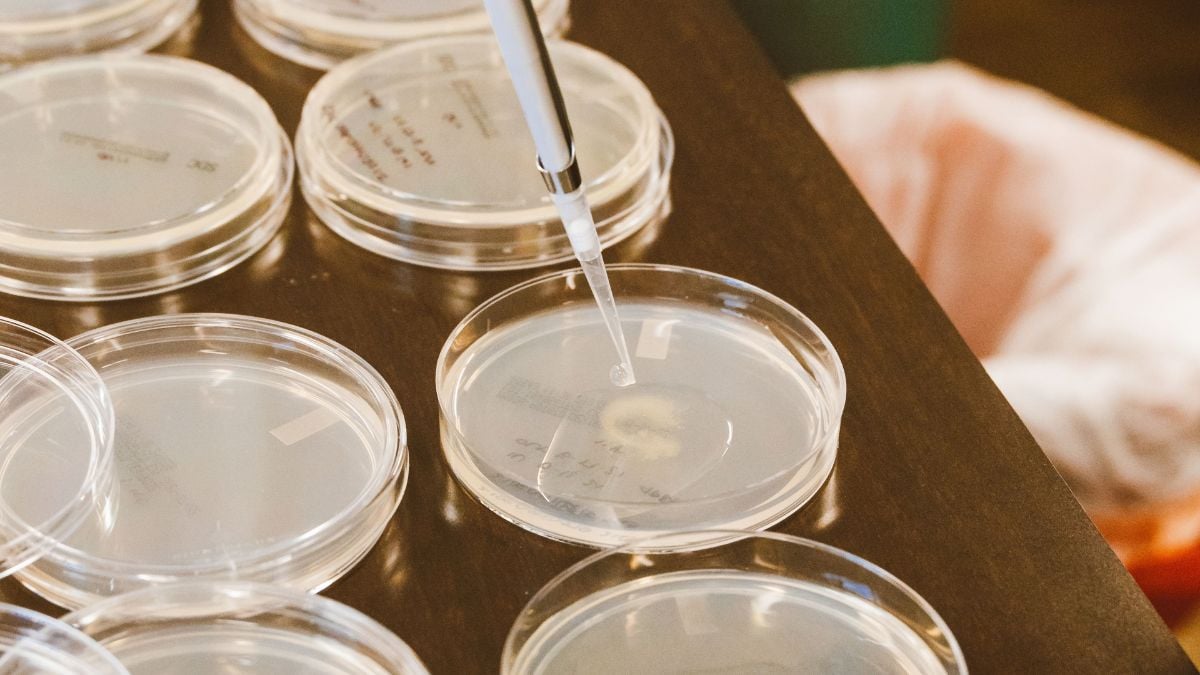
Scientists wanted to learn how different parts of the brain are made.
They discovered that the front and back of the brain begin with different starter cells.
The back part is called the hindbrain, or brainstem.
It helps control important jobs such as breathing, heartbeat, and sleeping.
For many years, researchers could not make hindbrain cells in the laboratory.
Now they have changed human stem cells into working motor neurons from the hindbrain.
This lets scientists study these neurons in a dish instead of only studying them inside a body.
The work may help explain diseases that damage the brainstem.

Stanford researchers found that the forebrain and hindbrain develop from different embryonic progenitor cells.
The hindbrain, or brainstem, controls breathing, heartbeat, sleep, and muscles of the face, tongue, and throat.
Scientists converted human pluripotent stem cells into functional hindbrain motor neurons in a laboratory dish.
Earlier efforts to produce hindbrain neurons had failed, limiting research into diseases affecting the brainstem.
The findings could help researchers study what goes wrong in neurons involved in conditions such as spinal muscular atrophy and amyotrophic lateral sclerosis.
- Who
- Researchers from Stanford University’s Department of Developmental Biology, including Kyle Loh and Rayyan Jokhai.
- What
- They discovered separate progenitor-cell origins for the forebrain and hindbrain and grew functional human hindbrain motor neurons in a dish.
- When
- The findings were published on 18 September.
- Where
- The research was conducted by Stanford University researchers in laboratory cell cultures, with the discovery initially observed in developing mouse embryos.
- Why
- To understand how brain regions develop and enable laboratory study of brainstem neurons and related diseases.
- Institution
- Stanford University’s Department of Developmental Biology
- Publication
- Nature Neuroscience
- Discovery
- The forebrain and hindbrain arise from different progenitor-cell populations
- Cells produced
- Functional motor neurons from the human hindbrain
- Brainstem functions
- Controls heartbeat, breathing, sleeping, and muscles of the face, tongue, and throat
- Potential research use
- Studying diseases including spinal muscular atrophy and amyotrophic lateral sclerosis