Archive · 24 Jan 2026
Kolkata Zoo Bats Tested for Nipah Virus

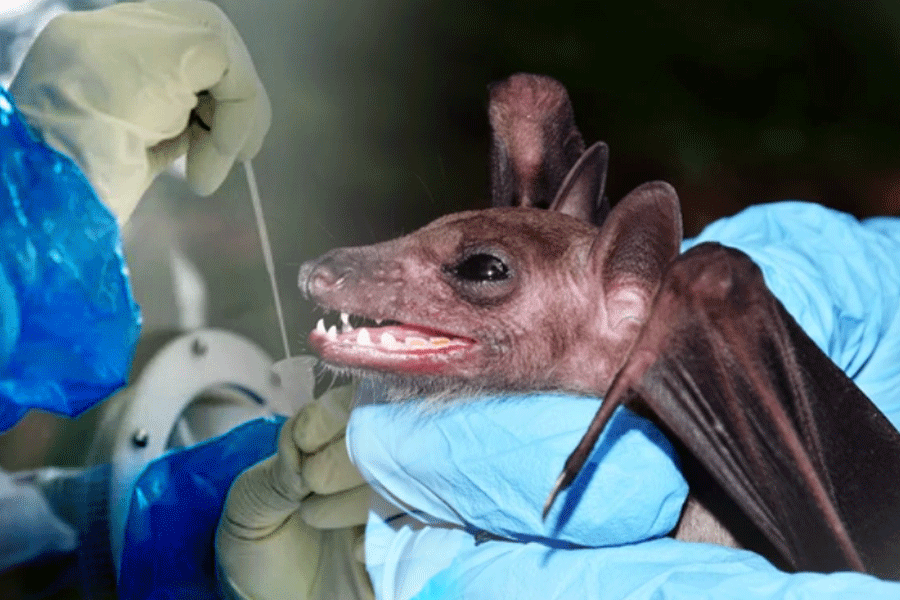
Scientists are testing bats in a zoo in Kolkata, India, to see if they have the Nipah virus.
This is because two nurses got sick with the virus.
The scientists took small samples from the bats and will check them to see if the bats are safe.
The virus can spread from bats to people if they touch or eat things that the bats have touched.
It can make people very sick, with symptoms like fever, headache, and sometimes even brain swelling.
People should wash their hands often, avoid touching bats, and not eat raw date palm sap or fruits that bats have bitten to stay safe.
It will take a few more days to know the results of the bat tests.

Bats at Alipore Zoological Garden in Kolkata are being tested for Nipah virus using RT-PCR tests.
Samples were collected by NIMR in collaboration with NIV, ICMR, and state health and forest departments.
Two nurses in West Bengal have been diagnosed with Nipah virus and are currently undergoing treatment.
The virus can spread through close contact with infected persons or animals, or contaminated food/drinks.
Early symptoms include fever, headache, cough, sore throat, and difficulty breathing, while severe cases can lead to brain swelling and coma.
- Who
- National Institute of Medical Research (NIMR), National Institute of Virology (NIV), Indian Council of Medical Research (ICMR), State Health Department, State Forest Department
- What
- Testing bats for Nipah virus and explaining symptoms and transmission
- When
- Samples collected on Thursday and Friday mornings; results pending
- Where
- Alipore Zoological Garden, Kolkata, and other areas in West Bengal
- Why
- To trace the source of Nipah virus following the detection of two cases in West Bengal
- Location
- Alipore Zoological Garden, Kolkata
- Testing Method
- RT-PCR tests
- Organizations Involved
- NIMR, NIV, ICMR, State Health Department, State Forest Department
- Affected Individuals
- Two nurses
- Current Status
- Undergoing treatment
- Incubation Period
- 4 to 14 days (up to 45 days reported)
- Natural Host
- Fruit bats of the Pteropodidae family
- Transmission
- Close contact with infected persons or animals, contaminated food/drinks