

Archive · 30 Jan 2026
South Korea Launches Nanosatellite for Earth Observation
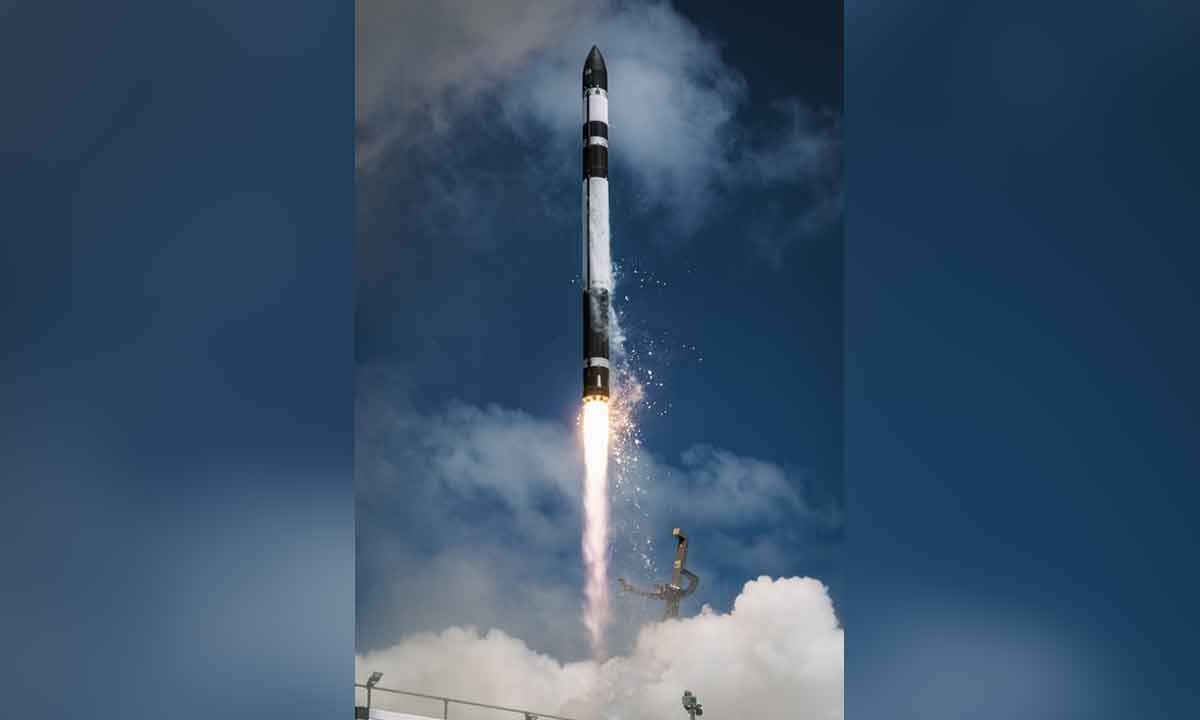
South Korea launched a small satellite called NEONSAT-1A into space on Friday.
This satellite is part of a bigger plan to have a group of 11 satellites that will help monitor and take pictures of the Korean Peninsula and nearby areas.
The satellite was made by a university in South Korea and was sent into space by a rocket from a company called Rocket Lab.
This is the second satellite in the group to be launched, and it has a special camera to take detailed pictures.
The goal is to have all 11 satellites working together by 2027 to help with things like monitoring natural disasters in real-time.
The project is funded by the South Korean government.

South Korea launched the NEONSAT-1A nanosatellite into orbit on Friday as part of a project to create a satellite constellation for Earth observation by 2027.
The satellite was developed by the Korea Advanced Institute of Science and Technology (KAIST) and launched aboard Rocket Lab's Electron rocket from New Zealand.
NEONSAT-1A is the second of 11 planned nanosatellites in the constellation, designed to monitor and take images of the Korean Peninsula and surrounding regions.
The satellite is equipped with a high-resolution optical camera for near-real-time natural disaster monitoring.
The NEONSAT program is a collaboration across multiple Korean academic, industry, and research institutions, funded by the Korean government's Ministry of Science and ICT (MSIT).
- Who
- South Korea, Korea Advanced Institute of Science and Technology (KAIST), Rocket Lab
- What
- Launch of NEONSAT-1A nanosatellite
- When
- Friday, 2026
- Where
- Mahia Launch Complex, New Zealand
- Why
- To create a satellite constellation for Earth observation by 2027
- Satellite Name
- NEONSAT-1A
- Launch Date
- Friday, 2026
- Launch Vehicle
- Electron rocket
- Launch Location
- Mahia Launch Complex, New Zealand
- Developer
- Korea Advanced Institute of Science and Technology (KAIST)
- Project Goal
- Earth observation by 2027
- Total Satellites in Constellation
- 11
- Funding Source
- Korean government’s Ministry of Science and ICT (MSIT)