

Archive · 17 Jan 2026
T. rex took 40 years to reach full size
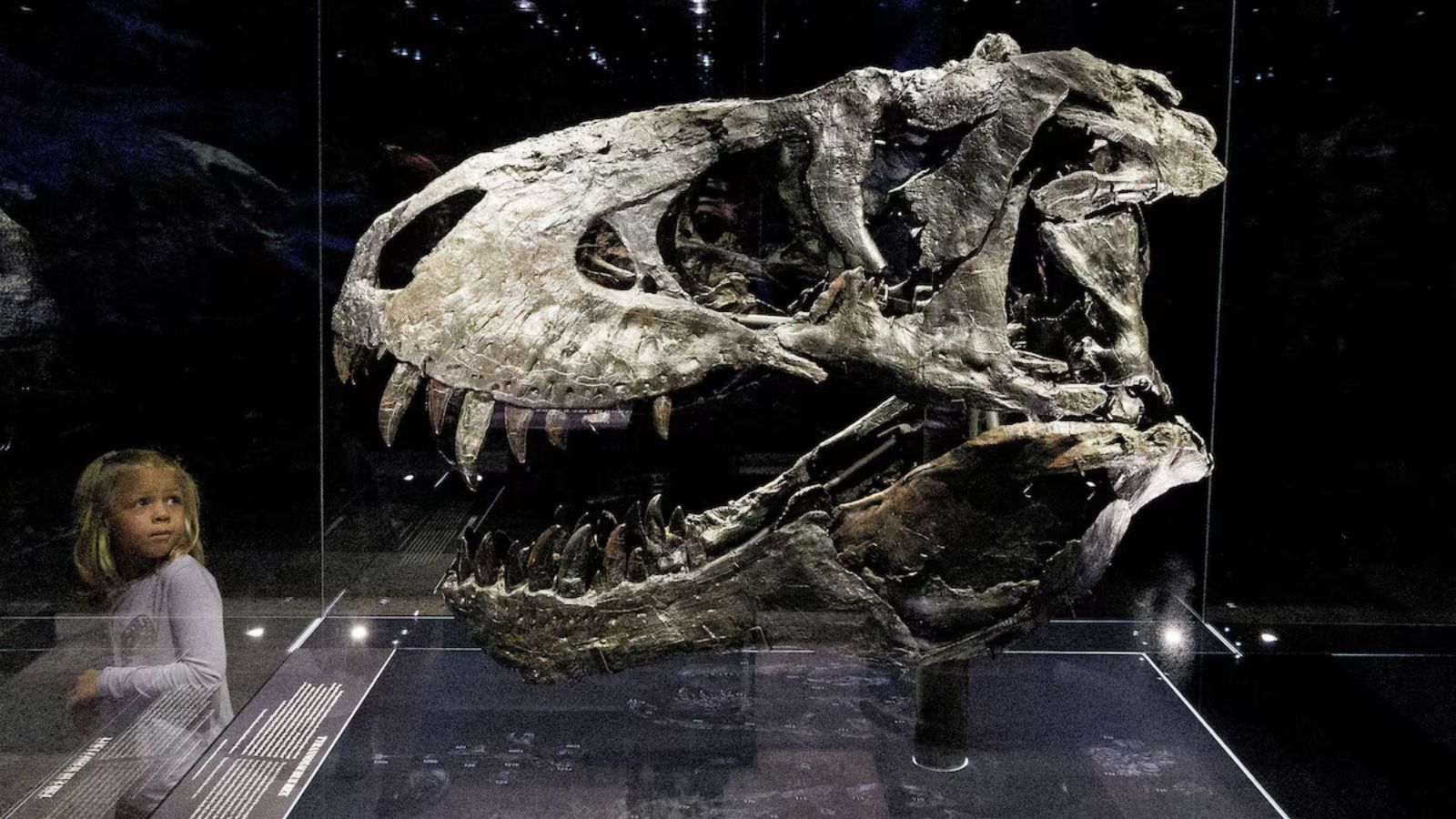
Scientists studied the bones of Tyrannosaurus rex to learn how fast it grew.
They found that T. rex took about 40 years to reach its full size of 8 tons, which is longer than previously thought.
The growth was not steady; some years it grew a lot, and other years it grew very little.
This flexible growth helped T. rex survive tough times and outcompete other dinosaurs.
The study also suggests that T. rex lived up to 50 years, longer than earlier estimates.
The researchers used special techniques to see growth rings in the bones, similar to tree rings, which showed these patterns.
T. rex was a massive predator that lived in what is now western North America before the dinosaurs went extinct.

T. rex took about 40 years to reach its maximum size of roughly 8 tons, longer than previously estimated.
Growth was variable, with some years showing more growth than others, depending on resources and conditions.
The study involved examining bone tissue microstructure in 17 fossil specimens using polarized light.
T. rex likely had a lifespan of 45 to 50 years, longer than the previously estimated 30 years.
The study used a new statistical approach and more specimens than previous research, leading to different conclusions.
- Who
- Researchers led by Holly Woodward and Jack Horner
- What
- Study on T. rex growth patterns using bone tissue microstructure
- When
- Study published this week in the journal PeerJ
- Where
- Western North America during the Cretaceous Period
- Why
- To understand how quickly T. rex reached its maximum size and its growth trajectory
- Maximum Size
- Roughly 8 tons
- Growth Period
- About 40 years
- Growth Pattern
- Variable, depending on resources and conditions
- Lifespan
- 45 to 50 years
- Study Method
- Examined bone tissue microstructure using polarized light
- Study Specimens
- 17 fossil specimens, ranging from juveniles to adults
- Study Location
- Many specimens held at the Museum of the Rockies in Montana