

Archive · 2 Aug 2026
Variable Cycle Engines Power Next‑Gen Fighter Jets
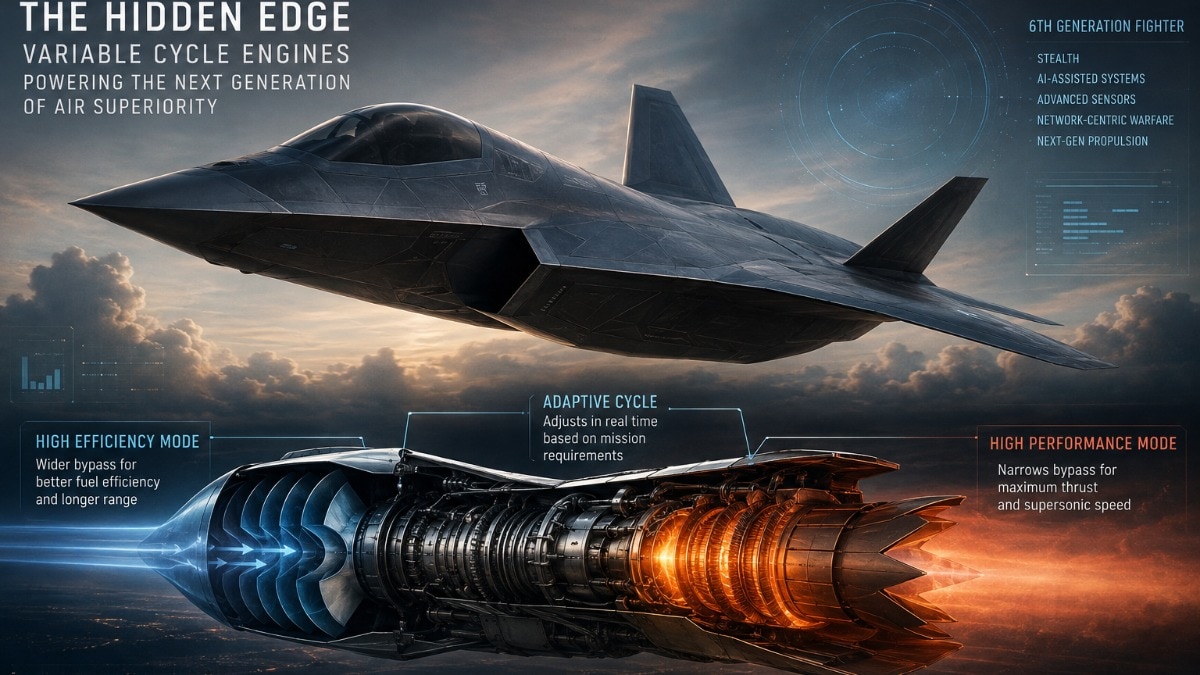
Variable Cycle Engines are like a smart engine that can change how it works while a plane is flying.
When a fighter jet is cruising far away, the engine lets a lot of air pass around it, saving fuel.
If the jet needs to speed up or fight, the engine switches to a mode that gives a lot of thrust.
This helps future fighters fly farther, use less fuel, and stay hidden from enemies.
Building these engines is hard because they need special parts that can move and survive high heat.
Scientists are working on them so the next generation of fighter planes can be faster, smarter, and more efficient.

Variable Cycle Engines adjust airflow to switch between high‑thrust and fuel‑efficient modes.
They enable sixth‑generation fighters to combine combat performance with extended range.
The technology supports higher electrical power and better cooling for advanced avionics.
Variable Cycle Engines can reduce afterburner use, lowering fuel burn and infrared signatures.
Development faces challenges in airflow control, movable parts, and high‑temperature materials.
- Who
- Military aircraft designers and engineers
- What
- Variable Cycle Engine technology for future fighters
- When
- Current development for sixth‑generation fighters
- Where
- Global aerospace industry
- Why
- To balance high performance with fuel efficiency and support advanced avionics
- Technology
- Variable Cycle Engine
- Generation
- Sixth
- Key Benefit
- High thrust + fuel efficiency
- Application
- Fighter jets
- Development Status
- In development