

Archive · 20 Aug 2026
India Cuts Air Cargo Transit Times, Expanding Export Opportunities
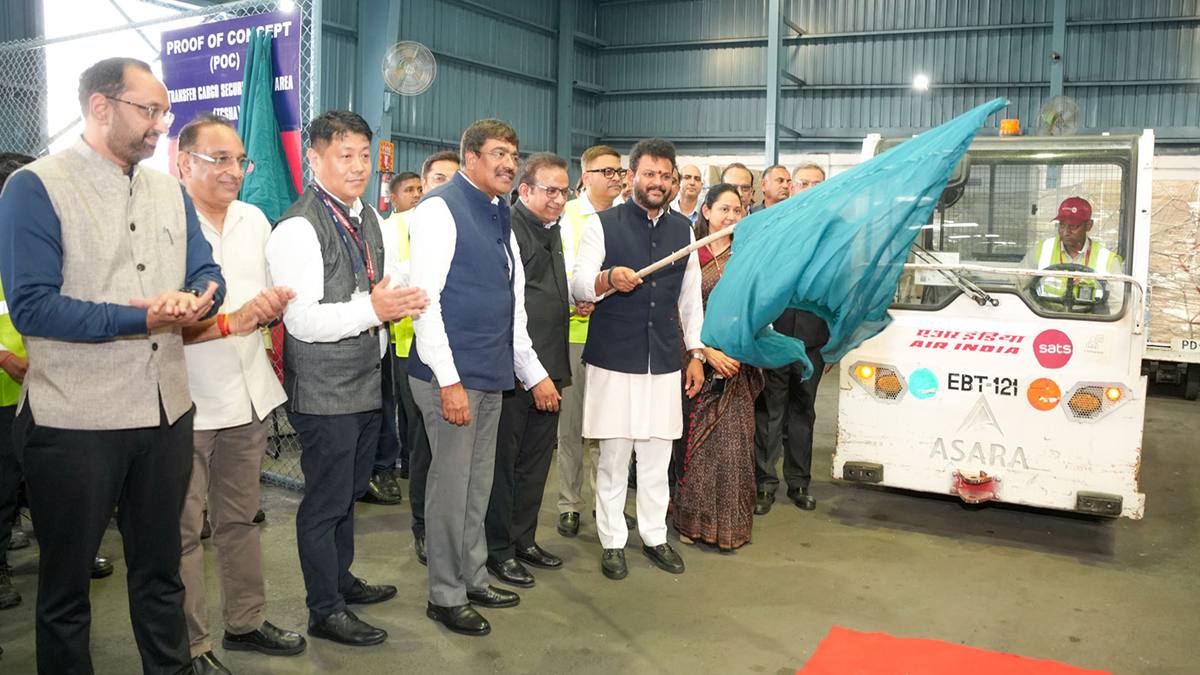
India has created a faster way to move goods by airplane to other countries.
Normally, cargo may have to be checked again when it changes planes at a transit airport.
Under the new system, goods checked at their starting point do not need the full screening process again.
This has reduced some delivery times from as long as 70 hours to about 20 hours.
The system was first tested on a route from Chennai to Delhi and then Frankfurt.
It now covers more Indian airports and international destinations.
Faster shipping may help farmers send fruits such as litchis and mangoes abroad before they spoil.
The government hopes this will help India handle much more air cargo by 2030.

India’s new transhipment framework has reduced some air-cargo transit times from up to 70 hours to around 20 hours.
The Domestic-to-International network now includes Chennai, Mumbai, Hyderabad, Ahmedabad and Bangaluru, with Frankfurt, London and Copenhagen as international destinations.
The system removes mandatory repeat screening for cargo already screened at its origin airport.
A pilot on the Chennai-Delhi-Frankfurt route handled about 280 metric tonnes of cargo from June onward.
The government says faster transit could help farmers and exporters of perishable goods while supporting a goal of 10 million metric tonnes of air cargo by 2030.
- Who
- India’s Ministry of Civil Aviation, led by Civil Aviation Minister K Rammohan Naidu, along with BCAS, CISF, Customs, airlines and other stakeholders.
- What
- India expanded its Domestic-to-International air-cargo transhipment framework and removed mandatory repeat screening for qualifying cargo.
- When
- The proof of concept began in June; the expanded phase was launched on Wednesday, and transit times are now reported at around 20 hours.
- Where
- The framework covers Chennai, Mumbai, Hyderabad, Ahmedabad and Bangaluru in India, connecting through Frankfurt, London and Copenhagen; the scaled-up phase was launched at Delhi airport.
- Why
- To reduce handling and processing time, improve the movement of exports—especially perishables—and support India’s ambition to become a global air-cargo hub.
- Transit time
- Reduced from as much as 70 hours to around 20 hours under the new system.
- Domestic airports
- Chennai, Mumbai, Hyderabad, Ahmedabad and Bangaluru.
- International destinations
- Frankfurt, London and Copenhagen.
- Pilot route
- Chennai-Delhi-Frankfurt.
- Pilot cargo handled
- About 280 metric tonnes.
- Current cargo volume
- India currently manages around 3.5 million metric tonnes of air cargo.
- 2030 target
- Nearly 10 million metric tonnes of air cargo.