

Archive · 25 Sep 2025
Climate Change Threatens the Khasi People's Forest-Based Life in Bangladesh
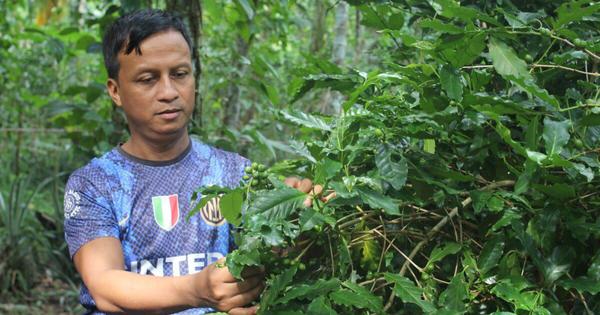
Imagine a group of people, the Khasis, who live in the forests of Bangladesh.
They grow betel leaves, like a special kind of farming, to make a living.
These forests are important because they help keep the Earth healthy, so the Khasis take care of them.
But now, things are changing because of climate change.
The weather is getting weird, with less rain, making it hard for the Khasis to grow their betel leaves.
They are losing money and looking for ways to adapt, such as planting coffee.
The Khasis want help to keep protecting the forests and are hoping to get paid for the work they do to protect the carbon-absorbing forests.

The Khasi people in Bangladesh practice betel leaf agroforestry, which depends on forest conservation.
Climate change, with irregular rainfall, is hurting betel leaf harvests and incomes.
Some Khasis are adapting by experimenting with alternative crops, such as coffee.
They seek financial incentives, such as REDD+ funding, for forest conservation.
Bangladesh is not yet eligible for REDD+ finance, unlike neighboring India's Meghalaya state.
- Who
- The Khasi people of Bangladesh
- What
- Their betel leaf-based agroforestry livelihood is threatened by climate change, with declining harvests and income
- When
- Recent years, with effects intensifying in 2024
- Where
- Northeastern Bangladesh, Sylhet region
- Why
- Climate change is causing drought and erratic rainfall, impacting betel leaf production and the Khasi way of life.
Khasi Community
Bangladesh Government
Funding for Conservation
Khasi Community
The Khasi community is requesting financial incentives, such as REDD+ payments, for their forest conservation efforts.
Bangladesh Government
The Bangladesh government is not yet able to provide REDD+ finance as the country is still working towards eligibility.
- Indigenous Group
- Khasi
- Location
- Northeastern Bangladesh
- Main Livelihood
- Betel leaf agroforestry
- Key Challenge
- Climate Change (drought, irregular rainfall)
- Proposed Solution
- REDD+ finance for forest conservation
- Area Protected
- Over 2,020 hectares of forest