1 year ago
Conflicts Boost Arms Industry: B-2 Bomber and New Technologies
After the war in Afghanistan ended, the arms industry worried about losing money.
However, wars in places like Ukraine and Gaza created new demand for weapons and fighter jets.
This made the US arms industry very profitable.
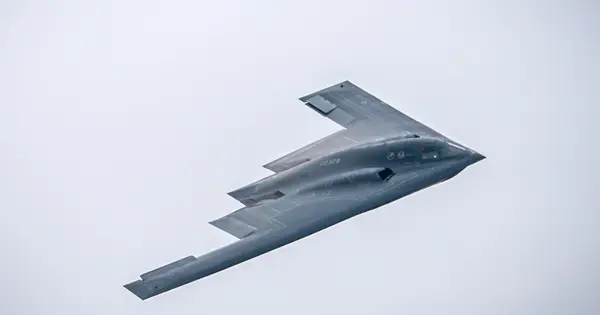
For example, the US used B-2 bombers to attack Iran.
These older bombers are being replaced by new, more advanced ones called B-21 Raiders.
More fighting means more profit for these companies, which is why they may benefit from these conflicts.

Conflicts in Ukraine, Gaza, and Asia increased demand for military aircraft and weapons.
India and Pakistan engaged in a four-day conflict with air power playing a crucial role.
The US used B-2 bombers to strike Iranian nuclear sites.
The B-2 bomber is nearing the end of its service life and is being replaced by the B-21 Raider.
The US arms industry benefits from prolonged conflicts, driving profits for companies.
- Who
- US, Iran, India, Pakistan, and various actors in global conflicts.
- What
- The impact of global conflicts on the defense industry and the role of air power.
- Where
- Focus on global conflicts, particularly in Europe, the Middle East, and Asia.
- When
- Recent events including conflicts in Ukraine, Gaza, and Asia, as well as the planned deployment of the B-21 Raider.
- Why
- To analyze the economic impacts of military conflicts and the strategic use of air power.
Military Strategy
Economic Interests
Air Power Deployment
Military Strategy
Utilizing existing B-2 bombers for combat to gain insight on the future B-21 Raiders in ongoing conflicts.
Economic Interests
Prioritizing the rapid deployment of B-21 Raiders without necessarily considering lessons from earlier combat situations.
Key facts
- B-2 Bomber Service Life
- 35 years
- B-2 Bomber Production Years
- 1989-2000
- B-21 Raider Estimated Cost
- $564 million per unit (2016)
- B-21 Raider Expected Deployment
- 2028-2030