

Archive · 23 Jul 2026
Yogendra Yadav Advocates Street Power Over Electoral Democracy
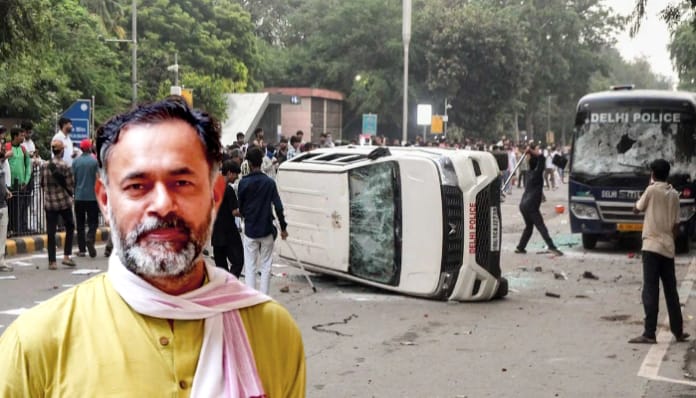
Yogendra Yadav, a well-known public intellectual, has been advocating for a shift from traditional electoral politics to a 'politics of resistance.'
He believes that protests and street mobilisation should play a more significant role in challenging the government, especially in light of the BJP's growing dominance.
Yadav's views have sparked debate, with some supporting his call for more robust dissent and others warning that this approach could undermine democratic institutions.
The recent BJP victory in West Bengal has added urgency to this discussion, as it has shown that the BJP can win in states previously considered strongholds of opposition parties.
Yadav's supporters argue that protests are necessary to hold the government accountable, while critics warn that this could lead to a weakening of democratic norms and institutions.

Yogendra Yadav advocates for a 'politics of resistance' over traditional electoral politics.
He believes street mobilisation should play a more significant role in challenging the government.
The BJP's victory in West Bengal has intensified the debate about the effectiveness of electoral politics.
Yadav's views have sparked controversy, with supporters seeing it as a necessary form of dissent and critics warning of potential threats to democratic institutions.
The recent NEET paper leak protest at Jantar Mantar is seen as a template for this new form of political resistance.
- Who
- Yogendra Yadav, a public intellectual and political activist
- What
- Advocacy for replacing electoral democracy with street power
- When
- Recent events and political developments
- Where
- India
- Why
- Frustration with the limits of electoral politics and the BJP's dominance
Pro-Democracy Activists
Government Supporters
Role of Protests
Pro-Democracy Activists
Protests are essential for democratic dissent and holding governments accountable.
Government Supporters
Protests should not replace constitutional and electoral processes.
Legitimacy of Street Mobilisation
Pro-Democracy Activists
Street mobilisation is a necessary tool for resistance against perceived authoritarianism.
Government Supporters
Street mobilisation can undermine the legitimacy of elected governments and democratic institutions.
- Yogendra Yadav
- Public intellectual and political activist
- BJP
- Bharatiya Janata Party, India's ruling political party
- West Bengal
- State in eastern India
- Suvendu Adhikari
- Chief Minister of West Bengal
- NEET
- National Eligibility cum Entrance Test for medical admissions in India
- Jantar Mantar
- A popular protest site in New Delhi
- CJP
- Cockroach Janta Party, a political party in India
- B.R. Ambedkar
- Principal architect of the Indian Constitution