Archive · 29 Jan 2026
India and EU Finalize Free Trade Agreement
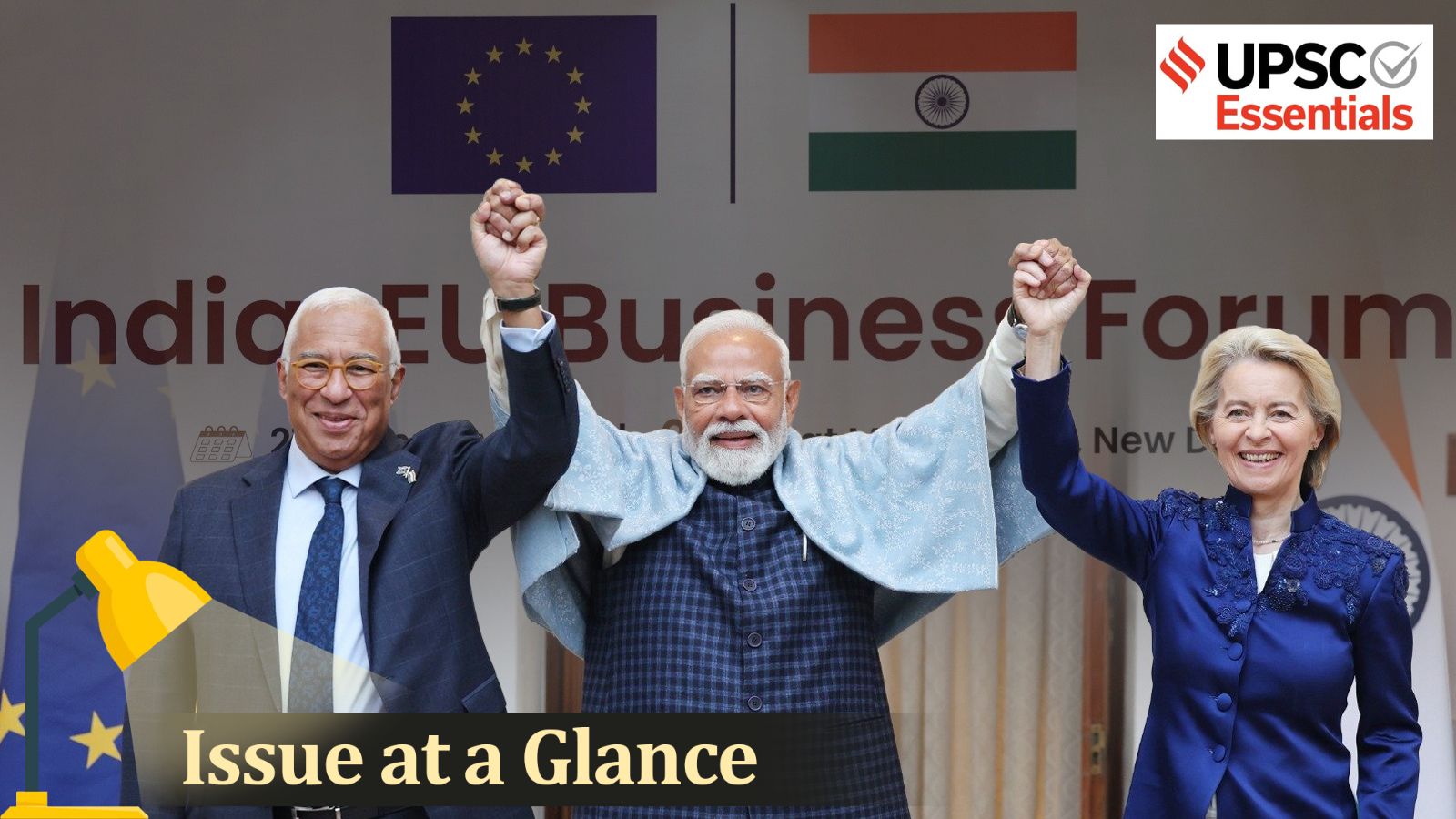
India and the European Union (EU) have agreed on a big trade deal called a Free Trade Agreement (FTA).
This deal will make it easier and cheaper for both sides to trade goods like clothes, shoes, and cars.
They also agreed to help each other if one side makes new rules that could hurt trade.
The EU will let more Indian students and workers come and study or work there.
They also made plans to work together on security and defence.
However, there are some challenges, like new EU rules that might make it hard for Indian companies to sell certain products.

India and the EU finalized a Free Trade Agreement (FTA) on January 27, 2024, in New Delhi.
The FTA includes mechanisms like the Rapid Response Mechanism (RRM) to address trade disruptions and the Non-violation Complaints provision to handle new measures that could nullify benefits.
Tariffs on labour-intensive goods will be reduced to zero, and duties on vehicles, wine, spirits, and beer will also be lowered.
A mobility framework was signed to ease the movement of Indian students, workers, and professionals across EU member countries.
Both sides adopted the 'Towards 2030: India–EU Joint Comprehensive Strategic Agenda' to enhance cooperation in various sectors and signed a security and defence partnership.
- Who
- India and the European Union
- What
- Finalized a Free Trade Agreement (FTA) and other strategic partnerships
- When
- January 27, 2024
- Where
- New Delhi, India
- Why
- To deepen economic ties, enhance mobility, and strengthen security and defence cooperation
- Date
- January 27, 2024
- Parties Involved
- India and European Union
- Key Mechanisms
- Rapid Response Mechanism (RRM), Non-violation Complaints provision
- Tariff Reductions
- Zero duty on labour-intensive goods, reduced duties on vehicles, wine, spirits, and beer
- Mobility Framework
- Uncapped mobility for Indian students and workers in EU
- Strategic Agenda
- Joint Comprehensive Strategic Agenda for 2026-2030
- Defence Partnership
- First overarching defence and security framework
- Challenges
- EU regulations like CBAM and EUDR, QCOs in India