Archive · 18 Jun 2025
Oarfish Sightings Spark Curiosity and Seismic Speculation

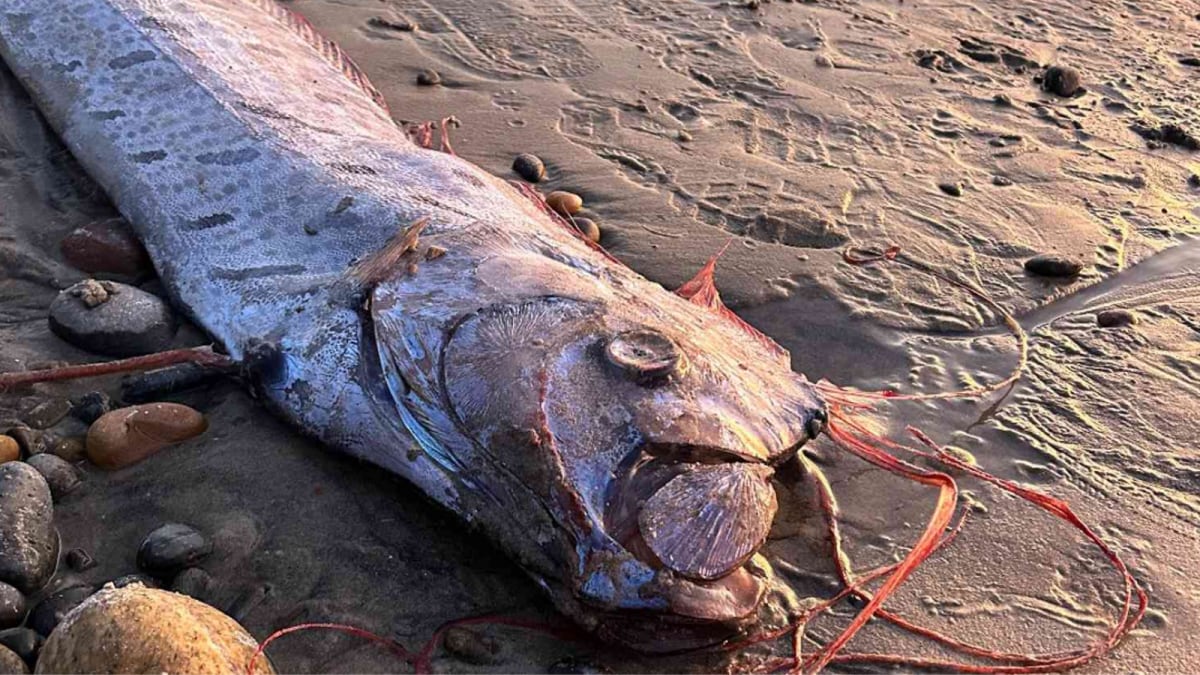
In 2025, there have been several sightings of the oarfish, a large, deep-sea fish nicknamed the "doomsday fish".
These sightings have happened in places like India, Australia, and New Zealand.
People are interested because of old stories that say the fish's appearance means an earthquake or tsunami might be coming.
Scientists are unsure why these fish are surfacing, and while there is no proof the fish can predict disasters, some think it might be related to changes in the ocean environment.
The fish can grow over 30 feet long and lives very deep in the ocean.

Multiple oarfish sightings have occurred in 2025, including in India, Australia, New Zealand, and California.
The oarfish, also known as the 'doomsday fish', is a deep-sea creature that can grow over 30 feet long.
The first sighting in 2025 was off the coast of Tamil Nadu, India, where a nearly 30-foot oarfish was caught.
Sightings have sparked public interest and concern, particularly due to their association with natural disasters in folklore.
Scientists suggest that oarfish appearances may be linked to seismic activity, water temperature changes, or illness.
- Who
- Local fishermen, residents, marine biologists, and the public.
- What
- Multiple oarfish sightings were recorded across the globe.
- When
- Since late May 2025 and throughout June 2025.
- Where
- India, Australia, New Zealand, and California.
- Why
- Reasons are unknown but may be linked to environmental changes or seismic activity.
Superstitious Beliefs
Scientific Perspective
Oarfish and Natural Disasters
Superstitious Beliefs
The appearance of oarfish is a warning sign of impending natural disasters like earthquakes or tsunamis.
Scientific Perspective
There is no scientific evidence to support a direct link between oarfish sightings and natural disasters.
- Common Name
- Oarfish, "Doomsday Fish"
- Locations
- India, Australia, New Zealand, and California
- Length
- Up to 30 feet
- Depth Habitat
- 200 to 1,000 meters
- Diet
- Plankton and crustaceans
- Scientific Suggestion
- May be linked to seismic activity or water temperature changes