Archive · 17 Sep 2026
US Russia Sanctions Bill Puts India Under Tariff Pressure
The United States is considering stronger penalties against Russia because of the war in Ukraine.
A proposed law would let President Donald Trump place very high tariffs on countries that buy a lot of Russian oil and gas.
India buys a large share of its oil from Russia.
India also imports most of the oil it uses.
The law would not automatically create a 100% tariff.
Instead, it would give the president the power to decide whether to impose one and how large it should be.
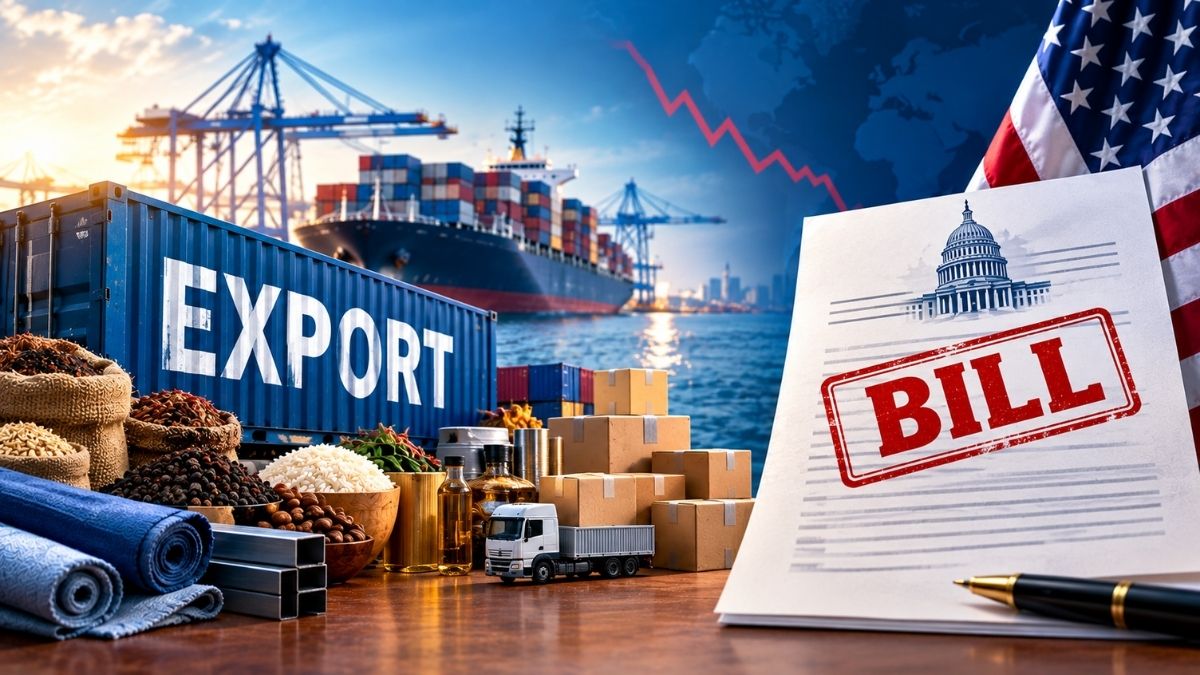
Indian exporters worry that this could make selling goods in America harder and less predictable.
India says it needs affordable and dependable oil supplies.
Supporters want to reduce the money Russia earns from energy, while critics fear that taking Russian oil off the market could make fuel more expensive worldwide.

The US House advanced or passed a Russia sanctions bill, with articles reporting different vote stages and margins.
The Lindsey O. Graham Act would authorize President Donald Trump to impose tariffs of up to 100% on major buyers of Russian oil and gas.
India imports about 88% of its crude and Russia supplied between 30.3% and more than 50% of its imports, depending on the period cited.
Indian exporters and analysts warn that the bill could create uncertainty, weaken growth, and pressure India in bilateral trade negotiations.
Supporters say the measure could reduce Russia’s war-related energy revenue, while critics warn that removing Russian oil could raise global prices and threaten energy security.
- Who
- The US House of Representatives, US Senate, President Donald Trump, Russia, India, Indian exporters, and energy and trade analysts are involved.
- What
- The Lindsey O. Graham Sanctioning Russia and Iran Act of 2026 would authorize tariffs of up to 100% on major buyers of Russian oil and gas and impose additional sanctions on Russia and Iran.
- When
- The Senate approved the bill in the previous month; House action was reported on Tuesday or Wednesday, with articles differing on whether it was advanced procedurally or passed. One article said it was scheduled for further consideration, while another said it had passed and was heading to the White House.
- Where
- The legislation is being considered in the United States and could affect India’s trade with the United States and purchases of Russian crude.
- Why
- Supporters seek to reduce Russia’s energy revenue and pressure it over the war in Ukraine; critics say the measure could disrupt energy supplies and increase US leverage over India’s trade negotiations.
Sanctions and pressure advocates
Trade and energy caution advocates
Reducing Russia’s revenue
Sanctions and pressure advocates
Supporters say sanctions and tariffs could reduce Russia’s energy revenue, target its energy and defence sectors, and pressure Vladimir Putin toward negotiations.
Trade and energy caution advocates
Critics say removing large volumes of Russian oil from global markets could worsen shortages and push up oil and fuel prices.
India’s Russian oil purchases
Sanctions and pressure advocates
Advocates argue that tariffs could discourage India and other major buyers from supporting Russia’s energy revenue.
Trade and energy caution advocates
Indian officials, exporters, and analysts say Russian crude is affordable, practical, and difficult to replace quickly for an import-dependent country.
Trade negotiations
Sanctions and pressure advocates
US policymakers would retain flexibility to use tariffs, exemptions, or waivers in response to geopolitical and energy conditions.
Trade and energy caution advocates
Indian trade representatives and analysts warn that the legislation could be used to pressure India into accepting less favorable terms in a proposed bilateral trade agreement.
- Reported House votes
- Articles reported either a 214-211 procedural vote to advance the bill or a 262-159 House passage vote.
- Potential tariff
- The bill would authorize tariffs of up to 100% on the five largest buyers of Russian oil or natural gas.
- Presidential discretion
- The measure would not automatically impose a 100% tariff; its timing, scope, and application would depend on presidential action, including possible waivers.
- India’s crude dependence
- India imports about 88% of its crude oil requirements.
- Russian crude share
- GTRI estimated Russia supplied 30.3% of India’s crude imports in fiscal 2026, while Kpler data cited a 45% share in August and more than 50% in the preceding two months.
- Russian crude value
- GTRI estimated India’s Russian crude purchases at $40.8 billion out of total crude imports worth $134.7 billion in fiscal 2026.
- Earlier US tariff
- The Trump administration imposed an additional 25% tariff on Indian imports in August 2025 over Russian crude purchases; the separate Russia-related duty was withdrawn in February 2026.
Sources
US’s Russia sanctions bill: Pressure tool and a dilemma for Trump, a worry for India
How America’s sanctions bill on Russia could impact India and its oil markets
Exporters jittery as US mulls 100% tariff under Russia Sanctions Bill