

Science & Tech · Space · 2 hrs ago
Europe launched its first Venus mission, Venus Express, in 2005
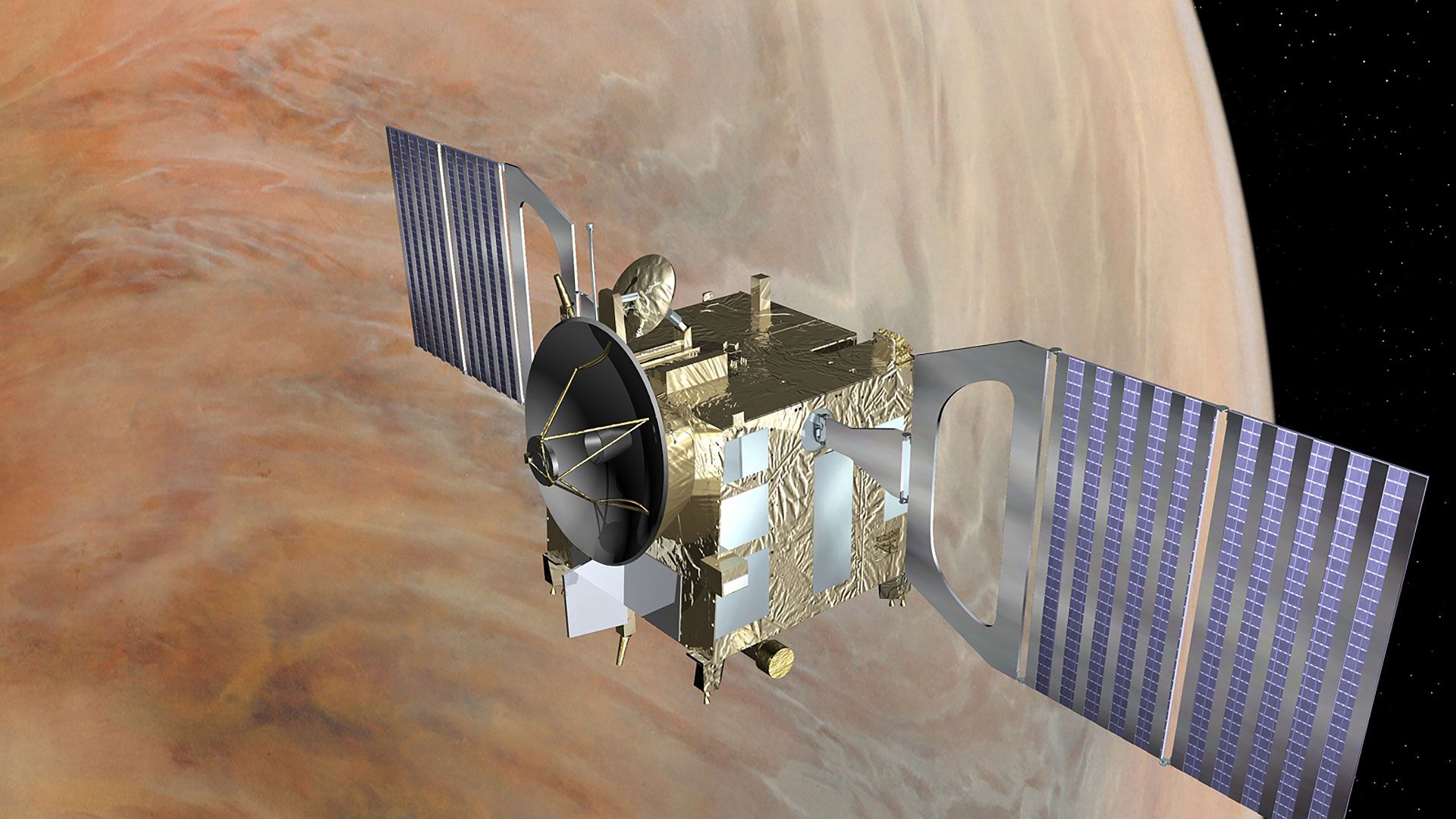
Europe launched Venus Express on Nov.
8, 2005, marking its first mission to Venus.
The spacecraft faced crushing pressure and harsh radiation as it studied the planet from orbit.
It found a swirling vortex near Venus's south pole, possible signs of active volcanoes and auroras generated by the planet.
The mission lasted more than nine years, ending when the spacecraft burned up in Venus's atmosphere in January 2015.
The mission helped scientists study how Earth-like planets change, and Venus may offer clues about climate change on Earth and the evolution of planets.
ESA later returned to Venus in 2018, when its joint BepiColombo mission with JAXA used the planet's gravity to head toward Mercury.

Europe launched its first mission to Venus, the spacecraft Venus Express, on Nov. 8, 2005.
The spacecraft operated for more than nine years and studied Venus from orbit.
It observed a vortex around the planet’s south pole, possible signs of active volcanoes and auroras generated by Venus.
Late in the mission, controllers sent the spacecraft into Venus’s clouds, although it was not designed for that maneuver.
Venus Express burned up in the atmosphere in January 2015.
- Who
- The European Space Agency (ESA) launched the Venus Express spacecraft.
- What
- Europe launched its first mission to Venus.
- When
- Nov. 8, 2005.
- Where
- From Earth; the launch site is not stated.
- Why
- To study Venus. The sources say studying the planet can help scientists understand how Earth-like planets and their climates change over time.
This story does not have two clearly opposing sides.
Europe launched Venus Express on a Russian Soyuz rocket.
Venus Express studied the planet for more than nine years and observed a south-pole vortex, possible signs of active volcanoes and auroras.
Controllers told Venus Express to dip into Venus’s clouds, although it was not designed for the maneuver.
Venus Express burned up in Venus’s atmosphere.
ESA returned to Venus when its joint BepiColombo mission with JAXA used the planet’s gravity to redirect toward Mercury.
- Spacecraft
- Venus Express
- Launch date
- Nov. 8, 2005
- Rocket
- Russian Soyuz
- Mission duration
- More than nine years
- End of mission
- Burned up in Venus’s atmosphere in January 2015
- Subsequent ESA mission
- BepiColombo used Venus’s gravity in 2018 to redirect toward Mercury
1 source
What people are saying
By studying Venus, scientists learn how Earth-like planets change over time,
Orbital studies [like Venus Express] hint that Venus may have hosted habitable oceans before becoming inhospitable.