

Science & Tech · Science & Environment · 2 hrs ago
Researchers create a supersolid quantum state at room temperature
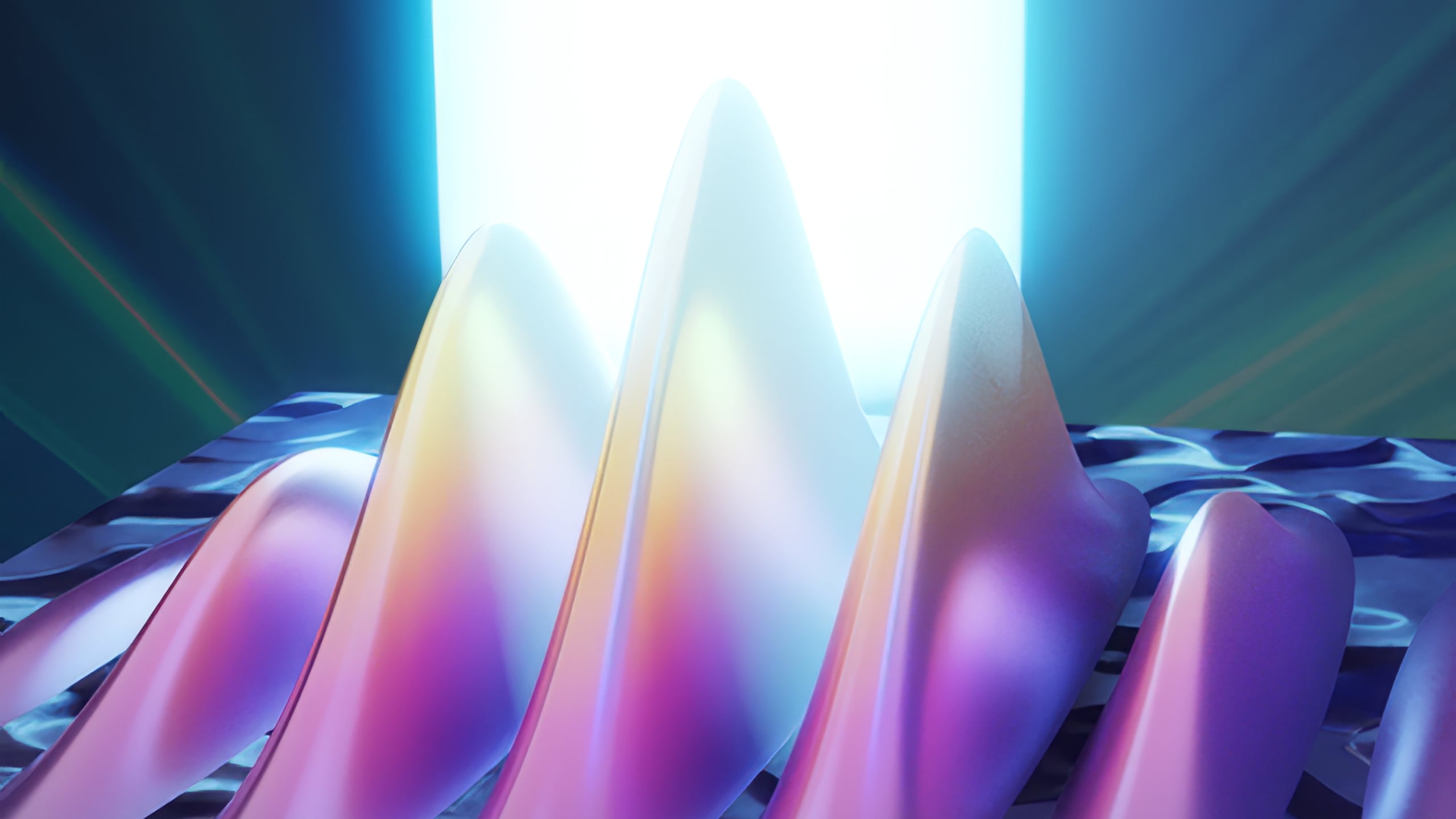
An international team created a supersolid quantum state in a laboratory experiment at room temperature.
The state was made in a tiny light-trapping structure called a microcavity, using a liquid crystal, an organic semiconductor and laser pulses.
A supersolid combines fluid-like flow with a repeating crystal pattern, and the researchers observed this pattern reform after each laser pulse.
The particles lasted only fractions of a second, but repeated tests and computer simulations supported the findings.
Avoiding the extreme cooling usually needed for quantum states could make research into quantum behavior simpler and less expensive.
The team says next steps include making the state last longer and studying the quantum vortices within it.

Researchers created a supersolid quantum state at room temperature, without extreme cooling.
The state was produced in a microcavity using a liquid crystal, an organic semiconductor and laser pulses.
The experiments showed that the condensate reformed with its crystal-like stripes in different positions after successive laser pulses.
The findings were published in Science Advances and could help make quantum technology easier to study and develop.
The individual particles lasted only fractions of a second, and the materials degraded over time.
- Who
- An international team of researchers.
- What
- They created a supersolid quantum state in an exciton-polariton Bose-Einstein condensate.
- When
- The article was published on 2026-11-08.
- Where
- In liquid-crystal microcavities; the researchers’ institutions included the Military University of Technology in Poland, City College of New York and CNRS in France.
- Why
- To study quantum behavior without extreme cooling and to explore possible uses in quantum technology.
This story does not have two clearly opposing sides.
Researchers combined a liquid crystal and an organic semiconductor, then used laser pulses to supply energy for the quantum reaction.
The condensate reformed, with its crystal-like stripes in slightly different positions each time.
The results were published in Science Advances.
- Quantum state
- Supersolid in an exciton-polariton Bose-Einstein condensate
- Operating temperature
- Room temperature; microcavities can operate at temperatures approaching 60 °C (140 °F)
- Experimental setup
- Liquid crystal, organic semiconductor and laser pulses
- Particle lifetime
- Fractions of a second
- Journal
- Science Advances
1 source
What people are saying
Our liquid-crystal microcavities can operate even at temperatures approaching 60 °C (140 °F).
We had to plan the entire sequence of experiments in advance,
This is a textbook example of spontaneous symmetry breaking,