

Business · Markets · 2 hrs ago
US futures rebound as Asian markets brace for more AI stock selling
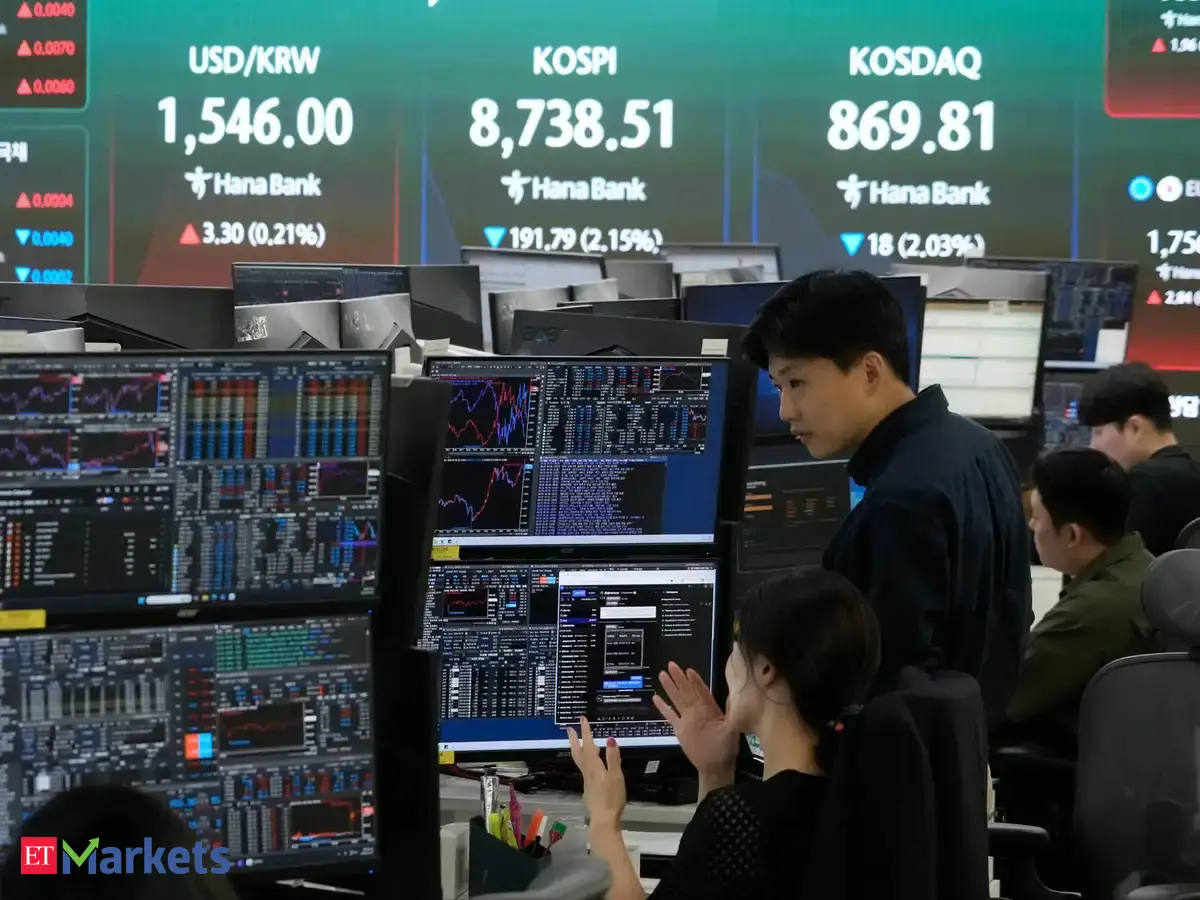
US stock futures rose on Monday after a sharp sell-off in AI and chip stocks last week.
The downturn hit markets across Asia, including Taiwan and South Korea, where technology shares make up a large part of the market.
Investors are questioning whether heavy borrowing to build AI data centres will pay off quickly enough to justify the money spent and high share prices.
The Nasdaq fell 10% last week, its biggest weekly drop since March 2020.
Taiwan's market fell 17% for the week, its biggest weekly drop since 1990.
Taiwan and China tightened or eased rules to support markets, while South Korea said it could deploy stabilisation funds if prices keep falling.
Asian markets may face further pressure, while US futures have started the week higher.

US stock futures rose in early Asian trading on Monday after a sharp selloff in technology and AI-related shares the previous week.
Asian markets remained cautious, with South Korean shares falling and Australian stocks edging lower.
Investors questioned whether spending on AI data centres will produce returns quickly and reliably enough to justify high stock prices.
Authorities in China, Taiwan and South Korea announced or prepared measures to support markets.
Investors were also watching for US inflation data due on Wednesday.
- Who
- US stock futures rose while Asian investors and authorities prepared for further volatility.
- What
- US futures rebounded as Asian markets braced for more selling in AI-related stocks.
- When
- Monday, November 23, 2026, in early Asian trading.
- Where
- Asian markets; US stock futures were trading in Asian hours.
- Why
- Investors were questioning whether AI-related spending would generate sufficient returns, amid a sharp technology and chip-stock selloff.
This story does not have two clearly opposing sides.
The Nasdaq fell 10% for the week, its largest weekly drop since March 2020, as technology and chip stocks sold off.
Taiwan’s financial regulator tightened short-selling rules, while Chinese exchanges announced support measures including easing margin-financing requirements.
South Korea’s finance ministry said market stabilisation funds could be deployed immediately if the market continued to fall.
US stock futures rose in early Asian trading, while Asian markets braced for further selling.
- S&P 500 futures
- Rose around 1% in early trade
- Nasdaq 100 futures
- Rose about 2% in early trade
- South Korea’s Kospi
- Fell 2.6% in early trading
- Taiwanese shares
- Fell 17% for the week
- US inflation data
- October personal consumption expenditures price index figures due Wednesday
2 sources
What people are saying
We reiterate our view that the recent pullback in risk assets is mostly an AI de-leveraging event amidst weak sentiment, coupled with a more hawkish Fed reaction function being priced in
We keep the faith in the durability of the AI supercycle, supported by lower leverage and improved positioning.
Generally speaking, panic like we’ve recently seen has been a good opportunity to start adding risk