

Science & Tech · Science & Environment · 4 hrs ago
Changing transistor layers may improve efficiency and enable new sensors
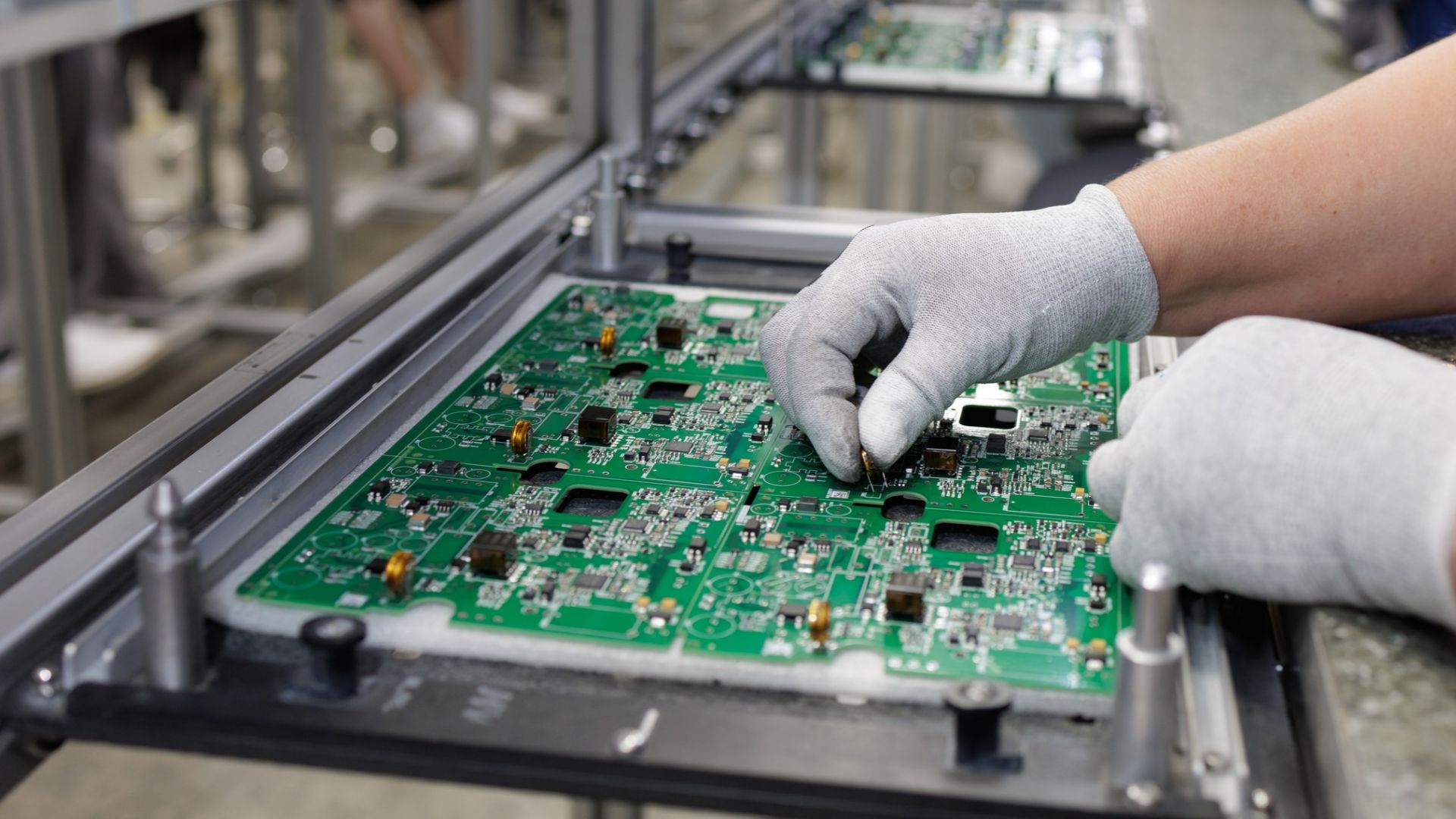
A University of Ottawa team is studying how to improve electronic devices by changing the materials and structure of their microscopic layers.
Many devices use thin-film transistors, which control electrical signals and are found in displays and other electronics.
The researchers focused on how the layer beneath the active material affects the way molecules above it arrange themselves.
In tests, raising the content of polymerized ionic liquid from 12% to 65% helped the transistors operate at voltages as low as 0.9 volts.
This could support more efficient electronics, including smaller and wearable devices, though the research does not establish that such products are ready for use.
Separately, Lessard’s group is developing sensors to measure the amount of a substance in a sample, including fentanyl, rather than only indicating whether it is present.
The team is working toward more precise drug testing, but the sources do not say when the sensors will be available.

Researchers at the University of Ottawa report that changing the composition of microscopic layers in thin-film transistors can improve device performance.
The team found that increasing the polymerized ionic liquid content in a dielectric layer changed the orientation of the transistor’s active material.
The resulting transistors operated at voltages as low as 0.9 volts, according to the study.
The research could support more efficient electronics, including smaller, wearable and biodegradable devices.
The team is also developing sensors that could measure the amount of substances such as fentanyl in a sample.
- Who
- Researchers in Benoit Lessard’s group at the University of Ottawa.
- What
- They investigated how changing microscopic transistor layers affects performance. The work may also inform sensors that measure drug quantities.
- When
- Not stated.
- Where
- University of Ottawa; the specific location of the experiments is not stated.
- Why
- To improve transistor efficiency and support new electronics and sensors that can measure how much of a substance is present.
This story does not have two clearly opposing sides.
This story does not have a timeline yet.
- Institution
- University of Ottawa
- Polymerized ionic liquid content
- Increased from 12% to 65%
- Lowest reported operating voltage
- 0.9 V
- Ion/Ioff ratio
- 104
- Transconductance
- Up to 1850 nS
1 source
What people are saying
It’s really important to keep in mind the bottom layer when you put the next layer on top, because it’s going to influence how that next layer organizes, how those molecules line up
useful for telling you a yes or no
Increasing PIL content from 12% to 65% enables OTFT operation at voltages as low as 0.9 V, with an Ion/Ioff ratio of 104 and transconductance up to 1850 nS.