

Science & Tech · Science & Environment · 1 hr ago
Human neurons on a chip help control a robot dog
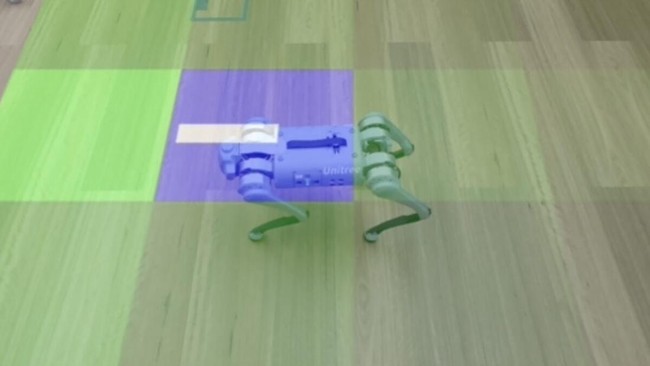
Cortical Labs in Australia connected human neurons on a chip to a robot dog in a demonstration of biological computing.
The researchers used electrical signals to stimulate the neurons and guide the robot’s movements.
They worked with Honda Research Institute Europe, varying the signals and using feedback from the robot to train and interpret the chip’s responses.
More than 4,000 hours of testing produced nearly 1,300 signal combinations.
The work builds on earlier experiments in which Cortical Labs used neurons to perform computer tasks, including playing Pong and Doom.
The team is studying how to communicate with and train biological systems reliably, while the robot still faces challenges in deciding when and where to move.
Further tests will examine how neuron-based chips store information and use memory.

Scientists at Australia’s Cortical Labs used a chip containing human neurons to control a robot dog.
The demonstration translated activity from a small group of neurons into the robot’s movements.
Cortical Labs worked with Honda Research Institute Europe on the project.
Researchers stimulated the neurons with electrical signals and gave feedback on the robot’s movements.
Testing ran for more than 4,000 hours and examined nearly 1,300 combinations of signals.
- Who
- Scientists at Cortical Labs, with help from Honda Research Institute Europe.
- What
- They used a chip containing human neurons to control a robot dog.
- When
- The article was published on November 16, 2026; it does not state when the demonstration took place.
- Where
- Not stated
- Why
- To demonstrate how biological systems could be applied in the real world and to explore how to communicate with and train them.
This story does not have two clearly opposing sides.
Cortical Labs used neurons to perform computer tasks, including playing Pong and Doom.
Cortical Labs and Honda Research Institute Europe used electrical signals to stimulate neurons on a chip and control a robot dog.
Researchers tested the chip and agent and observed nearly 1,300 combinations of signals.
- Researchers
- Cortical Labs scientists in Australia
- Project partner
- Honda Research Institute Europe
- Testing duration
- More than 4,000 hours
- Signal combinations
- Nearly 1,300
- Robot
- Robot dog
What people are saying
This robot dog is a simple demonstration of advances in biological systems that can be applied to the real world, but it helps make the opportunities real.
The challenge is not just growing neurons on silicon. The challenge is finding reliable ways to communicate with biological systems, train them and understand which approaches produce consistent results.