

Science & Tech · Space · 1 hr ago
BepiColombo reaches Mercury ahead of planned orbit insertion
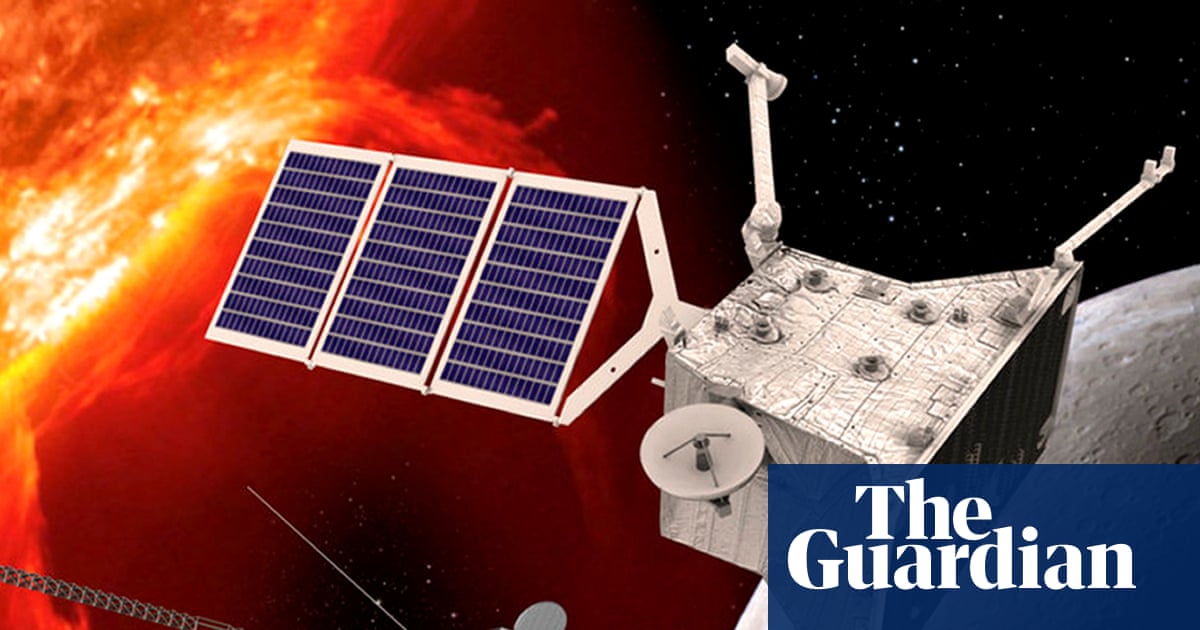
The European-Japanese BepiColombo mission has reached Mercury after travelling for more than eight years.
It is set to become only the second spacecraft mission to circle the planet when flight controllers fire its thrusters on Saturday.
Reaching Mercury is difficult because the Sun’s gravity speeds up spacecraft, which must brake to avoid flying past.
In early December, the spacecraft will separate into European and Japanese orbiters and move into different polar orbits.
They will study Mercury’s surface, interior, magnetic field and surrounding gases to help explain how the planet formed and why it is so dense.
Science operations are due to begin in April next year, and the orbiters are expected to work for about three years before running out of fuel and hitting the planet.

BepiColombo has arrived at Mercury after a voyage of more than eight years and 6bn miles.
The joint European-Japanese mission is preparing to enter orbit, which would make it only the second mission to circle Mercury.
Flight controllers are due to fire the spacecraft’s thrusters on Saturday to send it into orbit.
In early December, the spacecraft is due to separate into two orbiters, with science operations scheduled to start in April next year.
The mission aims to study Mercury’s formation, interior, surface, magnetic field and shadowed-crater ice.
- Who
- The joint European-Japanese BepiColombo mission.
- What
- It has arrived at Mercury and is preparing to enter orbit.
- When
- It arrived ahead of a planned orbit insertion on Saturday. The article was published on 20 November 2026.
- Where
- Mercury.
- Why
- To study how Mercury formed and investigate its interior, surface, magnetic field and other features.
This story does not have two clearly opposing sides.
BepiColombo completed its voyage of more than 8 years and 6bn miles and arrived at Mercury.
Flight controllers are due to fire the spacecraft’s thrusters to send it into orbit around Mercury.
The spacecraft is due to separate into two orbiters, one European and one Japanese.
Science operations are due to start.
- Mission
- BepiColombo, a joint European-Japanese mission
- Journey
- More than 8 years and 6bn miles
- Planned orbit insertion
- Saturday
- Orbiters
- Two: one European and one Japanese
- Science operations
- Due to start in April next year
- Mission cost
- €1.6bn (£1.4bn)
What people are saying
We’re very excited, it’s been a long wait
It’s a very complex and challenging mission
We’re expecting to learn a huge amount, bringing more powerful instruments on two spacecraft to study all aspects of the planet – its interior, surface, and the space around it