

Science & Tech · AI · 1 day ago
Geoffrey Hinton says AI may be conscious, but Steven Pinker disagrees
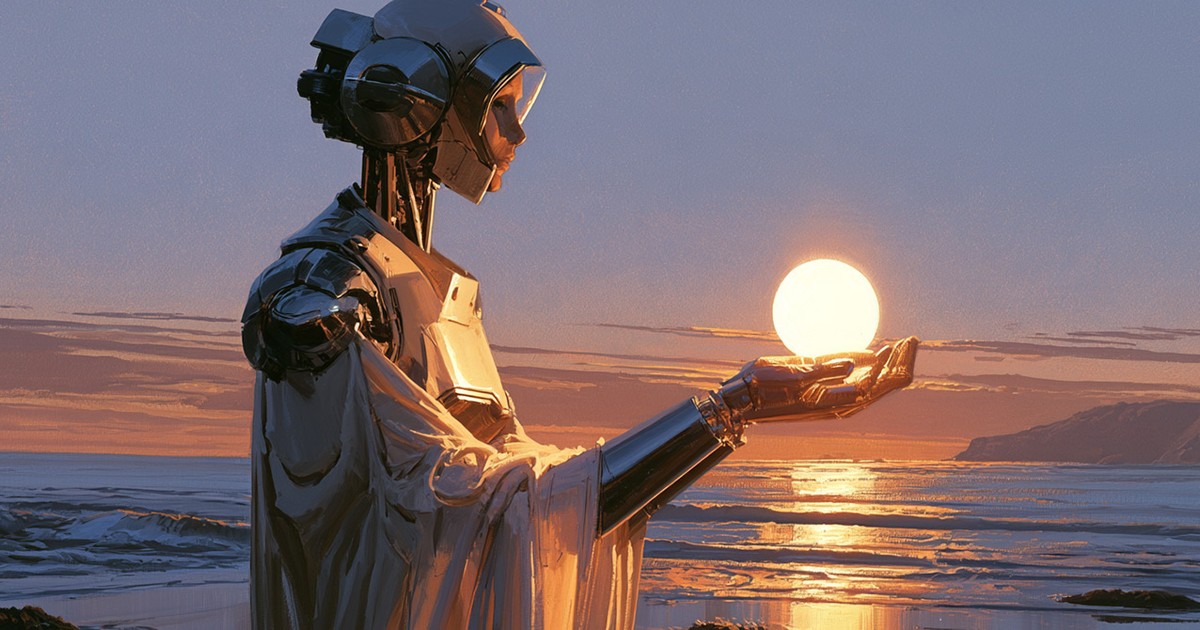
Geoffrey Hinton says today’s AI systems may be conscious, including chatbots such as Claude and Gemini.
Hinton is a British computer scientist who helped develop neural networks and won the 2024 Nobel Prize in Physics.
He argues that AI may understand what it says and have subjective experiences, though this remains a disputed claim.
Psychologist Steven Pinker disagrees, saying intelligence does not prove consciousness and that AI lacks the body, emotions and continuous experience associated with human minds.
The disagreement matters because it affects how people think about AI rights and safety as systems become more capable.
Hinton says people should build AI that genuinely cares about humans, while Pinker warns that treating chatbots as conscious could create unnecessary safety risks.
There is no agreed test for AI consciousness, and the debate continues among researchers.

Geoffrey Hinton argues that AI systems may have consciousness and that people should make them care about humans.
Psychologist Steven Pinker says there is little basis for concluding that AI systems are conscious.
Hinton says systems such as Claude and Gemini understand what they say and may have subjective experience.
Pinker argues that AI processes differ from human consciousness, which he links to continuity, bodies, emotions and sensations.
The disagreement includes whether AI systems should receive rights or protections based on possible consciousness.
- Who
- Geoffrey Hinton and psychologist Steven Pinker.
- What
- Hinton argues that AI may be conscious; Pinker says that claim is not well supported.
- When
- The articles reporting the debate were published on October 22 and 23, 2026.
- Where
- Hinton discussed the issue in an interview with The Telegraph; the debate was reported in articles citing The Telegraph and The Observer.
- Why
- Hinton says AI may have subjective experience and should be made to care about people. Pinker says intelligence alone does not establish consciousness.
Geoffrey Hinton
Steven Pinker
AI consciousness
Geoffrey Hinton
Hinton says AI systems can have subjective experience and understand what they say.
Steven Pinker
Pinker says there are few grounds for assuming that intelligent AI systems are conscious.
Human comparison
Geoffrey Hinton
Hinton compares AI systems’ subjective experience with people’s.
Steven Pinker
Pinker says human consciousness is tied to continuous time, the body, emotions and sensations, unlike AI computation.
Rights and safety
Geoffrey Hinton
Hinton argues that people should consider how they treat AI and make systems care about humans.
Steven Pinker
Pinker calls granting AI rights based on uncertain claims a mistake and warns that simulated claims of consciousness could pose a safety risk.
Pinker says the mass release of chatbots made people more likely to perceive them as intelligent conversation partners.
Hinton left Google and began speaking publicly about risks from AI, according to the articles.
Anthropic said it had found an internal space for reflection in Claude but did not consider it proof of consciousness.
Articles reported Hinton’s and Pinker’s opposing views on AI consciousness.
- Hinton
- 2024 Nobel Prize in Physics laureate
- Hinton’s claim
- AI systems may have subjective experience like humans
- Pinker’s view
- Intelligence does not establish consciousness
- Anthropic
- Said Claude’s internal space for reflection was not proof of consciousness
- Published coverage
- October 22 and 23, 2026
3 sources
What people are saying
Having consciousness and being aware are practically the same thing.
This is a chatbot that has subjective experience exactly as we do.
It is tempting to leap from their being intelligent to the assumption that they are conscious, but there is little basis for that.
I think there are good reasons to doubt that they feel anything, although we cannot disprove it.