

Science & Tech · Science & Environment · 9 hrs ago
A Polymer Membrane Could Cut Energy Use in Oil Refining by 31.6%
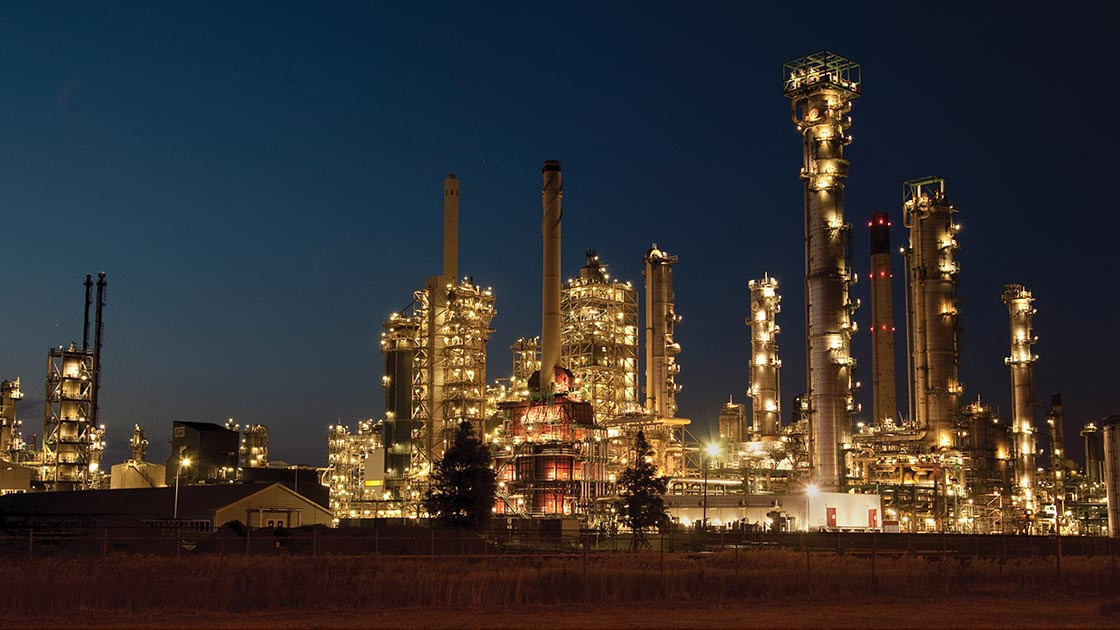
Researchers at KAIST and Georgia Tech developed a low-cost membrane to help separate crude oil during refining.
The membrane is made from porous polyacrylonitrile, a polymer used in industrial membranes.
Heavy hydrocarbons collect inside its pores, narrowing them and allowing the membrane to separate oil components at room temperature.
In tests, it had about 23 times the flow rate of previously reported crude-oil membranes and worked steadily for 28 days.
Simulations found energy use could fall by 31.6%, with carbon dioxide emissions down by 37.6% if the membrane is used before distillation.
It would not replace distillation, but could reduce the need to heat crude oil above 350°C at the start of the process.
Refineries could add it through a modular retrofit, while the researchers aim to adapt the technology for other chemical separations, including plastic recycling.

Researchers from KAIST and Georgia Tech developed a method that uses a bare polymer membrane to separate crude oil components.
The membrane selectively traps heavy hydrocarbons at room temperature, forming channels smaller than 2 nanometers.
Study simulations found that using the membrane before conventional distillation could reduce refining energy use by 31.6%.
The process could also cut carbon dioxide emissions, cooling water use and operating costs.
The membrane is intended as a pretreatment step and does not replace distillation.
- Who
- Researchers from the Korea Advanced Institute of Science and Technology and Georgia Institute of Technology.
- What
- They developed a bare polyacrylonitrile membrane for separating crude oil components before distillation.
- When
- The study was published in Nature in 2026, according to the article.
- Where
- The researchers are from KAIST and Georgia Tech; the technology is intended for oil refineries.
- Why
- To reduce energy use and emissions by separating some crude oil fractions before high-temperature distillation.
This story does not have two clearly opposing sides.
The study was published in Nature, according to the article.
OilPrice published its report on the membrane technology.
- Membrane material
- Porous polyacrylonitrile (PAN)
- Separation channels
- Smaller than 2 nanometers
- Permeation rate
- Approximately 23 times higher than previously reported state-of-the-art crude oil membranes
- Stable performance
- 28 consecutive days
- Simulated energy reduction
- 31.6% with membrane pretreatment before distillation
- Other simulated reductions
- 37.6% in carbon dioxide emissions; 20.7% in cooling water use; 36% in operating costs
What people are saying
One of the key challenges facing membrane systems for crude oil separation was the low productivities of the membrane units – the PAN membranes with their surprising separation mechanism – dramatically increase the productivity of the membrane unit, to the point where industry should seriously consider adopting the technology
Our goal is to precisely control this spontaneous pore-constriction phenomenon and develop it into a membrane platform applicable to the entire refining process
We also aim to expand the technology to plastic recycling, biofuel purification, and other sustainable chemical processes that support carbon neutrality.