

Health · Medical Research · 3 hrs ago
Touching a Dog May Reduce the Impact of Later Stress, Study Finds
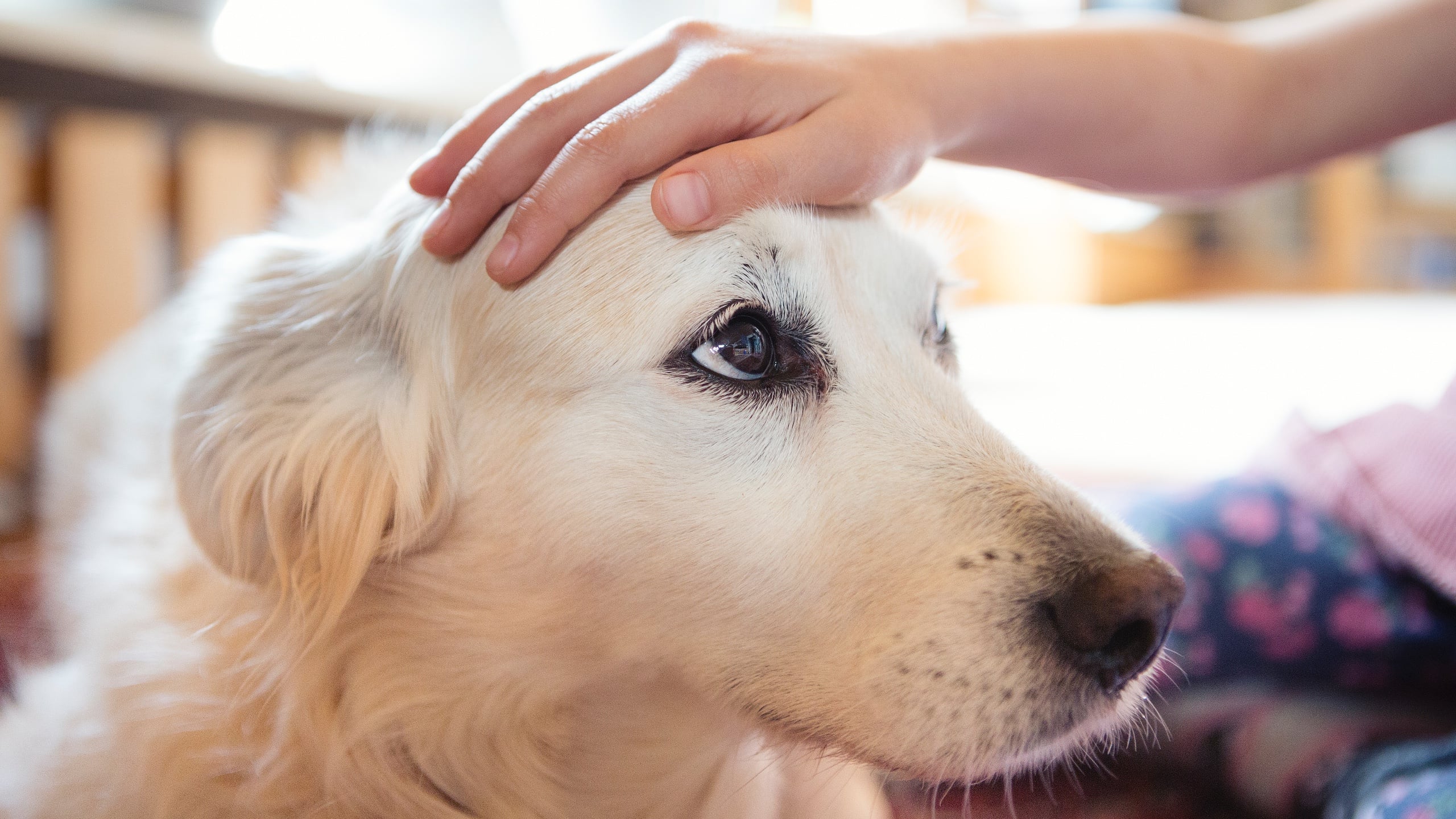
Researchers at the University of Innsbruck in Austria studied whether touching a dog can affect its owner's stress.
They tested 64 adult dog owners and their dogs in an experiment involving timed questions and arithmetic tasks designed to cause stress.
After the first test, owners had five minutes either to touch their dog or to remain apart from it.
Those who touched their dogs did not recover faster during the break, but they showed fewer biological signs of stress during the second test.
The findings suggest that contact with a dog may buffer owners against stress they are about to face.
The researchers monitored heart and brain activity, but the study does not establish whether the effect applies beyond this experiment.

A study of 64 adult dog owners found that touching their dogs during a five-minute break was associated with lower signs of stress during a later stress test.
The researchers said the finding suggests physical contact with a dog may buffer the bodily impact of an upcoming stressor.
Participants did not appear to recover more quickly from the first stress test during the break.
The study was conducted by researchers from the University of Innsbruck in Austria and published in Biological Psychology.
The researchers said more work is needed to understand how touch contributes to the benefits of human-animal interaction.
- Who
- Researchers from the University of Innsbruck studied 64 adult dog owners and their dogs.
- What
- The study found that owners who touched their dogs during a break showed lower signs of stress during a later test.
- When
- The article was published on 2026-10-24. The study date is not stated.
- Where
- The study was conducted by researchers from the University of Innsbruck in Austria.
- Why
- Researchers sought to investigate how benefits of human-animal interaction arise, including whether physical touch affects stress.
This story does not have two clearly opposing sides.
Participants completed an initial stress test involving timed questions or arithmetic and received negative feedback from an evaluator.
Participants could touch and interact with their dogs, or were kept apart from them because the dogs were leashed and out of reach.
Participants completed a second stress test; those who had touched their dogs showed lower signs of stress.
- Participants
- 64 adult dog owners: 51 women and 13 men
- Average age
- 34.1 years
- Recovery period
- 5 minutes
- Study institution
- University of Innsbruck, Austria
- Study journal
- Biological Psychology
What people are saying
These results indicate that touching one's dog dampens the bodily impact of an upcoming stressor and that pet owners may naturally seek such touch when interacting with their pet.
Thus, touch may represent an important mechanistic pathway through which upcoming threats are experienced as less threatening, potentially contributing