

Science & Tech · AI · 5 hrs ago
NVIDIA says GR00T 2 can learn robot tasks from five demonstrations
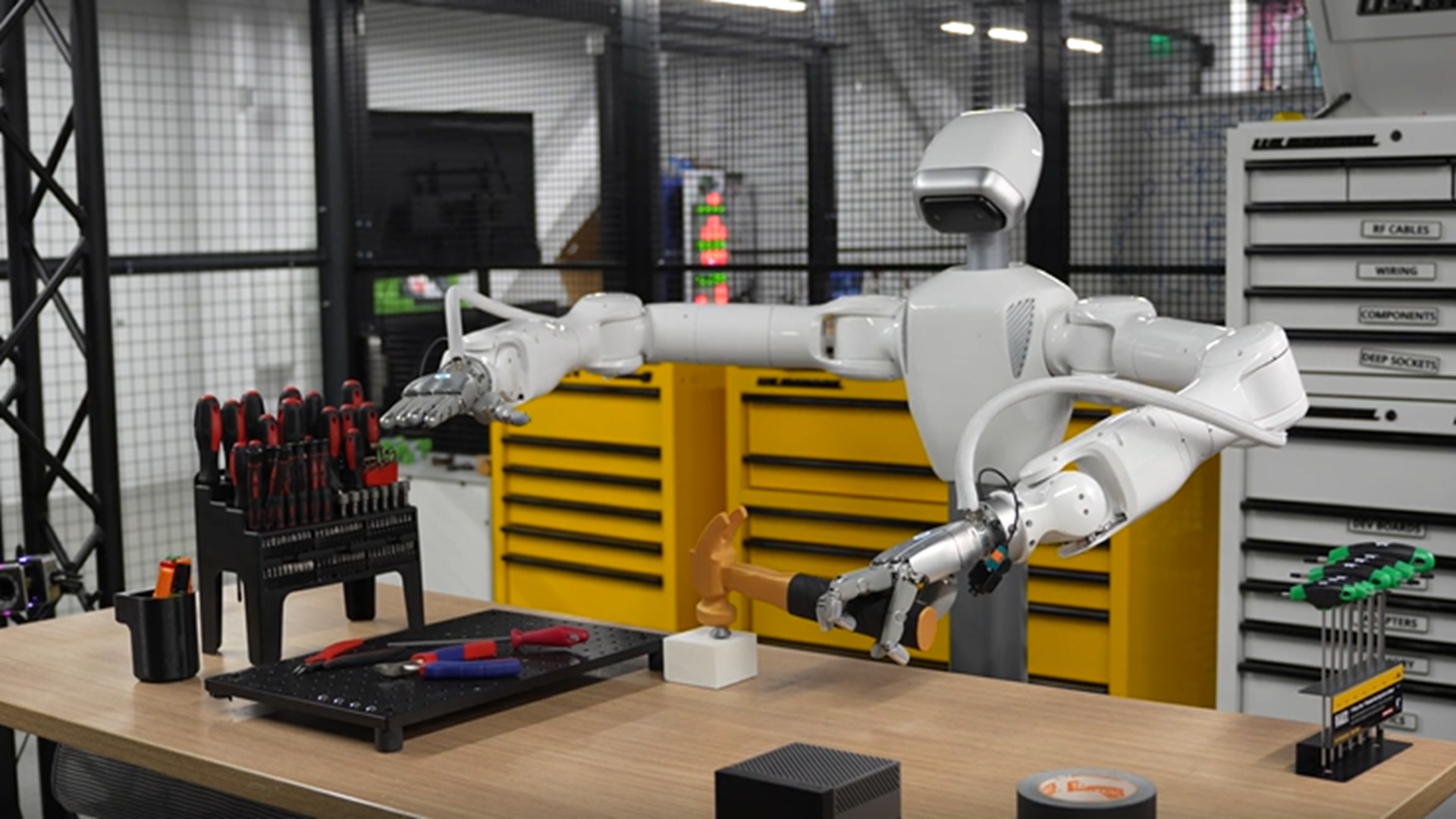
NVIDIA introduced GR00T 2, a model designed to help robots learn physical tasks from demonstrations.
It can transfer skills shown by people or other devices to robots with different bodies, including robot arms and humanoids.
In tests across 50 tasks, the model had a 40% average success rate without task-specific training; after five demonstrations per task and a 30-minute fine-tune, average success rose to 95%.
The model was trained on human video and data from handheld grippers and remotely operated robots, giving it examples of how objects and actions interact.
A smaller version, GR00T 2 Turbo, runs on a Unitree G1 humanoid and completed popcorn-serving tasks in all 48 trials.
NVIDIA says the technology aims to make robots more adaptable for industrial and everyday tasks.

NVIDIA introduced GR00T 2, a robot foundation model that can learn tasks from human demonstrations and transfer skills across different robot bodies.
In tests across 50 tasks, the model achieved a 95% average success rate after five demonstrations per task and a 30-minute fine-tuning session.
The demonstrations required less than three minutes of robot data per task.
GR00T 2 was trained using human video, handheld-gripper demonstrations and robot teleoperation data.
NVIDIA also developed GR00T 2 Turbo, which runs on a Unitree G1 humanoid using onboard computing.
- Who
- NVIDIA introduced GR00T 2.
- What
- The model transfers demonstrated skills to robots. It achieved a 95% average success rate across 50 tasks after five demonstrations per task and fine-tuning.
- When
- NVIDIA introduced it on November 9.
- Where
- At the Conference on Robot Learning in Austin, Texas.
- Why
- NVIDIA says the model is intended to help robots perform more adaptable manipulation in industrial and everyday settings.
This story does not have two clearly opposing sides.
This story does not have a timeline yet.
- Model
- GR00T 2
- Test results
- 95% average success across 50 tasks after five demonstrations per task
- Fine-tuning
- 30 minutes on one NVIDIA RTX 5090 graphics card
- Training data
- 402,730 hours of first-person human video
- Turbo inference time
- 124 milliseconds per prediction on a Unitree G1