

Business · Economy · 4 hrs ago
South Korea’s Export Volumes Surge as Oil Pushes Up Import Prices
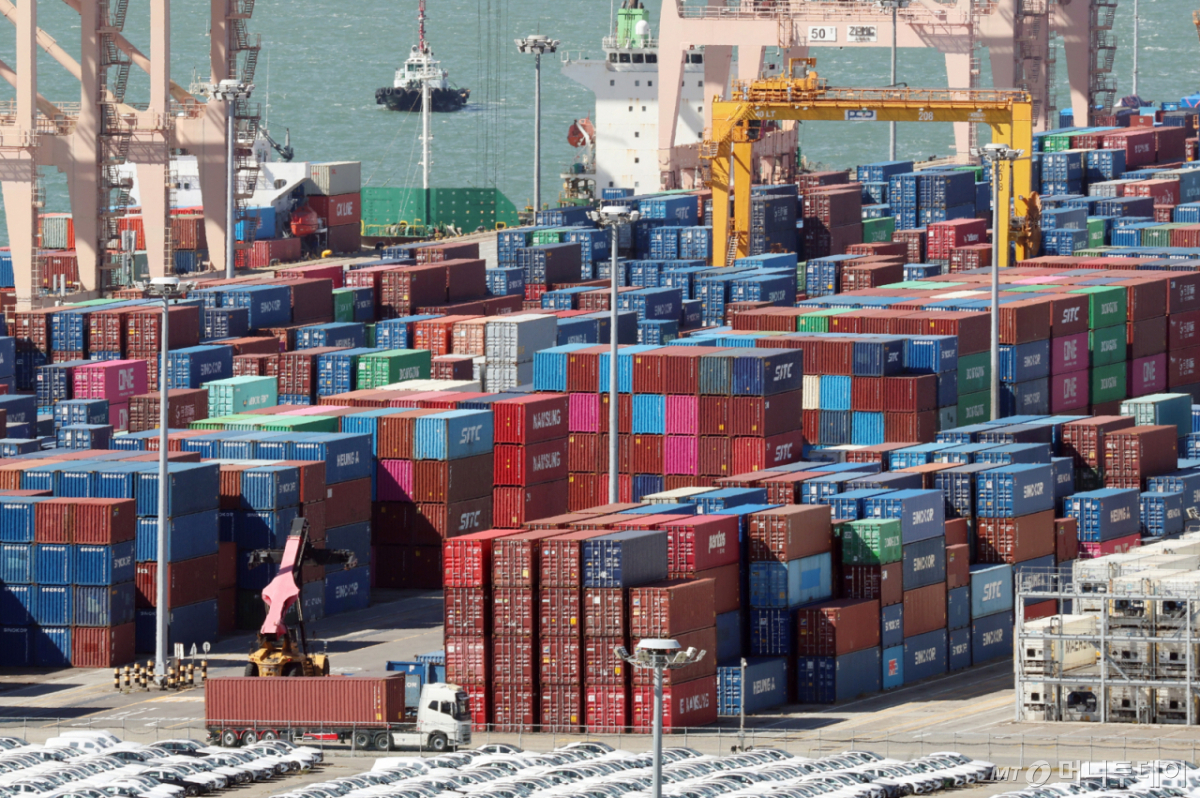
South Korea’s export volumes rose 32.1% from a year earlier, the biggest increase in 16 years and eight months.
The Bank of Korea said stronger shipments of semiconductors, computers and machinery helped drive the rise.
In won terms, export prices fell 0.8% from August, partly because the won strengthened against the US dollar.
Import prices moved the other way, rising 1.7% in September as international oil prices climbed despite the stronger won.
The increase ended three months of monthly declines in import prices, while prices for raw materials rose 9.6%.
The terms of trade improved 25.4% from a year earlier, as export prices rose more than import prices.
The Bank of Korea said that lower oil prices and the exchange rate through mid-October could ease import-price pressure, but oil-market uncertainty linked to the Middle East conflict remains.

South Korea’s export volume rose 32.1% in September from a year earlier, its biggest increase in 16 years and eight months.
Import prices increased 1.7% from August as international oil prices surged, reversing a four-month decline.
The export price index fell 0.8% from August, while export prices measured in contract currencies rose 2.6%.
The net terms-of-trade index rose 25.4% from a year earlier, and the income terms-of-trade index climbed 65.7%, a record annual increase.
Reports differ on the annual rise in import prices: one gives 17.6%, while another cites 14.2%.
- Who
- The Bank of Korea reported the figures.
- What
- September export volumes surged, while import prices rose as oil prices jumped.
- When
- The figures cover September 2026 and were announced on October 16.
- Where
- South Korea.
- Why
- Export volumes rose mainly because of growth in computer, electronics and optical equipment and machinery exports; higher international oil prices pushed up import prices.
This story does not have two clearly opposing sides.
Dubai crude averaged $88.75 a barrel, while the monthly average won-dollar exchange rate was 1,406.30 won.
Dubai crude averaged $113.71 a barrel, up 28.1% from August, and the monthly average won-dollar rate fell to 1,359.00 won.
The Bank of Korea released provisional September export-import price and trade index data.
The Bank of Korea team chief said the exchange rate and international oil prices had fallen from September levels.
- Export volume index
- Up 32.1% year on year
- Import price index
- Up 1.7% month on month
- Export price index
- Down 0.8% month on month
- Dubai crude price
- $113.71 a barrel in September, up 28.1%
- Net terms-of-trade index
- Up 25.4% year on year
- Income terms-of-trade index
- Up 65.7% year on year
3 sources
What people are saying
By mid-October, the exchange rate and international oil prices had fallen compared with September, which will act as a downward factor for import prices in October.
International oil prices affect both export prices and import prices, but import prices include mining products with a large weighting, while crude oil is not included in export prices.