

Business · Economy · 18 hrs ago
RBA economist warns AI boom could keep Australian interest rates higher
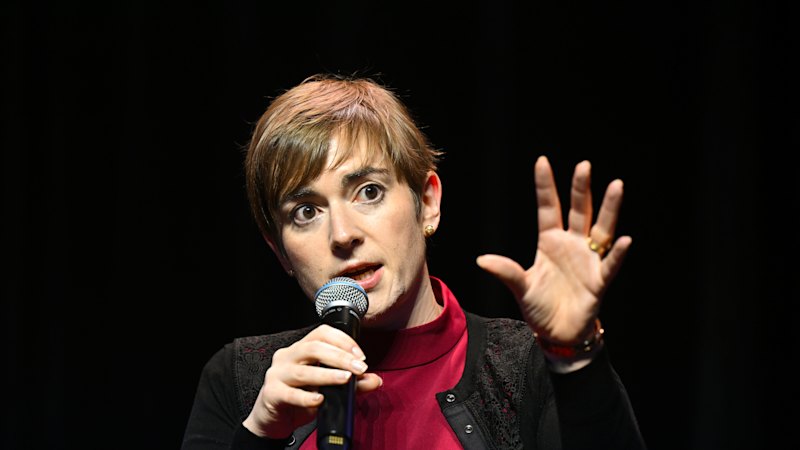
Reserve Bank chief economist Sarah Hunter warned that Australia’s AI investment boom could add to inflation pressure and keep interest rates higher in the near term.
She spoke at a business conference in Sydney as the central bank works to combat inflation.
Investment in data centres has risen tenfold in three years, and construction could equal 2 per cent of Australia’s GDP for the next two years.
The building boom is also competing with construction for trade workers, while data centres’ demand for electricity could push up power prices.
AI could eventually lift productivity, but businesses may need time to reorganise their work before gains appear; Hunter said the process can resemble earlier technologies such as electricity.
There is little evidence AI has cut overall employment so far, though hiring among younger workers may be lower in jobs highly exposed to the technology.
The Reserve Bank has released four research papers on AI as it examines the technology’s effects on the economy.

RBA Chief Economist Sarah Hunter warned that the artificial intelligence investment boom could keep Australian interest rates higher in the near term.
She said investment in data centres has risen tenfold over three years and could increase demand for workers and energy.
Data centre construction alone could equal 2 per cent of GDP for the next two years, according to Hunter.
Hunter said there was little evidence so far that AI had affected overall employment, though hiring among younger workers in highly AI-exposed occupations showed signs of slowing.
The RBA also reported that 5.3 per cent of Australian households’ financial wealth is invested in AI-related companies, directly or through superannuation.
- Who
- Sarah Hunter, the RBA’s chief economist, issued the warning.
- What
- She said the AI investment boom could add to economic demand and keep interest rates higher in the near term.
- When
- Monday, November 9, 2026.
- Where
- At a business conference in Sydney.
- Why
- Strong investment in AI-related projects could increase demand for capital, workers and energy, adding to economic pressures.
This story does not have two clearly opposing sides.
The share of Australian households’ financial wealth invested in AI-related companies was 2 per cent.
Investment in data centres rose tenfold.
Hunter addressed a business conference in Sydney and the RBA released four pieces of new research into AI.
- Data centre investment
- Up tenfold over the past three years
- Potential construction scale
- Equivalent to 2 per cent of GDP for the next two years
- Household financial wealth in AI-related companies
- 5.3 per cent
- AI-related wealth share in late 2022
- 2 per cent
- RBA business investment forecast
- 12 per cent growth this year; 0.8 per cent forecast in May
2 sources
What people are saying
Firms want to invest to take advantage of the new technology and to expand their capacity to meet faster future growth. Given this is happening globally, they’ll be competing for scarce savings, pushing up interest rates.
In Australia, contacts in the RBA’s liaison program indicate that AI has not yet impacted most firms’ headcount and is not expected to over the next year.
One example is electricity. The largest productivity gains did not come simply from replacing steam engines with electric motors, but from reorganising production and redesigning factory processes to best suit this new source of energy.