

Business · Companies · 9 hrs ago
IG Metall begins warning strikes across Germany’s metal and electrical industries
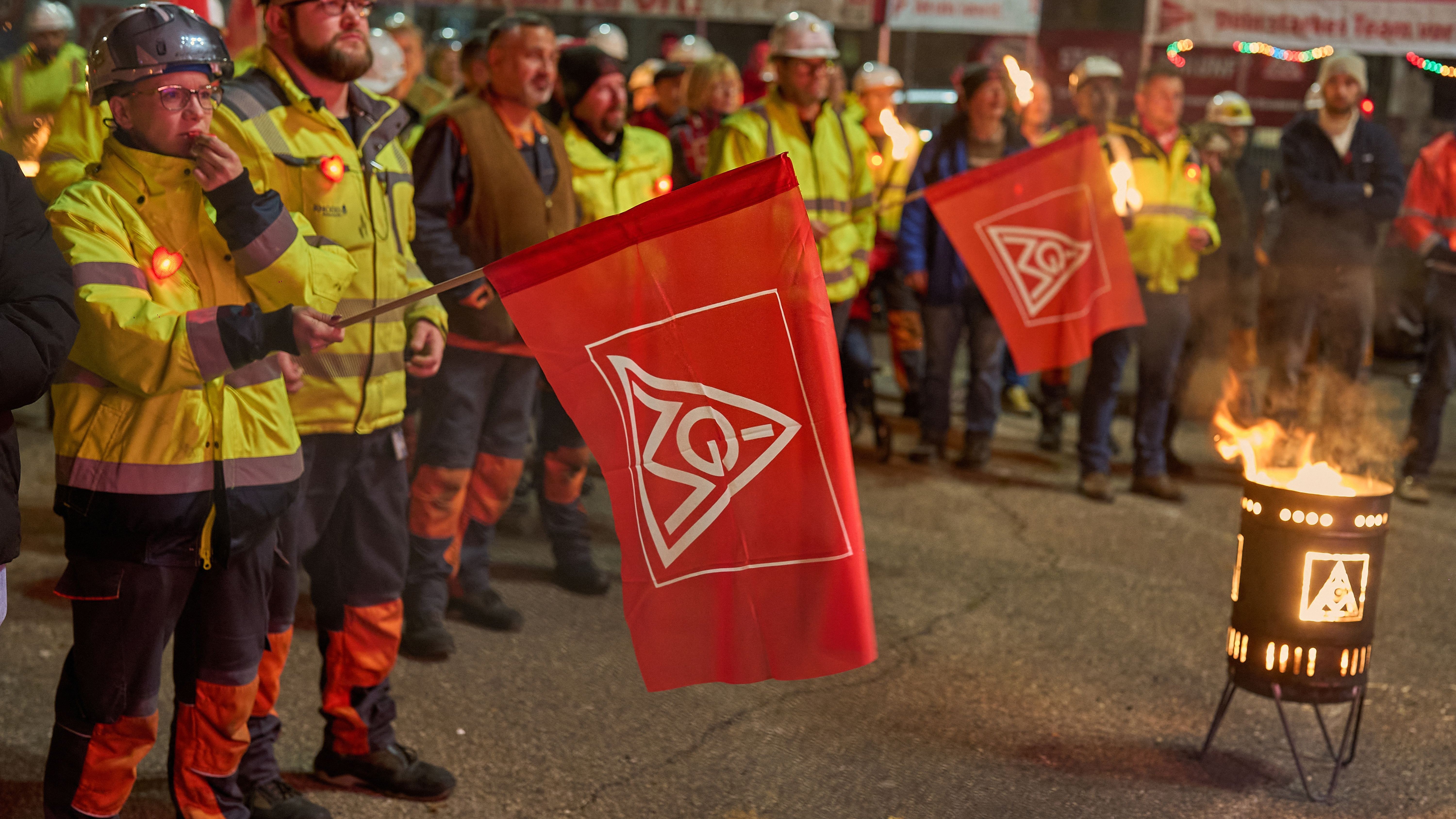
IG Metall began temporary strikes in Germany’s metal and electrical industries shortly after midnight, when a ban on industrial action expired.
Workers in night shifts at several businesses stopped work, including a metal producer in Andernach and a car-industry supplier in Hildesheim.
The union represents about 3.7 million workers in talks over a new collective agreement.
It is seeking a 5% pay rise over 12 months, support for lower-paid workers, and discussions about protecting jobs.
Employers have offered a one-off payment in July 2027 and a permanent 1.3% pay rise from July 2028, citing high costs and difficult economic conditions.
The union says the offer has angered workers, and wants strikes to increase pressure on employers.
Protests are due to spread nationwide next week.

IG Metall began warning strikes in Germany’s metal and electrical industries shortly after the peace obligation expired at midnight.
The union said the temporary walkouts would expand nationwide in the coming week.
The strikes aim to increase pressure in negotiations covering about 3.7 million employees.
IG Metall is seeking a 5% pay rise over 12 months, while employers have offered a one-off payment and a 1.3% increase from July 2028.
- Who
- IG Metall and employees at metal and electrical industry workplaces. Employers are the other parties in the wage negotiations.
- What
- Workers began temporary warning strikes after the peace obligation expired. The union aims to increase pressure in negotiations.
- When
- Shortly after midnight on November 1, 2026.
- Where
- Germany, including workplaces in Andernach, Hildesheim and Munich.
- Why
- IG Metall wants higher pay and talks on job security. It said the employers’ offer had caused anger and incomprehension among workers.
IG Metall
Employers
Pay
IG Metall
The union is seeking a 5% increase over 12 months.
Employers
Employers offered a one-off payment equal to 1% of average annual gross pay in July 2027 and a permanent 1.3% increase from July 2028.
Jobs and economic conditions
IG Metall
IG Metall wants job security addressed in negotiations.
Employers
Employers cited difficult economic conditions and high costs for industry in Germany to justify their offer.
IG Metall warning strikes began after the peace obligation expired.
The union said the protests would expand across Germany.
- Employees covered
- About 3.7 million
- Union pay demand
- 5% over 12 months
- Employer one-off payment
- 1% of average annual gross pay in July 2027
- Employer permanent increase
- 1.3% from July 2028
- Andernach
- About 300 Thyssenkrupp Rasselstein employees gathered outside the plant during a protest action
4 sources
Metall- und Elektroindustrie: Warnstreiks der IG Metall sind angelaufen
Warnstreiks der IG Metall kurz nach Mitternacht angelaufen
Metall- und Elektroindustrie: Warnstreiks der IG Metall kurz nach Mitternacht angelaufen
What people are saying
strong warning strikes
so-called offer
Employers see employees as pure cost factors.
The midnight warning strike at Thyssenkrupp Rasselstein is only the beginning of a massive warning-strike phase.