

Science & Tech · Space · 3 hrs ago
MIT team uses X-ray echoes to map regions around black holes
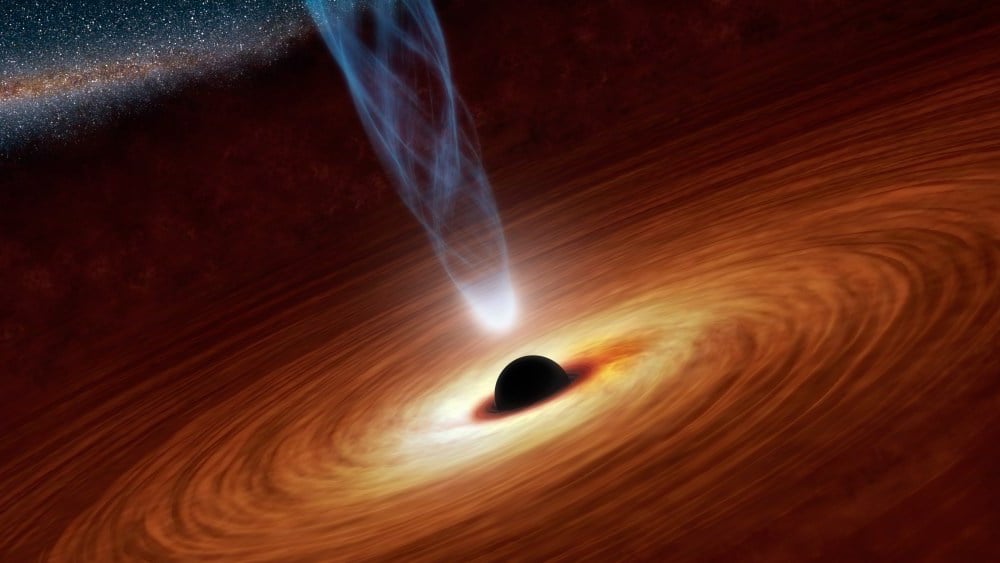
At MIT, Professor Erin Kara leads research on black holes using data from space- and ground-based telescopes.
Her team focuses on supermassive black holes, which sit at the centers of massive galaxies and influence how those galaxies form and evolve.
X-ray reverberation mapping traces echoes created when radiation from a black hole’s corona bounces off the gas and dust swirling around it in an accretion disk.
The method emerged after researchers found time delays in X-ray data in 2009, and Kara studied the signals during her PhD at Cambridge.
The echoes help map extreme regions close to black holes, where direct observations are difficult.
Kara’s group now analyzes data from missions including XRISM and NICER to investigate how black holes grow and affect their surroundings.
The team is continuing to refine the technique and also studies other powerful X-ray events, including black hole outbursts.

An MIT team led by Professor Erin Kara uses X-ray reverberation to map regions around supermassive black holes.
The technique tracks X-rays from a black hole’s corona as they bounce off the surrounding accretion disk.
Kara’s group analyzes data from missions including XRISM and NICER to study black holes and their effects on galaxies.
The research builds on X-ray echoes first identified in archival data in 2009.
- Who
- Professor Erin Kara and her team at MIT’s Kavli Institute for Astrophysics and Space Research.
- What
- They use X-ray reverberation signals to map regions around supermassive black holes.
- When
- The article was published on 2026-10-22. The team’s work continues today.
- Where
- MIT’s Kavli Institute for Astrophysics and Space Research; the black holes studied reside at the centers of massive galaxies.
- Why
- To understand how black holes grow and evolve, and how they affect the galaxies around them.
This story does not have two clearly opposing sides.
Andy Fabian and his team identified unusual X-ray time delays in archival data and interpreted them as evidence of X-ray reverberations around a black hole.
Kara and her students analyze data from XRISM, NICER and other missions to study black holes.
- Team leader
- Professor Erin Kara
- Research institute
- MIT’s Kavli Institute for Astrophysics and Space Research
- First evidence identified
- 2009
- X-ray missions named
- XRISM and NICER
- Echo source
- X-rays from a black hole’s corona bouncing off its accretion disk
What people are saying
They had only found these echoes in one black hole. But the archive was full of data of these reverberation signals that no one had analyzed in this particular way. So I had my whole PhD to kind of play with this archive, and it felt very discovery-driven.