

Science & Tech · Science & Environment · 6 hrs ago
Chinese engineers cut cargo ship energy use by 5% with bubble lubrication
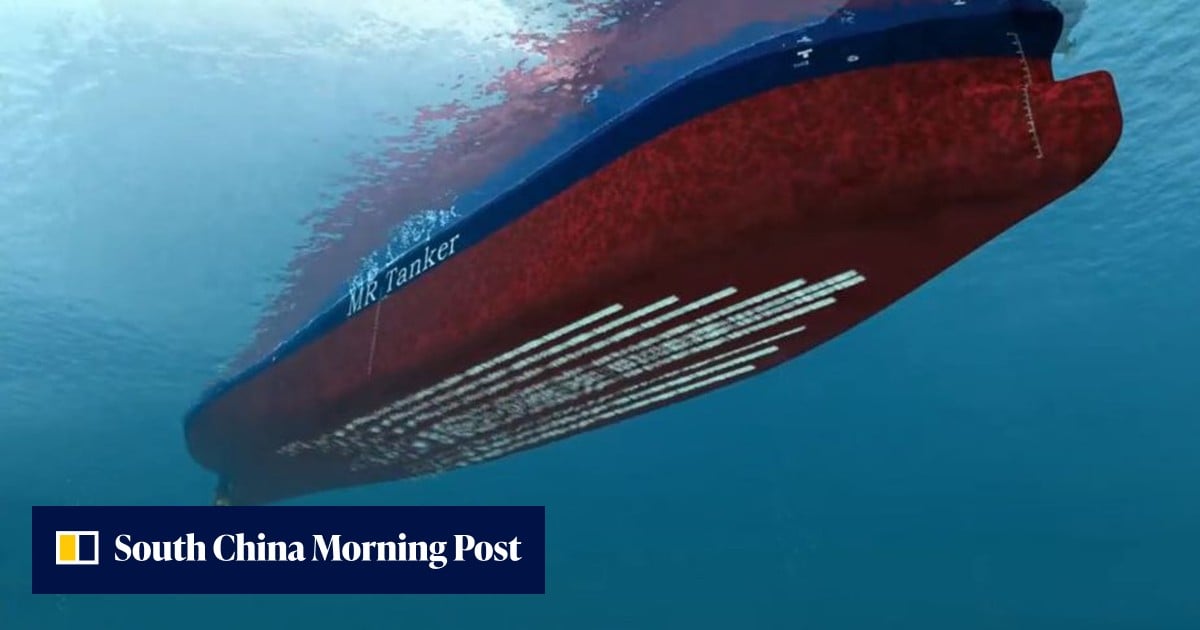
Chinese engineers have applied a drag-reduction principle to commercial shipping.
Supercavitating torpedoes travel inside a gas-filled cavity that reduces their contact with water.
A related bubble-lubrication system is being used on cargo ships.
The system cut net energy consumption by 5%, according to the stated result.
Lower energy use can mean less fuel is needed to move ships.
The approach adapts underwater technology for commercial vessels, but no further plans are given.

Chinese engineers have applied a bubble-lubrication system to commercial shipping, cutting a cargo ship’s energy use by 5%.
The system uses a drag-reduction principle related to supercavitation.
Supercavitating torpedoes travel inside a gas-filled cavity that sharply reduces their contact with water.
The article does not identify the ship or say where or when the system was tested.
- Who
- Chinese engineers.
- What
- They applied a bubble-lubrication system to a cargo ship, cutting energy use by 5%.
- When
- Not stated.
- Where
- Not stated.
- Why
- The system uses a drag-reduction principle to reduce energy consumption.
This story does not have two clearly opposing sides.
This story does not have a timeline yet.
- Energy-use reduction
- 5%
- System
- Bubble lubrication
- Researchers
- Chinese engineers
- Related principle
- A gas-filled cavity reduces contact with water