

Business · Economy · 3 hrs ago
Trump announces new tariffs as US inflation reaches 3.8%
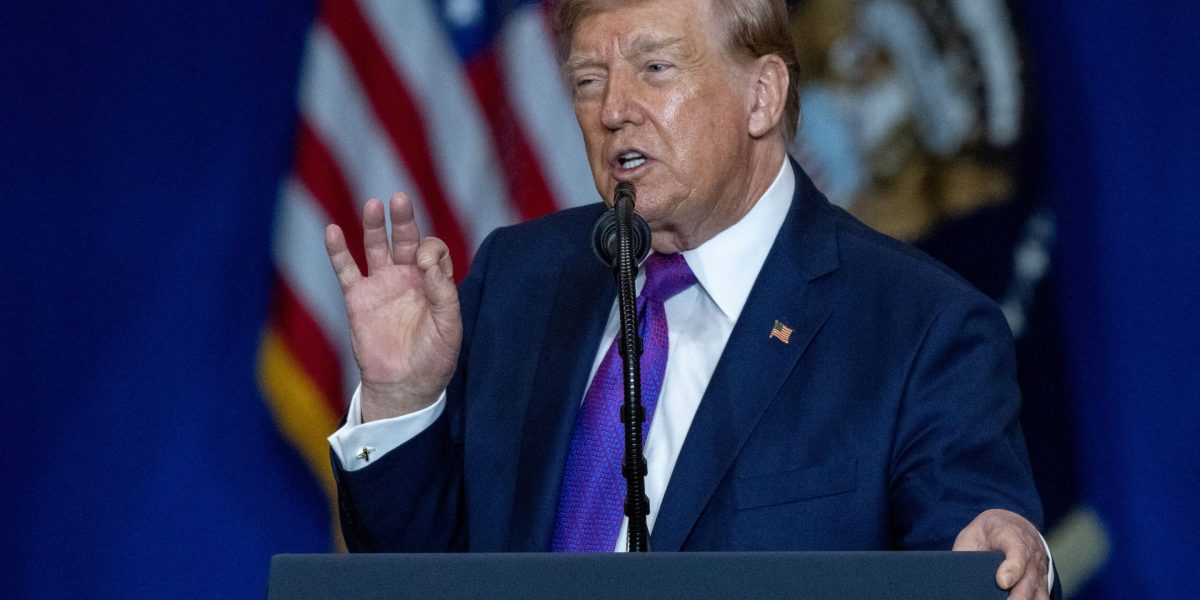
The US announced new tariffs on imports from 14 economies, including China, the European Union, Japan and countries in South-East Asia.
The duties use Section 301 of the Trade Act, which allows tariffs in response to foreign practices the US considers unfair or harmful to its commerce.
US inflation was 3.8%, nearly twice the Federal Reserve’s 2% target, according to the Personal Consumption Expenditures price index.
US businesses and consumers often bear the cost of tariffs through higher prices, rather than foreign exporters paying them.
China faces a 20% duty, while rates for Vietnam and India could be lower if they reach trade deals.
The Supreme Court struck down earlier emergency tariffs, forcing the administration to return much of the money it had collected.
Importers are likely to challenge the new duties in court, and the Federal Reserve is due to meet on December 9 and 10.

President Donald Trump’s administration announced proposed tariffs on imports from 14 economies as US inflation reached 3.8% in October.
The inflation rate was nearly double the Federal Reserve’s 2% target.
The proposed rates include 20% on China and 15% on the European Union, with rates on other economies varying.
The tariffs use Section 301 of the US Trade Act, which allows action against foreign practices deemed unreasonable or discriminatory.
The articles say US businesses and consumers are likely to bear much of the cost, adding to concerns about inflation and the Federal Reserve’s next move.
- Who
- The Trump administration announced the proposed tariffs, targeting imports from 14 economies.
- What
- It proposed new tariffs under Section 301 of the US Trade Act. The announcement came as US inflation was reported at 3.8%.
- When
- November 25–26, 2026. The articles say the announcement and inflation data release occurred on the same day.
- Where
- The United States; the tariffs target imports from China, the European Union and 12 other economies.
- Why
- The administration cited foreign practices it considers unreasonable or discriminatory, or that burden or restrict US commerce.
Trump administration
Tariff critics
Purpose
Trump administration
The administration cited foreign practices it considers unreasonable or discriminatory, or that burden US commerce.
Tariff critics
Critics say the tariffs’ costs fall largely on US businesses and consumers and add to inflation pressures.
Economic effects
Trump administration
Trade Representative Jamieson Greer said the duties would mostly top up existing rates by a few percentage points.
Tariff critics
The articles say tariffs can raise prices for US consumers and complicate the Federal Reserve’s effort to control inflation.
The Supreme Court struck down Trump’s sweeping emergency tariffs, according to Fortune.
The first tranche of forced-labour tariffs took effect, covering about 60 countries, according to SMH.
The administration announced proposed tariffs on 14 economies on the same day US inflation data showed a 3.8% annual rate.
The Federal Reserve was scheduled to meet again, according to Fortune.
- US inflation
- 3.8% in October
- Federal Reserve target
- 2%
- Tariffs announced
- Proposed duties targeting imports from 14 economies
- China rate
- 20%
- European Union rate
- 15%
- Vietnam rate
- Up to 35%, or 20% if it reaches a trade deal
3 sources
What people are saying
The concern is the impact on U.S. inflation, and thus U.S. interest rates.
In effect, it’ll look more like a top-up
When it all nets out, it really will just top up a few percentage points.
tariffs represented a one-off price increase rather than broader inflationary factors