

Science & Tech · Big Tech & Internet · 8 hrs ago
Data Center Expansion Faces Growing Resistance in Britain
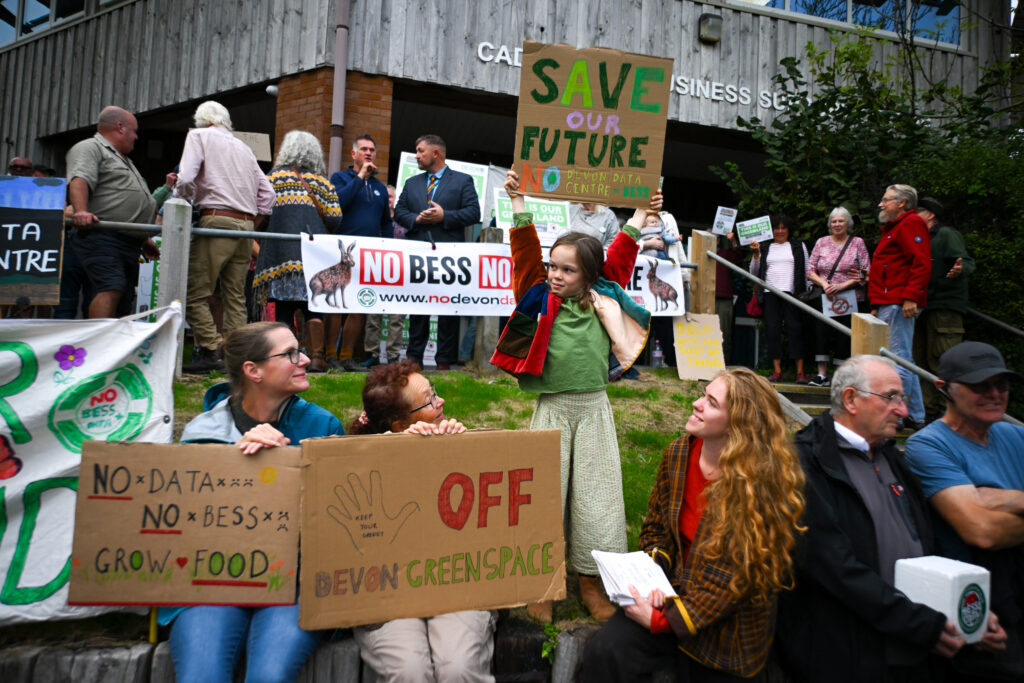
Microsoft plans to build a 140-megawatt data center near Langley in Slough, a borough west of London.
Slough already has more than 40 data centers, drawn by its connections to major fiber-optic and subsea cables.
Residents say they see few local benefits and are concerned about the long-term costs for communities.
Their concerns are part of a wider pushback, with campaigns against projects also emerging in Devon, Scotland, Essex and London.
The Labour government wants to triple Britain’s data center capacity by the decade’s end, arguing that expansion supports jobs and national security.
But questions about energy use and environmental oversight have raised doubts about how the growth will be managed.
A taskforce warned that local opposition has already stopped permitted projects in the United States, and said Britain has roughly 12 months to build public support before similar resistance takes hold.

Residents in Slough and other parts of Britain are increasingly opposing data center development.
Microsoft is planning a proposed 140-megawatt data center near Langley, in the borough of Slough.
Slough is home to more than 40 data centers and has attracted operators because of its fiber-optic connections and location.
The Labour government aims to triple Britain’s data center capacity by the end of the decade, while the Green Party has proposed a moratorium.
A transparency group found that ministers and officials consulted 137 businesses on data center expansion, but only two community groups and no environmental organizations.
- Who
- Residents, data center developers and the British government are central to the story.
- What
- Data center expansion in Britain is facing growing local resistance.
- When
- The article was published on November 9, 2026. The government aims to triple capacity by the end of the decade.
- Where
- Slough and other areas of Britain, including Devon, Scotland, Essex and London’s Brick Lane.
- Why
- Developers are drawn to Slough for its fiber-optic connections and location. Residents question the benefits and longer-term costs of expansion.
Local residents and environmental campaigners
British government and data center developers
Community impact
Local residents and environmental campaigners
Residents question what the boom has brought to Slough and say they bear the risks.
British government and data center developers
The government says expansion supports jobs and national security; developers say projects can benefit communities.
Expansion policy
Local residents and environmental campaigners
The Green Party has proposed a moratorium, and local campaigns oppose projects.
British government and data center developers
Labour aims to triple data center capacity by the end of the decade and has rejected a moratorium.
Oversight
Local residents and environmental campaigners
Critics point to limited consultation with community groups and gaps in oversight of energy and environmental issues.
British government and data center developers
The government coordinates development and can accelerate planning and grid access for projects demonstrating public benefits.
Around 90 percent of Britain’s data centers were sited in England.
Polling cited in the article found that 56 percent of voters said data centers were a major or crucial factor in their congressional choices.
The Labour Party aims to triple Britain’s data center capacity.
- Proposed Slough project
- 140 megawatts
- Data centers in Slough
- More than 40
- Data centers across the U.K.
- Around 500
- Government consultations
- 137 businesses, two community groups and no environmental organizations
- Public confidence
- 84 percent of Britons believe the government will prioritize partnerships with large technology companies over the public interest when regulating AI
What people are saying
Where is this supposed investment? Slough has not become Silicon Valley,
Residents shoulder all the risk, while developers sit in their ivory towers.
would be a disaster for jobs and national security.
Britain has a window—we think of roughly 12 months—to build a compact that earns public consent before that pattern takes hold,