

Science & Tech · Science & Environment · 3 hrs ago
Wildfires threaten Sulawesi cave paintings dating back 67,800 years
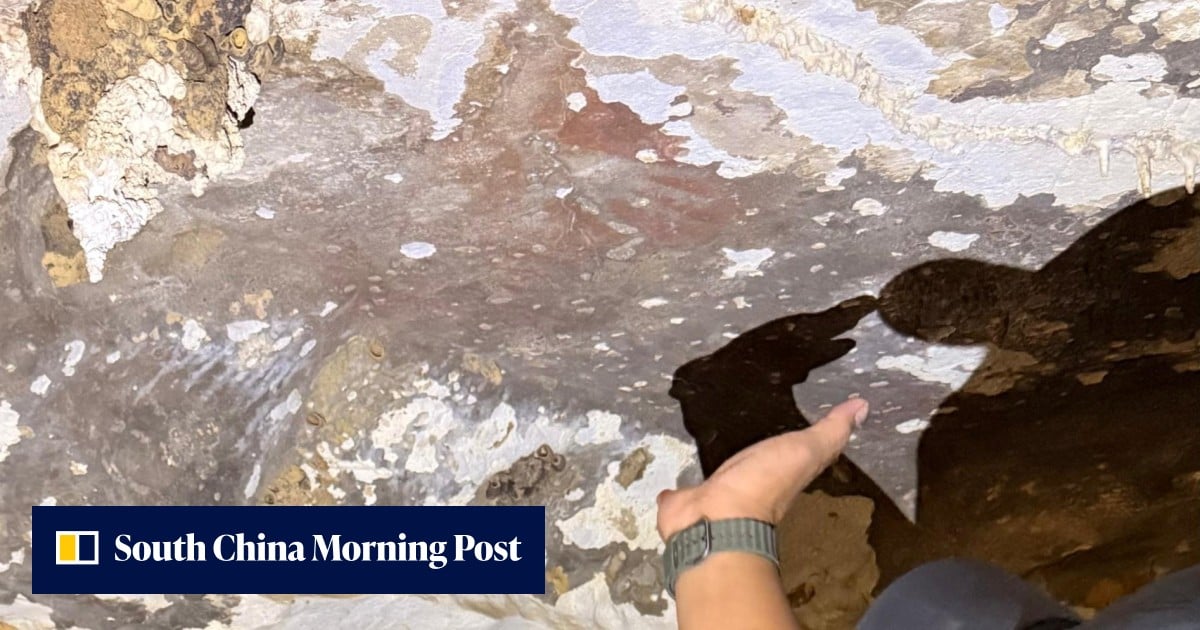
Wildfires on Indonesia’s Sulawesi island threaten ancient cave art with heat and smoke that could speed its deterioration.
Researchers say a reddish hand stencil on Muna Island is at least 67,800 years old, while an image of human-like figures with a pig in Maros-Pangkep is at least 51,200 years old.
The fires are part of Indonesia’s most intense forest and land fires since 2015, as severe El Niño conditions bring higher temperatures and less rain.
Fire reached within 800 metres of the Maros-Pangkep cave, and more than 270 hectares of its national park burned between September 30 and October 18.
Heat could damage the art by changing temperatures around it, while soot from smoke could cover and blur the images.
Firefighters are still tackling fires in parts of the park, and conditions remain dry with no rain reported.
Researchers warn that without quick measures to limit the damage, important evidence of human history could be lost.

Wildfires in Indonesia are threatening ancient cave paintings on Sulawesi with heat and smoke that researchers say could accelerate their deterioration.
The fires are part of Indonesia’s most intense forest and land fires since 2015, driven by a severe El Niño that has raised temperatures and reduced rainfall.
A hand stencil on Muna Island has been dated to at least 67,800 years old, while an artwork in Maros-Pangkep is at least 51,200 years old.
More than 270 hectares of the national park burned between September 30 and October 18, and fires came within 800 metres of the Maros-Pangkep cave.
- Who
- Researchers and firefighters say the wildfires threaten the paintings.
- What
- Heat and smoke from wildfires risk accelerating the deterioration of ancient cave paintings.
- When
- Fires burned near the site for more than a week earlier in October. More fires were being fought on October 22 and 23.
- Where
- Sulawesi, Indonesia, including the Maros-Pangkep area in South Sulawesi and Muna Island.
- Why
- A severe El Niño has raised temperatures and reduced rainfall, leaving forests and peatland vulnerable to fire.
This story does not have two clearly opposing sides.
Fires burned near the Maros-Pangkep site for more than a week and came within 800 metres of the cave.
More than 270 hectares of the national park burned.
Firefighters worked to put out fires in other parts of the park.
- Muna Island hand stencil
- At least 67,800 years old
- Maros-Pangkep artwork
- At least 51,200 years old
- National park burned
- More than 270 hectares
- Fire proximity to cave
- Within 800 metres
- Fire period
- September 30 to October 18
2 sources
What people are saying
The first and most destructive effect is the heat. Even without direct fire touching the paintings, it could ruin them because it changes the temperature around the paintings and accelerates the process of corrosion
They create soot on the paintings and cover them, so that the paintings will become blurred and difficult to identify
If we don't do something about this quick, if there isn't any tactical mitigation efforts for this incident we will lose one of the most amazing evidence of human history in Maros-Pangkep