

Science & Tech · Science & Environment · 2 hrs ago
Elephant crop-raiding risk could rise across southern Africa by 2085
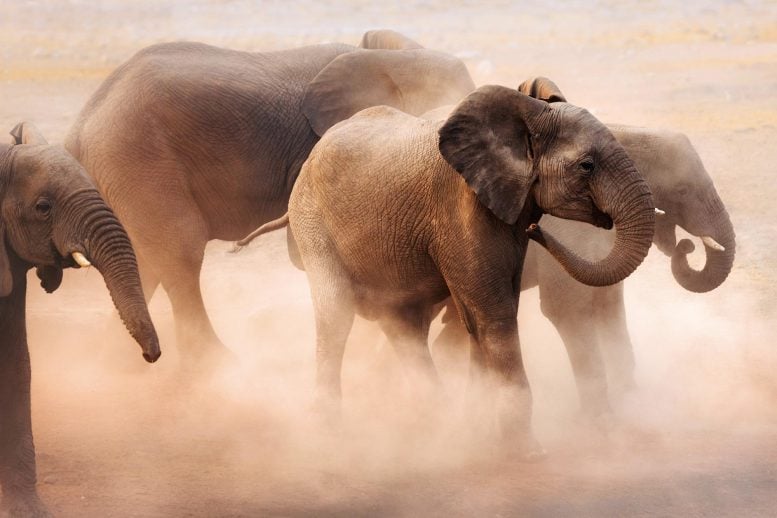
A study projects that the area at high risk of elephant crop raids could grow by 33% to 100% by 2085 across southern Africa.
Researchers examined raid records from 2004 to 2020 in 38 communal conservancies in Namibia and modeled risk across parts of Namibia, Botswana, Angola and Zambia.
Growing populations and expanding farmland were the strongest drivers of rising conflict in the study, while drier conditions also increased risk.
Elephants may raid crops when farms overlap with their habitat or when dry conditions reduce natural resources.
Crop raids can damage harvests and threaten farmers’ incomes, which can also weaken local support for wildlife conservation.
All four future scenarios predicted more raids and a wider spread of high-risk areas, with the largest increase under a scenario of high population growth and land conversion.
The study’s projections extend to 2085, but it does not describe a specific response or next step.

The area of Southern Africa facing a high risk of elephant crop raids could grow by 33% to 100% by 2085, a study projects.
Researchers say human population growth and farmland expansion are the main drivers of rising conflict risk.
Drier conditions in protected elephant habitats may also push elephants toward farms.
The study analyzed reported crop raids from 2004 to 2020 across 38 communal conservancies in Namibia.
All four modeled future scenarios showed more crop-raiding activity and a wider spread of high-risk areas.
- Who
- African savanna elephants and farming communities in Southern Africa.
- What
- A study projects that the area at high risk of elephant crop raids could expand by 33% to 100% by 2085.
- When
- By 2085; the historical crop-raid records analyzed covered 2004 to 2020.
- Where
- Southern Africa, with historical data from 38 communal conservancies in Namibia and analysis covering northern Botswana and parts of Angola and Zambia.
- Why
- Population growth, cropland expansion and drier conditions in protected elephant habitats are expected to increase encounters.
This story does not have two clearly opposing sides.
Researchers analyzed reported elephant crop raids across 38 communal conservancies in Namibia.
The study was published in PNAS Nexus.
All four modeled scenarios project increased crop-raiding activity and a wider distribution of high-risk areas.
- Projected high-risk area growth
- 33% to 100% by 2085
- Historical study area
- 38 communal conservancies in Namibia
- Historical records
- 2004 to 2020
- Southern Africa's savanna elephants
- More than 290,000, roughly 70% of the continent's population
- Regional rivalry scenario
- Wet-season crop raiding projected at approximately twice the level of the sustainable development scenario
1 source
What people are saying
We find that human population growth, cropland expansion, and climate-driven aridity in core elephant-protected areas drive conflict risk
Aggressive human land-use expansion leads to the most dramatic increases in conflict, with climate impacts playing a significant but smaller role