

Science & Tech · Science & Environment · 10 hrs ago
Thawing permafrost threatens forests in Yakutia and eastern Siberia
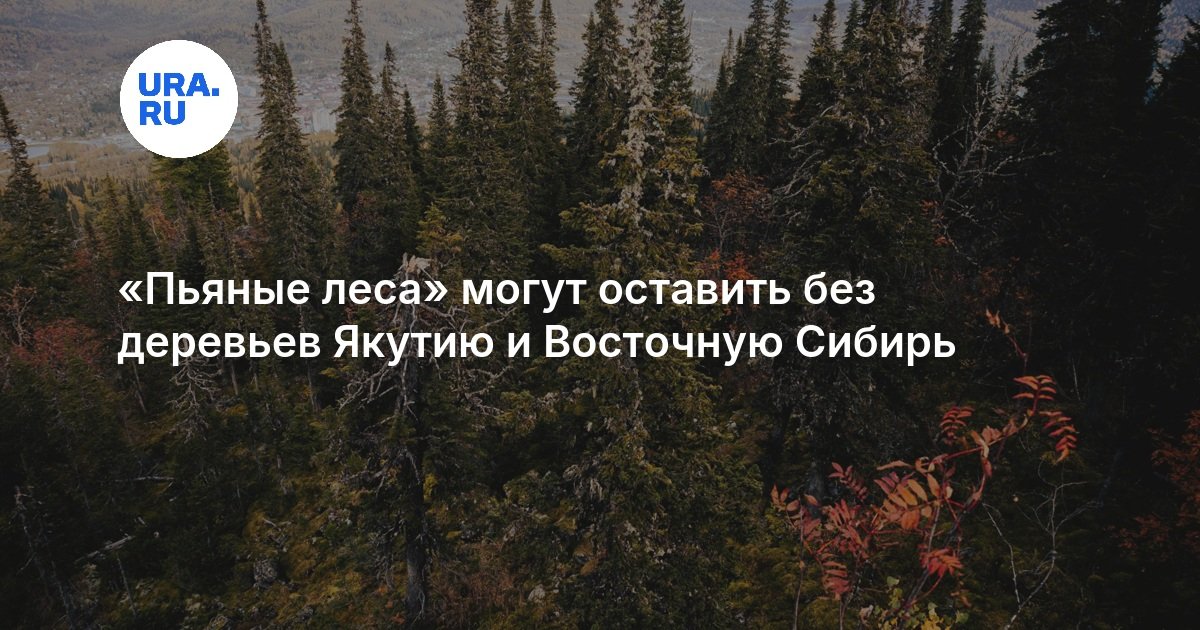
Thawing permafrost could put about 100,000 hectares of forest at risk in Yakutia and eastern Siberia.
The affected trees, sometimes called “drunken forests,” lean at unusual angles and may eventually fall and die.
The ground shifts as underground ice melts, leaving tree roots with less stable support.
The effect is especially visible in Yakutia, including areas between the Olyokma, Tokko, Aldan and Uchur river basins.
Some leaning trees keep growing, while others die; wetlands and small pools can form where forest is lost.
Fewer trees can mean faster thawing, because forest cover shades the ground, and exposed soil warms more quickly.
Thawing can also release ancient organic matter that microbes break down, producing carbon dioxide and methane; whether a leaning tree survives depends on local soil and root conditions.

Thawing permafrost could put about 100,000 hectares of forest in Yakutia and eastern Siberia at risk.
As underground ice melts, soil can sink or swell, leaving tree roots less able to support trunks.
Some trees tilt and fall, and wetlands or small bodies of water may form where forests die.
The loss of tree cover can speed further thawing because forests shade the ground.
Thawing soil can also release ancient organic matter that may produce carbon dioxide and methane as it decomposes.
- Who
- Forests and trees in Yakutia and eastern Siberia are at risk. Expert Ilya Rybальченко discussed factors affecting whether tilted trees survive.
- What
- Thawing permafrost is making some trees tilt and fall, threatening about 100,000 hectares of forest.
- When
- The reports were published on October 24, 2026. The sources do not state when the forest impacts began.
- Where
- Yakutia and eastern Siberia, especially in Yakutia between the basins of the Olyokma, Tokko, Aldan and Uchur rivers.
- Why
- Global warming is thawing underground ice and destabilizing the soil that supports tree roots.
This story does not have two clearly opposing sides.
Soil loses stability and may sink or swell, weakening the support for tree roots.
The ground receives more heat, which can accelerate permafrost thaw and further forest loss.
Microorganisms decompose it, potentially releasing carbon dioxide and methane into the atmosphere.
- At-risk forest
- About 100,000 hectares
- Affected regions
- Yakutia and eastern Siberia
- Noted area in Yakutia
- Between the Olyokma, Tokko, Aldan and Uchur river basins
- Potential gases
- Carbon dioxide and methane
3 sources
What people are saying
Наклонённое дерево не обязательно обречено на гибель.
наклонившееся дерево не обязательно обречено на гибель