

Science & Tech · Space · 11 hrs ago
Report names four lunar sites for future science missions
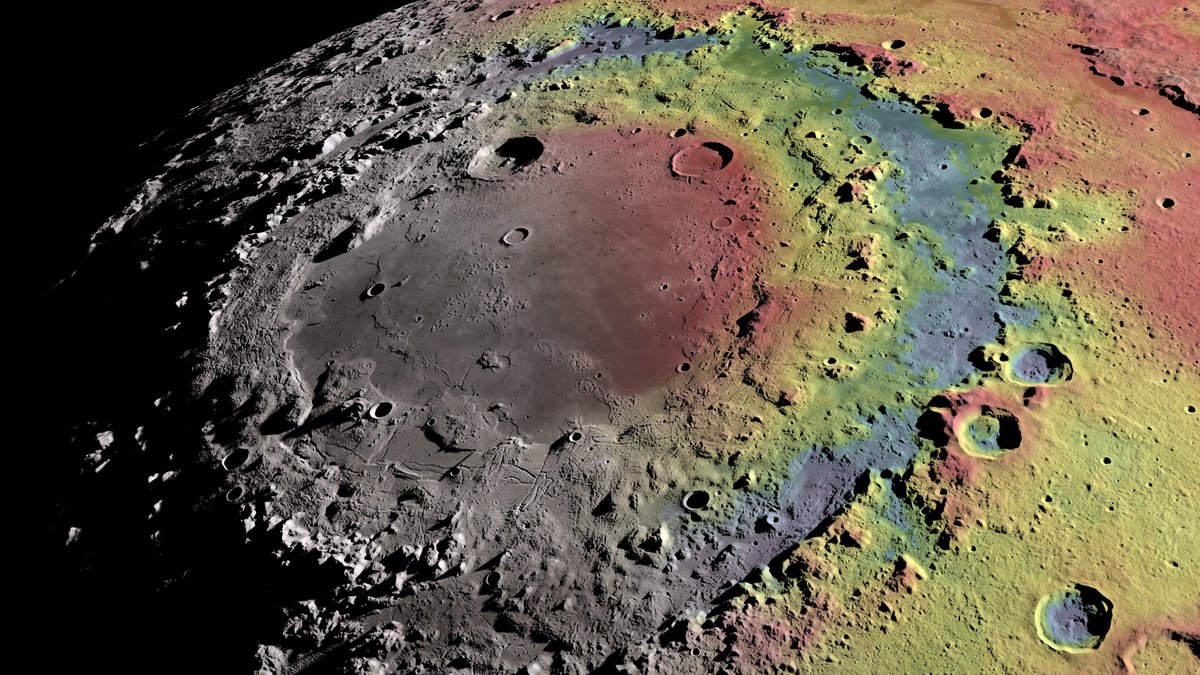
The National Academies panel recommends four sites for future human missions to the moon: Bhabha Crater, Mons Hadley, the Orientale Basin and the Aristarchus Plateau.
The report focuses on areas beyond the lunar south pole, where the United States and China are planning crewed missions.
NASA aims to send astronauts to the south pole in 2028, while China is targeting human landings there by 2030.
Each recommended site offers different research opportunities, including studying ancient impacts, volcanism and space weather.
The sites could reveal more about the moon and solar system and add scientific value to south-pole missions.
The moon could also serve as a testbed for methods to prevent Earth life from contaminating other worlds.
The panel says samples from some sites could be returned to Earth, but it does not give a timeline for missions to these destinations.

A National Academies report identifies four nonpolar lunar sites for future human science missions.
The recommended destinations are Bhabha Crater, Mons Hadley, the Orientale Basin and the Aristarchus Plateau.
The report says the sites could support research into lunar history, astronomy, space weather, impact craters and volcanic processes.
The recommendations are intended to add scientific value to missions alongside planned crewed journeys to the lunar south pole.
- Who
- The National Academies of Sciences, Engineering, and Medicine committee on key nonpolar lunar destinations.
- What
- A report names four sites to prioritize for future human science missions.
- When
- The article was published on October 21, 2026. The report’s release date is not stated.
- Where
- Four nonpolar sites on the Moon: Bhabha Crater, Mons Hadley, the Orientale Basin and the Aristarchus Plateau.
- Why
- The sites could help answer scientific questions about the Moon, the solar system and the universe.
This story does not have two clearly opposing sides.
NASA’s Artemis IV mission seeks to send astronauts to the lunar south pole.
China is targeting human landings at the lunar south pole.
- Recommended sites
- Bhabha Crater; Mons Hadley; Orientale Basin; Aristarchus Plateau
- Bhabha Crater
- On the lunar farside
- Mons Hadley
- Partly explored by Apollo 15 moonwalkers
- Orientale Basin
- One of the largest and best-preserved multiringed impact craters in the solar system
- Aristarchus Plateau
- A geologically rich volcanic landscape
- NASA Artemis IV
- Aims to send astronauts to the lunar south pole in 2028
What people are saying
Returning to the moon will be a great achievement for humanity—and setting foot where we never have before will be a major moment for science.