

Science & Tech · Space · 2 hrs ago
NYU Researchers Test How Simulated Microgravity Affects Human Cells
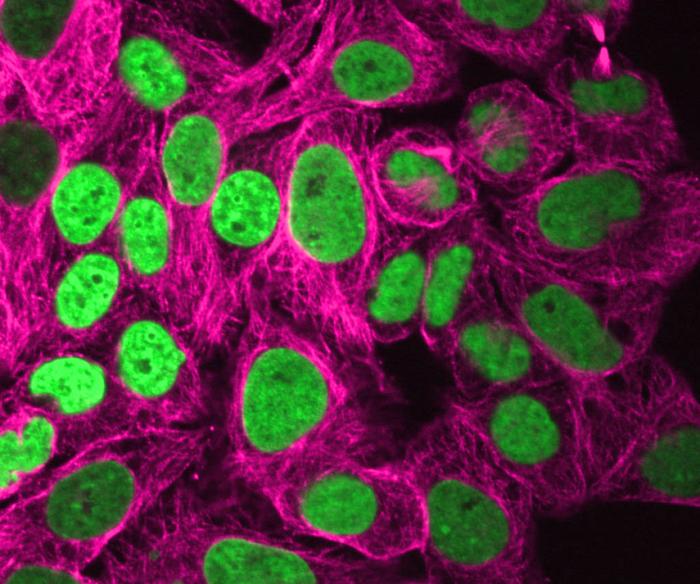
Researchers at New York University studied how reduced gravity affects human cells using a laboratory setup that simulates microgravity.
The work addresses a gap in understanding how gravity shapes the organization and function of the human genome.
Long stays in space have been linked to changes in astronauts’ muscles, bones, vision, heart and blood vessels, and nervous systems.
NASA’s Twins Study also found genetic-level effects, but the full impact of spaceflight on genes remains unclear.
The team rotated cell cultures along two axes and used imaging to examine them after 24 hours, while developing methods to reduce fluid movement that can complicate such experiments.
The researchers aim to separate gravity’s effects from other factors and improve understanding of how space travel affects people; the account gives no findings from the cell analysis.

Researchers at New York University built a device to study how simulated microgravity affects human cells.
The study aims to isolate gravity’s effects on human genes and examine how the genome functions in zero gravity.
The team used a Random Positioning Machine to rotate living cell cultures along two axes.
Researchers observed the cells after 24 hours of exposure to simulated microgravity or fluid flows.
The work is intended to improve understanding of how space travel affects people.
- Who
- Researchers at New York University’s Center for Soft Matter Research, led by the study team.
- What
- They tested how simulated microgravity and fluid flows affect living human cell cultures.
- When
- The article was published on October 17, 2026. The experiment date is not stated.
- Where
- At New York University, using a Random Positioning Machine; the specific experiment location is not stated.
- Why
- To isolate gravity’s effects on human genes and better understand how space travel affects people.
This story does not have two clearly opposing sides.
Researchers designed a Random Positioning Machine and rotated dishes of living cell cultures along two axes.
The team used advanced imaging to observe cells exposed to simulated microgravity or fluid flows.
- Institution
- New York University
- Device
- Random Positioning Machine (RPM)
- Exposure period
- 24 hours
- Cell culture motion
- Rotation along two different axes
- Article publication
- October 17, 2026
What people are saying
We wanted to know what gravity's role is in the genome's organization and function here on Earth.
To uncover it, you have to remove gravity as a force, so we simulated zero gravity in our experiments.