

Science & Tech · Science & Environment · 2 hrs ago
One Week of Contact With Healthy Coral Restarted Bleached Coral Recovery
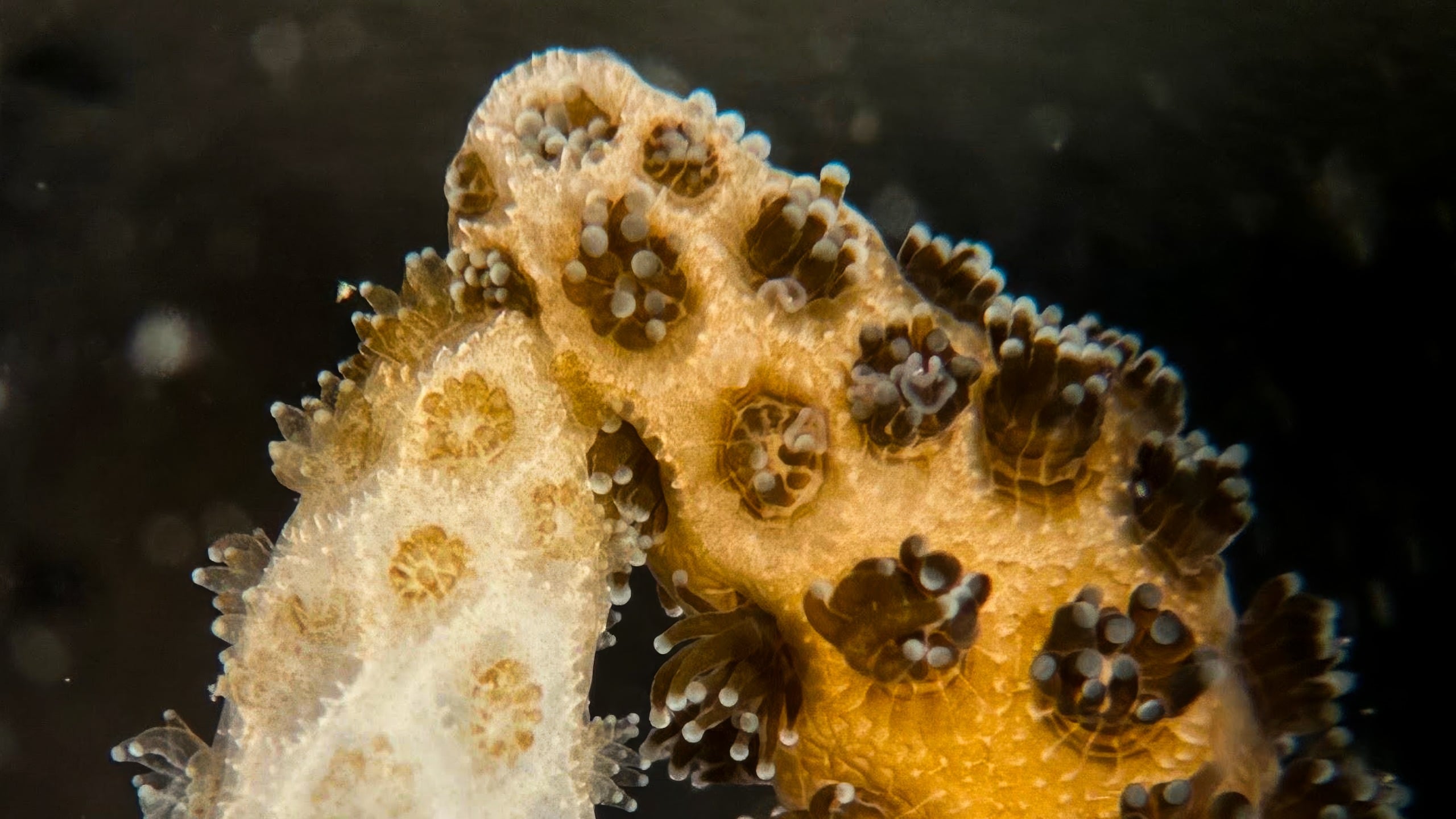
Stanford researchers found that healthy coral can help bleached coral recover by transferring algae to it through direct contact.
Corals rely on algae living inside them for food, but heat, pollution and ultraviolet exposure can cause them to lose the algae and turn white.
The two corals must touch and fuse to form a bridge through which algae and nutrients can pass.
One week of contact was enough to start recovery, and the bleached coral regained its color within up to seven weeks.
That is much faster than natural recovery, which can take months—long enough for a coral to die.
It is not yet known whether the method works on wild reefs, because the lab tests used coral pieces from the same colony.
The approach could help individual corals, but may not work at large scale as bleaching becomes more frequent and widespread.

A laboratory study found that one week of direct contact with healthy coral could restart recovery in bleached coral.
The healthy coral transferred algae and nutrients to its bleached neighbor through a tissue connection.
The bleached coral then recovered fully in up to seven weeks, even if the healthy coral was removed after the first week.
The researchers used genetically identical coral pieces from the same colony, and it remains unclear whether the method works on wild reefs.
Scientists said the approach might help individual corals but may not be practical at scale.
- Who
- Stanford scientists, including marine scientist Danny Collins, studied the coral.
- What
- They found that a week of direct contact with healthy coral could restart recovery in bleached coral.
- When
- The study was reported on October 14, 2026. The contact lasted one week.
- Where
- In a laboratory; the coral pieces came from the same colony.
- Why
- The researchers wanted to find a way to help bleached corals recover before they die.
This story does not have two clearly opposing sides.
Color began returning where a bleached coral fragment touched a healthy fragment in a lab tank.
Researchers found that contact with healthy coral had jump-started recovery in the bleached coral.
The bleached coral completed its recovery, whether contact continued or ended after the first week.
- Contact period
- One week was enough to jump-start recovery.
- Recovery time
- Up to seven weeks in total.
- Transfer mechanism
- Direct contact allowed algae and nutrients to pass through a tissue bridge.
- Experimental coral
- Pocillopora damicornis pieces came from the same colony.
- Research setting
- Laboratory; effectiveness on wild reefs remains unclear.
2 sources
What people are saying
While bleached corals may be dying, they are not dead yet
The question we wanted to answer is, once a coral has bleached, what can we do?
What we've found is that if we put a healthy coral in contact with a bleached coral, the healthy coral actually sends over algal symbionts and nutrients to the bleached coral, fully recovering it in a short period of time
I was blown away watching the actual color of this healthy coral slowly spread over into this bleached coral