

Science & Tech · Science & Environment · 59 mins ago
Bronze leg discovery points to a larger Roman presence in Scotland
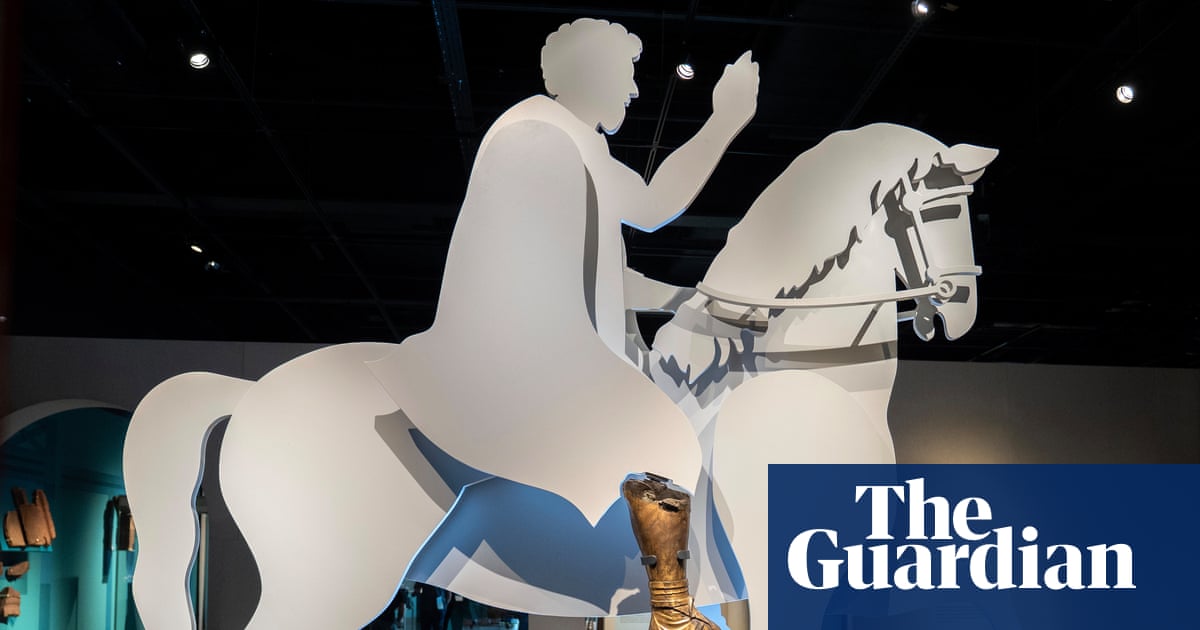
Archaeologists now link a bronze leg found in a Scottish bog to a statue of Roman emperor Antoninus Pius.
The object was dug up in 1820 and later kept at Dalkeith House near Edinburgh.
Earlier scholars thought it may have been looted from York, but researchers now believe it came from the Scottish Borders and was part of a statue near Hawick.
The statue may have been erected after Roman forces took control of southern Scotland around AD 140.
The find supports a view that Roman power extended farther north than historians once believed.
During the Antonine period, from AD 142 to 165, Romans occupied parts of Scotland, and curator Fraser Hunter estimates that about 10,000 troops were stationed across the south and east.
A major exhibition on Roman Scotland opens at the National Museum of Scotland in Edinburgh on Saturday, showing the leg alongside other finds, including artefacts from the Roman fort and town at Inveresk.

Archaeologists believe a bronze leg found in a Scottish bog came from a statue of Emperor Antoninus Pius erected near Hawick.
The discovery is helping support the view that Roman influence in Scotland was greater than previously thought.
The leg was dug up in 1820 and later kept for about 100 years in a storeroom at Dalkeith House.
It is the centrepiece of the largest exhibition ever staged on the Romans in Scotland, opening at the National Museum of Scotland in Edinburgh.
Curator Fraser Hunter estimates that about 10,000 Roman troops were stationed across southern and eastern Scotland during the Antonine period.
- Who
- Archaeologists and curators at the National Museum of Scotland are presenting the discovery.
- What
- A bronze leg is believed to have belonged to a large statue of Emperor Antoninus Pius on horseback.
- When
- It was dug up in 1820. The exhibition opens on Saturday; the article does not give the date.
- Where
- The leg was found in a bog in rural Scotland and is now displayed in Edinburgh.
- Why
- The discovery and other artefacts suggest Roman occupation and influence in Scotland were more extensive than previously realised.
Antiquarians
Archaeologists
Origin of the leg
Antiquarians
Antiquarians argued it had been looted, perhaps from York, and carried north.
Archaeologists
Archaeologists believe it came from the Scottish Borders and belonged to a statue erected near Hawick.
How it was removed
Antiquarians
Antiquarians suggested it had been hacked off by marauding Scottish tribes.
Archaeologists
Archaeologists believe it was carefully removed and deposited where it was found.
The bronze leg was dug up in a bog in rural Scotland.
Scholar James Curle said he could not visualise conditions that would have led to the statue being erected north of the Great Wall.
The exhibition opens at the National Museum of Scotland in Edinburgh.
- Find date
- 1820
- Believed statue location
- Near Hawick, Scottish Borders
- Emperor depicted
- Antoninus Pius
- Antonine occupation period
- AD142 to 165
- Estimated Roman troops
- About 10,000 across southern and eastern Scotland
What people are saying
We cannot visualise the conditions which would have led to its erection anywhere north of the Great Wall
These kind of things are not only visually dominant but they look really, really alien
You only find it in Inveresk. It’s not seen anywhere else in Scotland; it’s not seen anywhere in the UK.