

Science & Tech · Space · 7 hrs ago
Perseverance confirms organic carbon in two rocks on Mars
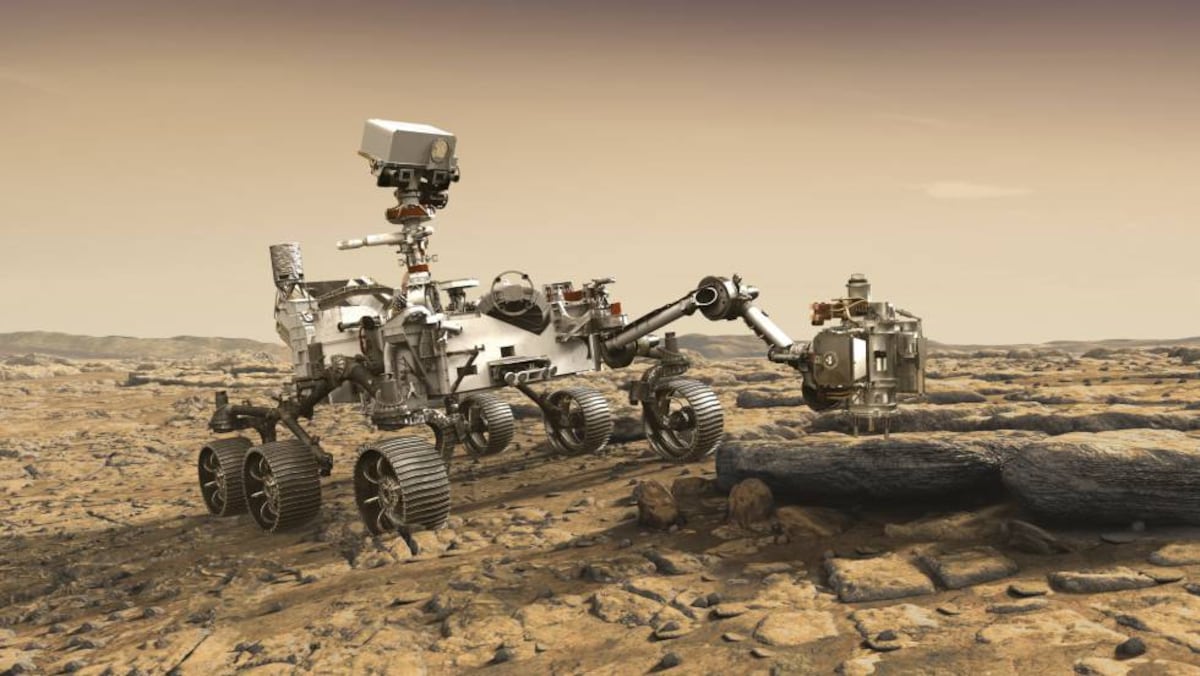
NASA’s Perseverance rover found organic carbon in two rocks in the Bright Angel formation inside Mars’s Jezero crater.
Organic carbon is a building block of life, but it can also form through chemical processes without living things.
The rover used its SHERLOC instrument to examine the rocks, where the material lay just microns below the surface.
Finding it so close to the surface is unusual because radiation and oxidants can break down organic material there.
Perseverance had earlier identified a possible sign of past life in a rock from the same formation, and the new finding confirms organic carbon is present.
The discovery does not show that Mars had life, and the rover cannot determine whether the rocks preserve fossils.
More sensitive laboratory tests on Earth may help answer that question, but the sources do not say when or how those tests will happen.

Scientists have confirmed organic carbon in two rocks examined by NASA’s Perseverance rover in the Bright Angel formation inside Mars’ Jezero crater.
The material was found just micrometres below the rocks’ surfaces, where radiation and oxidants usually break down organic compounds.
The carbon is macromolecular, but it can form through biological or non-biological processes and does not prove that life existed on Mars.
The findings add evidence that ingredients necessary for life may have been present across wide regions of ancient Mars.
- Who
- A scientific team studying samples examined by NASA’s Perseverance rover.
- What
- The team confirmed organic carbon in two Martian rocks. Its presence does not prove that life existed.
- When
- The article was published on November 13, 2026. The date of the confirmation is not stated.
- Where
- In the Bright Angel formation in Jezero crater on Mars.
- Why
- The finding adds information about whether Mars could have supported life in the past.
This story does not have two clearly opposing sides.
NASA announced that Perseverance had identified a possible biosignature in a rock nicknamed Cheyava Falls, in Bright Angel.
Cinco Días reported that a scientific team had confirmed organic carbon in two rocks examined by Perseverance in Bright Angel.
- Rover
- NASA’s Perseverance
- Formation and crater
- Bright Angel, Jezero crater
- Rocks
- Two
- Material
- Macromolecular organic carbon
- Depth
- A few micrometres below the surface
- Earlier finding
- Possible biosignature announced in August 2025