

Science & Tech · Space · 12 hrs ago
Perseverance Data Shows Martian Dust Is Less Abrasive but Still Hazardous
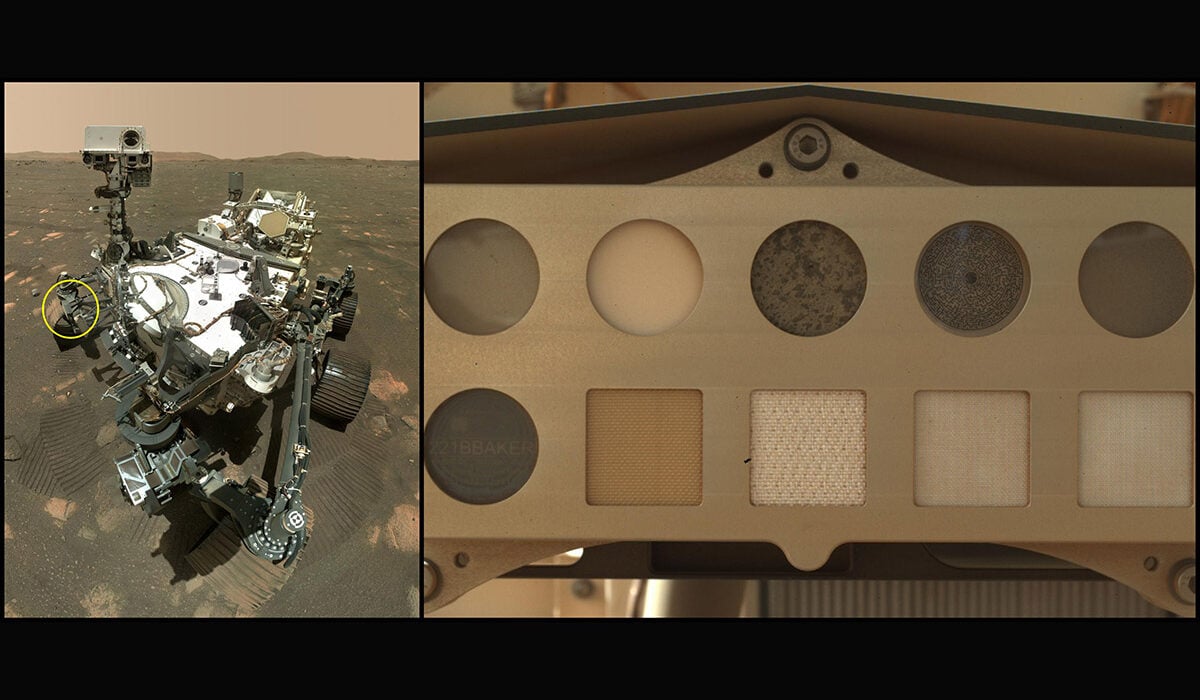
A team led by Washington University in St. Louis used NASA's Perseverance rover to study Martian dust on small pieces of spacesuit material.
The samples had been exposed to the Martian atmosphere for 1,645 Martian days.
The material showed little visible wear, and the dust grains were smoother than those found on the Moon.
That suggests Martian dust may be less abrasive than lunar dust, but it does not make the dust safe.
Researchers found very fine particles, along with perchlorates and other toxins that could pose health risks if breathed in.
The dust is also electrically charged and can stick to surfaces, potentially carrying it into astronaut habitats.
The findings point to the need for astronaut training to prepare for dust exposure during future Mars missions.

Data from NASA’s Perseverance rover found little visible wear on spacesuit material after 1,645 Martian days of exposure to dust.
The study found that Martian dust particles were smoother than jagged lunar grains, suggesting they may be less abrasive to equipment.
The dust can still pose health risks because it contains perchlorates and other toxins and includes ultrafine particles.
Researchers say the findings highlight the need to prepare astronauts for Mars’ dusty environment.
- Who
- Researchers led by Washington University in St. Louis Assistant Professor Scott VanBommel.
- What
- A study used Perseverance rover data to examine Martian dust and its effects on spacesuit material.
- When
- The material had been exposed for 1,645 Martian days, or sols. The study’s publication date is not stated.
- Where
- On Mars, using data from NASA’s Perseverance rover.
- Why
- To assess dust risks and help prepare astronauts for the Martian environment.
This story does not have two clearly opposing sides.
Perseverance’s spacesuit-material swatches were exposed to the Martian atmosphere.
Researchers used PIXL data to examine the swatches and characterize dust particles.
- Exposure period
- 1,645 Martian days (sols)
- Rover instrument
- Planetary Instrument for X-ray Lithochemistry (PIXL)
- Fine particles
- 2.5 µm or smaller
- Ultrafine particles
- As small as 100 nanometers in diameter
- Study lead
- Scott VanBommel, Washington University in St. Louis
What people are saying
The electrostatic properties of Martian dust are likely causing it to preferentially adhere to some surfaces,