

Business · Markets · 15 hrs ago
Rupiah slips to 18,103 per US dollar
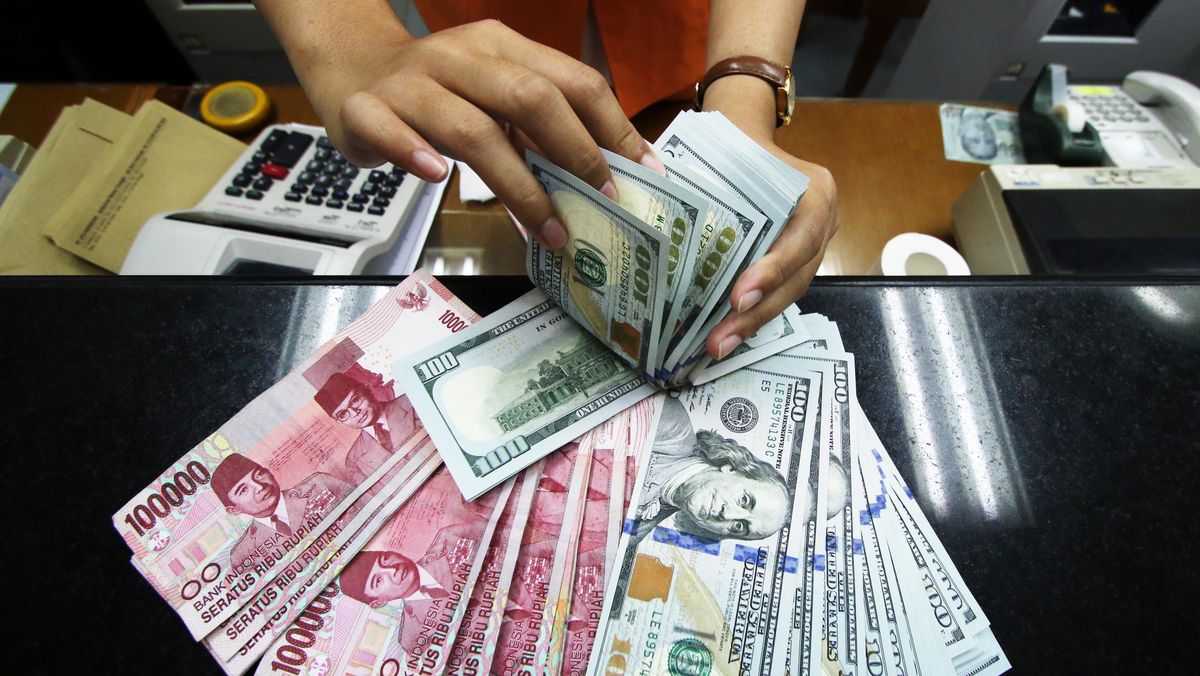
The rupiah fell to 18,103 per US dollar on Monday morning, November 9.
That was a drop of 14 points, or 0.08%, from the previous trading session.
Asian currencies moved in mixed directions, with the Chinese yuan and Philippine peso among those that weakened while the Japanese yen and South Korean won rose.
Currency analyst Lukman Leong said strong US jobs data lifted the dollar, putting pressure on the rupiah.
He said hopes for peace in the Middle East could limit the rupiah's decline.
Leong expected the rupiah to trade between 18,100 and 18,150 per dollar during the day.

The rupiah weakened to 18,103 per US dollar on Monday morning, November 9.
It fell 14 points, or 0.08 percent, from the previous trading session.
Currency analyst Lukman Leong said stronger-than-expected US employment data had supported the dollar.
He said hopes for peace in the Middle East could limit the rupiah’s decline.
Leong forecast the rupiah would trade between 18,100 and 18,150 per US dollar that day.
- Who
- The Indonesian rupiah and US dollar. Currency analyst Lukman Leong commented on the market.
- What
- The rupiah weakened to 18,103 per US dollar, down 14 points or 0.08 percent.
- When
- Monday morning, November 9, 2026.
- Where
- In trading reported from Jakarta, Indonesia.
- Why
- The dollar strengthened after US employment data came in much better than expected. Hopes for peace in the Middle East could limit the rupiah’s decline.
This story does not have two clearly opposing sides.
US employment data came in much better than expected, supporting the US dollar.
The rupiah traded at 18,103 per US dollar, down 14 points from the previous session.
Lukman Leong forecast a trading range of 18,100 to 18,150 per US dollar.
- Exchange rate
- 18,103 rupiah per US dollar
- Change
- Down 14 points, or 0.08 percent
- Date
- Monday, November 9, 2026
- Forecast range
- 18,100–18,150 rupiah per US dollar
What people are saying
The rupiah is expected to weaken against the US dollar, which strengthened after US employment data, or NFP, was much better than expected. However, strong hopes for peace in the Middle East could limit the decline.