

Science & Tech · Science & Environment · 3 hrs ago
US-German team launches $13.3 million fusion research center
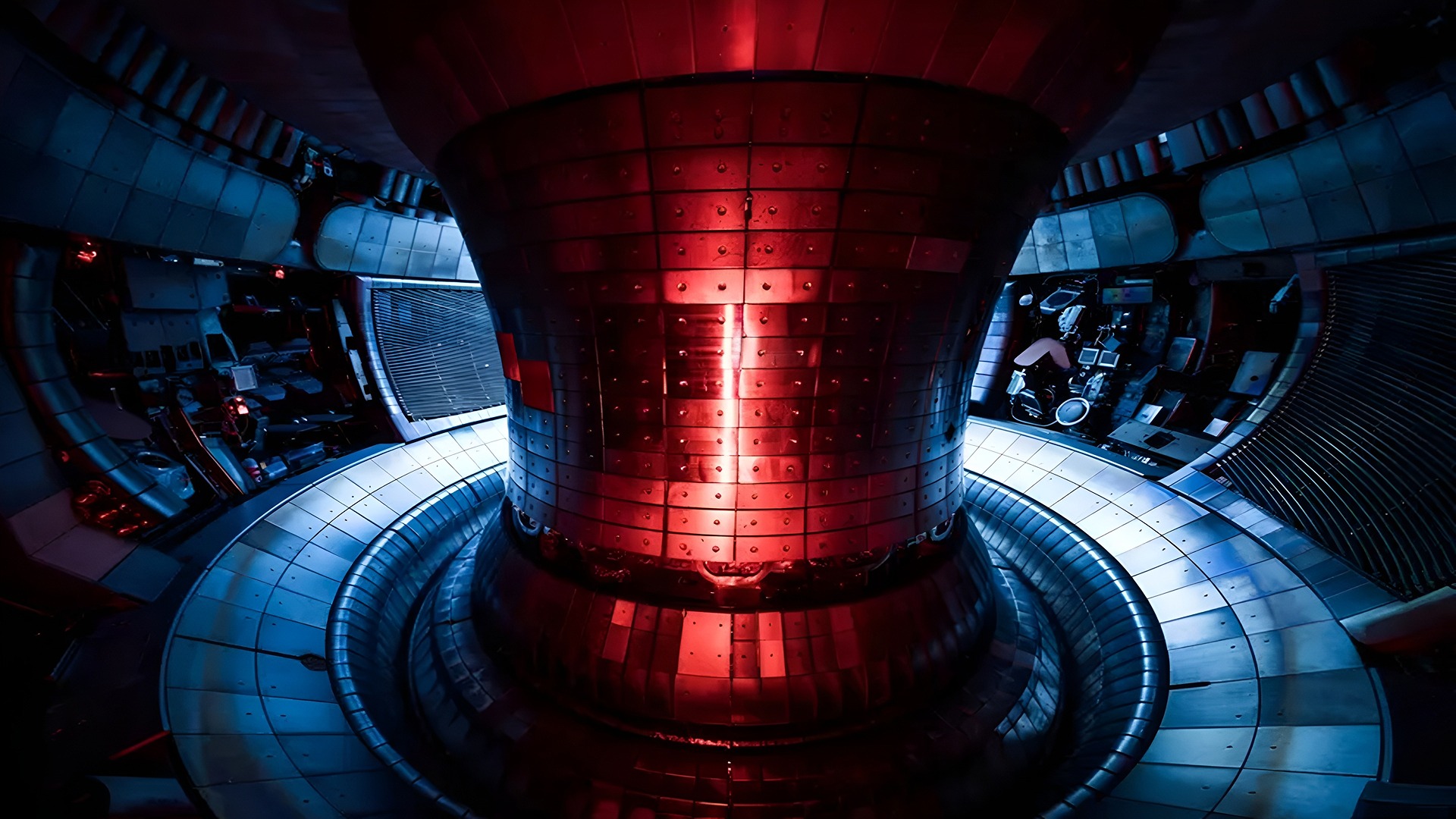
Columbia University and Germany’s Max Planck Institute for Plasma Physics are joining forces to study ways to improve fusion technology.
Their new center will focus on tokamaks and stellarators, two kinds of machines that use magnetic fields to contain extremely hot plasma.
Tokamaks use electric currents in the plasma to help confine it, while stellarators rely on complex external magnetic coils and may be better suited to continuous operation.
The researchers aim to combine advantages of both designs to improve plasma stability and make future reactors more practical.
The work will also tackle extreme heat, sudden plasma disruptions and superconducting magnets, challenges that stand in the way of fusion power.
The five-year project has $13.3 million in funding from U.S. sources and the Max Planck Institute for Plasma Physics.
The center is scheduled to begin work in 2027, with researchers using major fusion facilities in Germany and opportunities for early-career scientists to work across the partner institutions.

Columbia University and Germany’s Max Planck Institute for Plasma Physics are launching a $13.3 million fusion research center.
The center will study tokamak and stellarator designs to address scientific and technical challenges on the path to fusion power.
The five-year project is scheduled to begin in 2027.
Researchers will work with two major German fusion facilities and take part in experiments there.
The center will also involve private-sector researchers and offer international placements for early-career scientists.
- Who
- Researchers from Columbia University and Germany’s Max Planck Institute for Plasma Physics, with private-sector researchers invited to participate.
- What
- They are launching a $13.3 million virtual research center to study tokamak and stellarator fusion designs.
- When
- The center is scheduled to begin work in 2027 and will initially operate for five years.
- Where
- The partner institutions are in the United States and Germany; experiments will involve facilities in Greifswald and Garching.
- Why
- The project aims to combine the strengths of two fusion designs and address scientific and technological challenges on the path to fusion power.
This story does not have two clearly opposing sides.
Interesting Engineering reported that U.S. and German researchers are launching the center.
The center is scheduled to begin work.
- Total project funding
- $13.3 million
- U.S. funding
- $7.5 million
- Max Planck IPP funding
- €5 million
- Project duration
- Five years initially
- German fusion facilities
- Wendelstein 7-X in Greifswald and ASDEX Upgrade in Garching
What people are saying
The Max Planck Columbia Center will bring together two leading institutions in plasma physics and fusion research. We aim to combine the strengths of tokamaks and stellarators to address key scientific and technological questions on the path toward a fusion power plant.
In partnership, we will be able to provide unique opportunities both to develop the fusion workforce and to advance key open scientific questions on the path to fusion energy.