

Business · Markets · 3 hrs ago
Economist says geopolitics poses greater risk to the rupiah than MSCI concerns
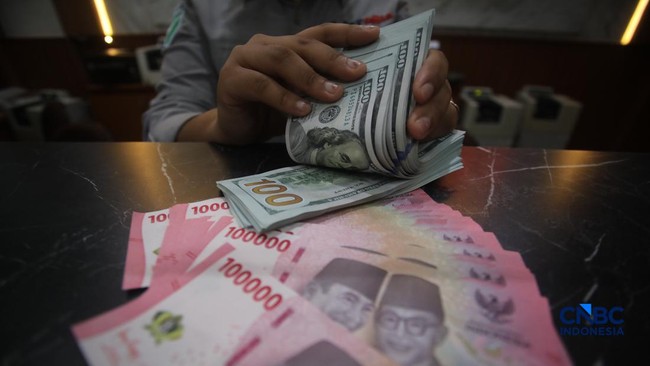
Bank Danamon economist Irman Faiz says geopolitics poses a bigger risk to Indonesia’s rupiah than MSCI concerns.
MSCI is considering whether to downgrade Indonesia’s stock market from emerging-market to standalone status, and that prospect has been linked to a fall in the Jakarta stock index and foreign stock sales.
Faiz says stock-market outflows have a limited direct effect on the rupiah because investors may move the money into other Indonesian assets instead of taking it out of the country.
He estimates that each US$100 million leaving stocks leads to a depreciation of 11 to 12 rupiah from the previous level.
Geopolitical tensions can affect both stocks and government bonds, while higher oil prices may raise global inflation and keep interest rates high.
Investors may then shift toward safer assets in developed countries, strengthening the US dollar and putting pressure on the rupiah.
Faiz expects the MSCI-related effect to remain limited until a decision due in June 2027 on Indonesia’s market classification.

Bank Danamon chief economist Irman Faiz said geopolitical risks pose a greater threat to the rupiah than concerns about MSCI’s assessment of Indonesia’s stock market.
He said worsening geopolitical conditions can drive foreign investors out of both stocks and bonds, while stock-market outflows alone have a smaller direct effect on the currency.
Faiz said tensions in the Middle East can raise global oil prices and inflation, prolong high interest rates and strengthen demand for safer assets such as the US dollar.
He said investors may wait for MSCI’s final decision in June 2027 on whether Indonesia remains an emerging market or is reclassified as a standalone market.
- Who
- Irman Faiz, chief economist at Bank Danamon.
- What
- He said geopolitical risks are a greater fundamental threat to the rupiah than negative sentiment about MSCI.
- When
- He made the comments on November 5, 2026. MSCI’s final decision is expected in June 2027.
- Where
- At a Bank Indonesia media briefing in Sabang, Aceh.
- Why
- Geopolitical tensions can affect capital flows from both stocks and bonds and can strengthen demand for safer assets, including the US dollar.
This story does not have two clearly opposing sides.
Faiz made his comments at a Bank Indonesia media briefing in Sabang, Aceh.
Faiz said investors may wait for MSCI to decide whether Indonesia remains an emerging market or becomes a standalone market.
MSCI is expected to announce its decision on the status of Indonesia’s stock market.
- Economist
- Irman Faiz, Bank Danamon chief economist
- Briefing location
- Sabang, Aceh
- MSCI decision
- Expected in June 2027
- Stock outflows
- Foreign investors’ net selling reached Rp16.5 trillion
- Estimated sensitivity
- US$100 million in stock outflows was associated with Rp11–12 of rupiah depreciation, according to Faiz’s study
What people are saying
The bigger factors affecting the rupiah are geopolitics; if geopolitical conditions improve, active funds still enter Indonesia’s stock market, but if they worsen, those funds tend to leave.
The direct impact of outflows from the stock market should be smaller.
The impact of MSCI may be limited in its direction before a final decision takes place.