

Science & Tech · Science & Environment · 4 hrs ago
NASA Astronaut Photographs Moon-Like Rock Formation in Madagascar
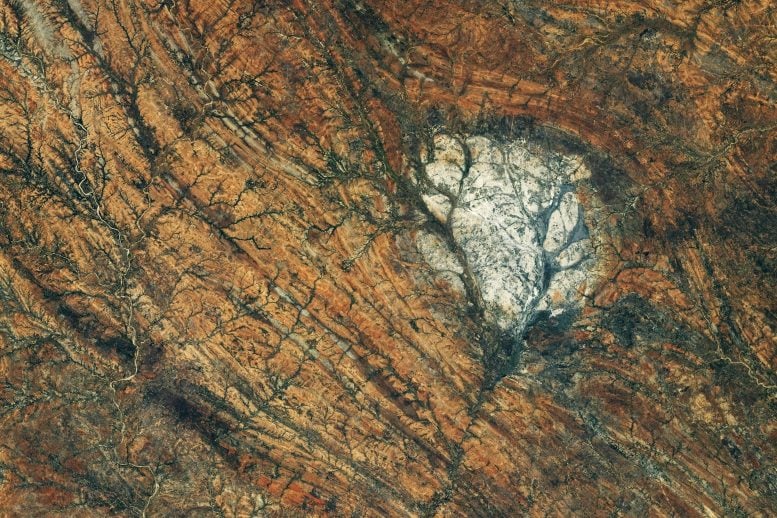
An astronaut photographed the Saririaky anorthosite massif from the International Space Station on August 28, 2026.
The formation is in southern Madagascar and covers about 100 square kilometers.
Anorthosite is a bright igneous rock found on Earth and in the Moon’s highlands, the pale areas visible on the lunar surface.
The Madagascar rocks are at least 600 million years old, while similar rocks on the Moon are more than 4 billion years old.
Geologists think ancient continental collisions during the assembly of Gondwana stretched and altered the rocks around the massif.
A second nearby anorthosite body may once have been connected to it, but that remains a hypothesis.
Earth’s anorthosite formations help scientists study the Moon’s early history, especially because the number of lunar rock samples is limited.

A NASA astronaut photographed the Saririaky anorthosite massif in southern Madagascar from the International Space Station on August 28, 2026.
The rock formation contains anorthosite, a rock type also found in the Moon’s bright highlands.
Scientists believe the massif formed at least 600 million years ago.
The exposed formation covers about 100 square kilometers.
Researchers study Earth anorthosite formations to learn more about the Moon’s early history.
- Who
- An unnamed NASA astronaut aboard the International Space Station took the photograph.
- What
- The astronaut photographed the Saririaky anorthosite massif, a large formation of Moon-like rock.
- When
- August 28, 2026.
- Where
- Southern Madagascar.
- Why
- The reason for taking the photograph is not stated. Earth anorthosite formations can help scientists investigate the Moon’s early history.
This story does not have two clearly opposing sides.
The Saririaky massif is believed to have originated at least 600 million years ago.
Continental collisions deformed rocks in the region, according to geologists’ account.
An astronaut aboard the International Space Station photographed the massif.
SciTechDaily published its article about the formation.
- Formation
- Saririaky anorthosite massif
- Location
- Southern Madagascar
- Photograph date
- August 28, 2026
- Estimated age
- At least 600 million years
- Exposed area
- Approximately 100 square kilometers (40 square miles)
- Rock type
- Anorthosite