

Business · Economy · 11 hrs ago
China’s stock slump threatens its plan to fund AI growth
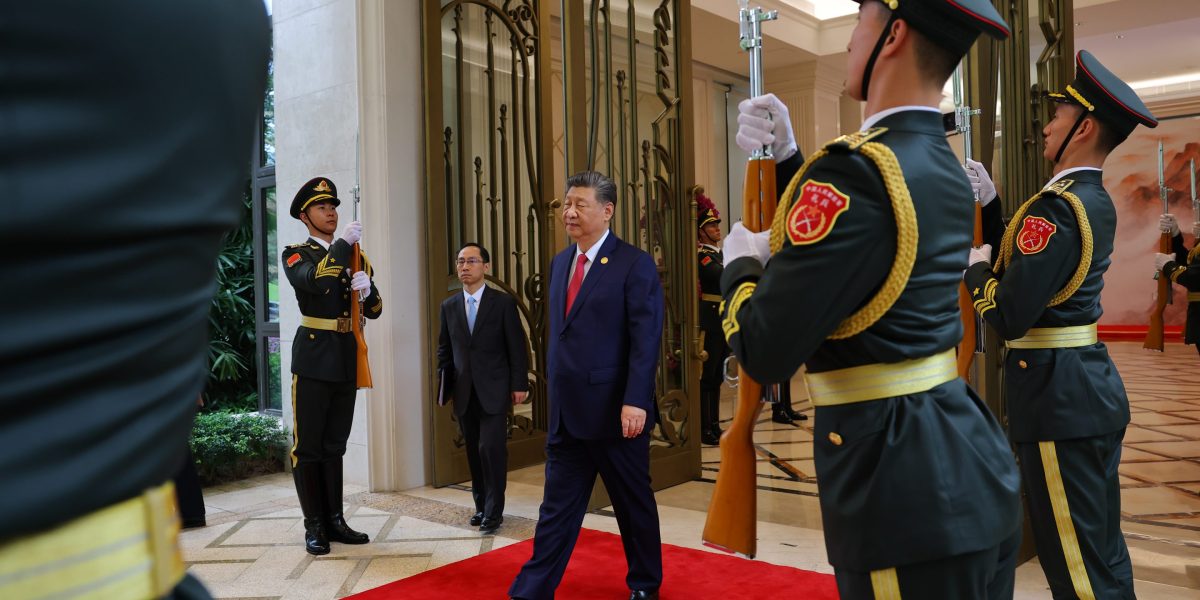
China’s STAR 50 index has fallen 44% from its summer high, raising concerns about the country’s economy and President Xi Jinping’s plans.
Beijing wants households to invest more in shares so the stock market can help fund AI development and reduce reliance on property.
A weak housing market has already hurt consumer demand, while property investment fell nearly 22% in October.
Many households remain wary of stocks after past crashes and a government crackdown on the technology sector in 2020.
Yardeni Research warns an AI bubble burst could further weaken Xi’s economic plan by erasing wealth and making it harder to shift investment away from property.
China’s government has made stabilizing capital markets a priority, and regulators have eased rules for company buybacks while discouraging some share sales.

China’s STAR 50 index has fallen 44% from its high this summer, threatening Beijing’s effort to use stock-market investment to help fund artificial intelligence growth.
Yardeni Research warned that a stock-market slump could undermine President Xi Jinping’s plan to shift savings away from property and finance AI development.
The housing downturn has weighed on consumer demand, while October data showed property investment fell nearly 22%.
Yardeni said Chinese stocks have faced pressure from competition, higher taxes and energy costs, tariffs, and possible export restrictions by trading partners.
Retail investors remain wary after the government’s 2020 tech crackdown and repeated market busts.
- Who
- President Xi Jinping and China’s government are seeking to fund AI growth through a stronger stock market; Yardeni Research warned of the risks.
- What
- A steep fall in Chinese stocks threatens Beijing’s plan to channel household savings into the market and support AI investment.
- When
- The index has fallen from its high this summer; the article was published on November 21, 2026.
- Where
- China.
- Why
- Market declines and investor wariness threaten the effort to shift savings from property into stocks and finance AI development.
This story does not have two clearly opposing sides.
Xi’s team pledged to shrink the state-owned enterprise universe.
A stock-market crash required an aggressive rescue by state-backed institutions.
Xi’s government cracked down on China’s tech sector.
The STAR 50 index reached a high before falling 44%.
Premier Li Qiang said stabilizing capital markets was the top priority for the rest of the year.
Property investment fell nearly 22%, according to data cited in the article.
- STAR 50 decline
- 44% from its high this summer
- Nasdaq decline
- 18% from its record
- Property investment
- Fell nearly 22% in October
- Real estate share of household wealth
- Roughly 70% in China
- China GDP growth
- Nearly sixfold since the Shanghai Composite’s October 2007 peak
What people are saying
To keep AI funding flowing, Xi needs a buoyant stock market.
Yet this is a moment of real danger for Xi. A bursting AI bubble would not merely erase wealth or dent China’s technological prestige. It would weaken Beijing’s attempt to replace a broken property model with a stock-market-led one.
China can build world-class AI models, train engineers, and spend billions on chips. But if its households still view Shanghai as a casino with odds set by the Politburo, Xi’s dream of creating a Chinese version of Wall Street may remain just that: a dream.