

Business · Companies · 1 hr ago
German automakers face labor disputes as profits fall
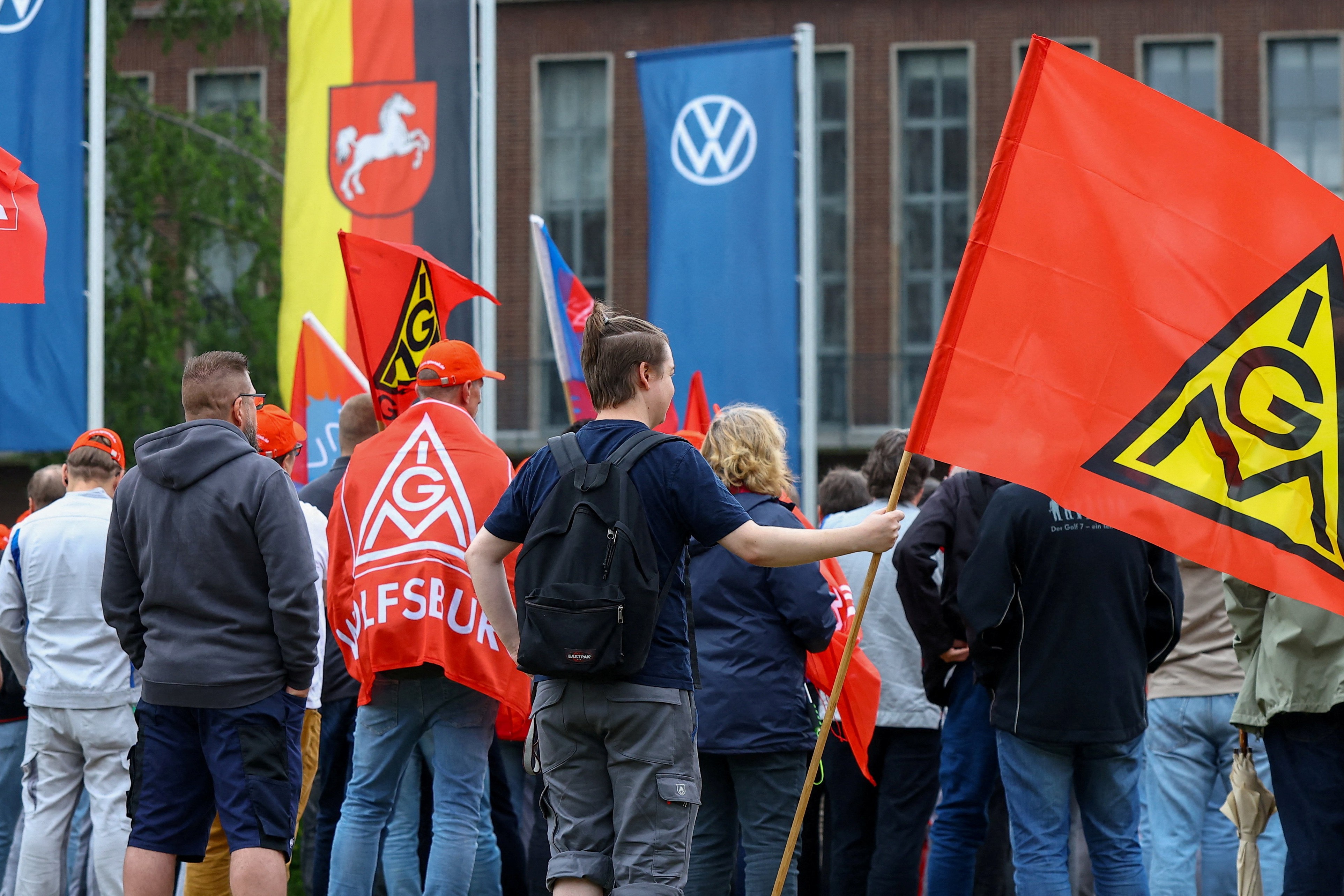
German automakers are facing months of tense labor talks and possible strikes over job cuts and factory closures.
The pressure is driven by weaker demand, US tariffs and competition from China, which are reducing profits that once helped cover Germany's high production costs.
Volkswagen, Mercedes-Benz, Bosch and Schaeffler have announced plans to cut thousands of jobs and reduce investment.
Volkswagen and IG Metall are beginning decisive talks about job and wage cuts at Europe's largest carmaker, and the union says it will strongly resist the company's demands.
Volkswagen says deep cost cuts are needed to stay competitive, while the union has threatened strikes from January 1 if there is no agreement.
A Volkswagen plan for its European factories is due by June 2027, including options for four German sites without replacement vehicle models planned; they could be repurposed or closed over the next decade.
The talks could shape jobs and factories across Germany's auto industry, where falling profits are also squeezing suppliers.

German automakers face months of labor talks and strikes over job cuts and possible factory closures as profits weaken.
Volkswagen, Mercedes-Benz, Bosch and Schaeffler have announced plans to cut thousands of jobs and reduce investment.
Volkswagen is set to hold decisive talks with Germany’s IG Metall union over staffing and pay cuts.
IG Metall has vowed strong resistance and threatened strikes at Volkswagen from January 1 if no agreement is reached.
The companies cite Chinese competition, US tariffs and weaker demand as factors eroding profits.
- Who
- German automakers, including Volkswagen, Mercedes-Benz, Bosch and Schaeffler, and their workers and unions.
- What
- Companies are planning job cuts and reduced investment, while labor talks and strikes concern staffing, pay and possible factory closures.
- When
- The dispute is expected to involve months of negotiations; Volkswagen’s decisive talks with IG Metall begin November 24.
- Where
- Germany, with Volkswagen’s plans also covering its European factories.
- Why
- Chinese competition, US tariffs and weaker demand are reducing profits that had helped offset Germany’s high labor and production costs.
German automakers
IG Metall
Job cuts and costs
German automakers
Volkswagen says deep cost cuts are needed to remain competitive.
IG Metall
IG Metall has promised strong resistance to the company’s demands on jobs and pay.
Possible factory closures
German automakers
Volkswagen says four German plants have no successor vehicle models planned and says closures may be considered if other options are unavailable.
IG Metall
The union opposes the company’s demands and has threatened strikes if no agreement is reached.
Volkswagen recorded its biggest operating loss in more than a decade.
Volkswagen is due to begin decisive talks with IG Metall on staffing and pay cuts.
IG Metall has threatened strikes at Volkswagen from this date if no agreement is reached.
Volkswagen plans to finalize a plan for its European factories.
- Automotive worker pay
- €65 per hour in Germany
- Mercedes-Benz automotive profit margin
- 1.9% in the first nine months, down from 14.9% four years earlier
- BMW automotive profit margin
- 3.5% in the first nine months, down from 8.7% four years earlier
- European supplier operating margins
- 2.9% forecast for this year, compared with 7.1% in 2018
- Volkswagen factories
- Four German units have no successor vehicle models planned, according to the company
3 sources
What people are saying
The unions are in a very difficult position because companies are not making profits, are not investing and management is increasingly determined to try to impose changes.
It was out of the question that an agreement could be reached this year.
We need to ensure that we overcome the current tsunami in the sector and that companies do not become insolvent in the medium term. IG Metall must also be aware of that.