

Business · Economy · 3 hrs ago
Indonesia’s middle-class population fell by nearly 10 million in five years
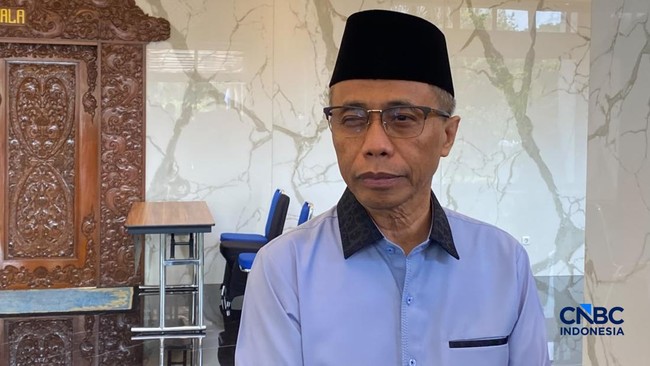
Indonesia’s middle-class population fell from over 57 million in 2019 to 47.85 million in 2024, according to Deputy Coordinating Minister for Economic Affairs Dradjad H. Wibowo.
The decline does not necessarily mean people have stopped spending, he said, because jobs and sources of income are changing as the economy shifts.
Technology, artificial intelligence and geopolitical changes are putting pressure on some traditional industries, including textiles and footwear, while services such as transport, hotels and restaurants are growing.
Spending patterns are changing too: people may buy smaller amounts and use online shopping more, while spending in several service sectors is growing faster than in textiles and footwear.
The change matters because middle-income and aspiring middle-income households account for over 80% of household consumption, a key support for Indonesia’s economy.
The government plans internships for 150,000 people and vocational training for 300,000 in 2027, alongside tax and other support for workers and households.
Wibowo says workers need skills suited to new jobs, with tourism and the creative economy expected to provide more work.

Indonesia’s middle-class population fell by nearly 10 million people between 2019 and 2024, according to figures presented by Deputy Coordinating Minister for Economic Affairs Dradjad H. Wibowo.
The group numbered more than 57 million, or about 21.5% of the population, in 2019 and 47.85 million, or about 17%, in 2024.
Dradjad said the decline should not be read solely as a fall in purchasing power, citing shifts in jobs, income sources and consumer behavior.
He pointed to technology, artificial intelligence and geopolitical changes as factors reshaping employment, with some traditional sectors under pressure and services growing.
The government plans job training, internships and tax incentives to help workers adapt to the changing economy.
- Who
- Indonesia’s middle-class population; Dradjad H. Wibowo presented the figures and discussed possible causes.
- What
- The population fell by nearly 10 million between 2019 and 2024.
- When
- The figures compare 2019 with 2024; Dradjad discussed them on November 5, 2026.
- Where
- Indonesia.
- Why
- Dradjad cited changes in employment and economic activity, including technology, AI and geopolitical shifts, as factors. He said changing consumption and income patterns also affect how the decline is understood.
This story does not have two clearly opposing sides.
Indonesia had more than 57 million people in the middle class, about 21.5% of the population.
The middle-class population was 47.85 million, about 17% of the population.
Dradjad discussed the decline and its possible causes in an interview with CNBC Indonesia.
The government plans internships for 150,000 participants and vocational training for 300,000 people.
- Middle class in 2019
- More than 57 million people; about 21.5% of the population
- Middle class in 2024
- 47.85 million people; about 17% of the population
- Internships planned for 2027
- 150,000 participants
- Vocational training planned for 2027
- 300,000 people
- Income tax relief
- The article says the program reaches about 7.5 million workers and covers workers earning under Rp10 million
- Home purchase VAT incentive
- Applies to homes priced up to Rp2 billion
What people are saying
This is indeed an economic transformation. There is technological disruption, AI, geopolitics.
So it does not mean purchasing power has disappeared, but there has been a shift.
So we have to look at how this transformation is happening, and how our workforce can adapt.