

World · Africa · 4 hrs ago
Critically endangered hooded vultures arrive at Chester Zoo
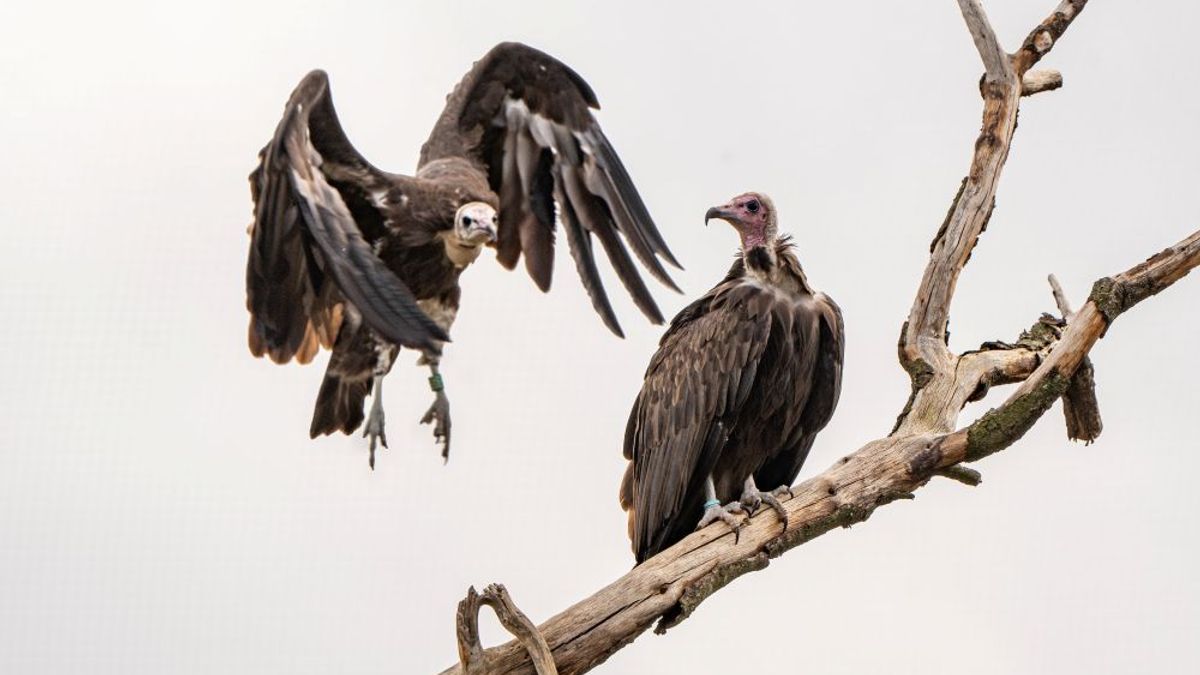
Chester Zoo has welcomed its first pair of hooded vultures, a species classified as critically endangered.
The birds, named Claudia and Alan, are part of a Europe-wide conservation breeding program.
Zoo keepers hope the pair will have chicks, which would be a first for Chester Zoo.
Hooded vultures are native to parts of sub-Saharan Africa and have declined mainly because of poaching and pesticide exposure.
Their numbers have fallen sharply, and many other Old World vulture species are also threatened.
Vultures help clear away dead animals, which can reduce the spread of some diseases.
The zoo hopes the pair will breed, but no further plans or timeline are given.

A pair of critically endangered hooded vultures has arrived at Chester Zoo.
The zoo named the birds Claudia and Alan, and hopes they will breed, which would be a first for the zoo.
The pair are part of a Europe-wide conservation breeding program.
Hooded vultures have declined mainly because of poaching and pesticide exposure.
- Who
- A pair of hooded vultures named Claudia and Alan.
- What
- They arrived at Chester Zoo. The zoo hopes they will breed.
- When
- Not stated.
- Where
- Chester Zoo, England.
- Why
- They are part of a Europe-wide conservation breeding program to help preserve the species.
This story does not have two clearly opposing sides.
Hooded vultures were listed as Least Concern on the IUCN Red List.
Hooded vultures have been reclassified as Critically Endangered.
Claudia and Alan arrived at Chester Zoo.
- Arrival
- A pair of hooded vultures
- Zoo
- Chester Zoo
- Names
- Claudia and Alan
- Conservation program
- Europe-wide breeding program
- Threat status
- Critically Endangered
What people are saying
Nobody prepared me for how much I would fall in love with them, their antics and characters
They look like they’ve just put a hood up, and they have this beautiful blue ring around their eyes, like natural eyeliner
In the wild, vultures help prevent zoonotic diseases – illnesses that can spread between species – because their stomach acid is so strong they can eat decaying meat that other animals would not be able to digest. This helps prevent the spread of diseases like anthrax and botulism into the soil