

Science & Tech · Science & Environment · 1 hr ago
Atlantic Commission Cuts Menhaden Fishing Limits in Chesapeake Bay
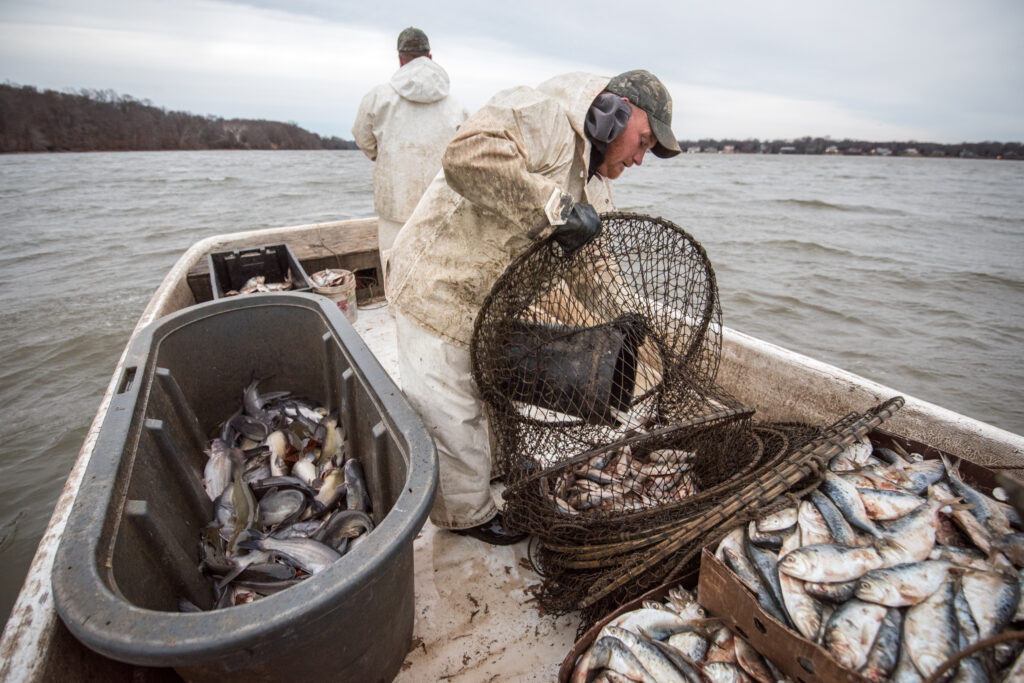
Atlantic fisheries managers cut industrial menhaden fishing limits at a meeting in Newport, Rhode Island.
The Chesapeake Bay cap will fall by 27% in 2027 and 34% by 2028, while the coastwide catch limit will drop by 9% in each of those years.
Menhaden are small fish that feed predators such as ospreys, striped bass and bluefish, and are also processed into fishmeal and fish oil.
Some conservationists worry predators are not getting enough food, though researchers have not proven industrial fishing is the cause.
In 2026, 81% of monitored osprey pairs in the Bay’s saltier waters failed to raise a chick, while birds in fresher areas did better.
The adopted limits are less strict than the commission’s ecological target, which its technical committee said would require a 39% coastwide cut in 2027 to give managers a 50% chance of meeting the target.
The commission says the new limits carry no risk of overfishing under its separate, less strict measure, and the board will revisit the Bay cap at least every three years.

The Atlantic States Marine Fisheries Commission’s Menhaden Management Board cut the Chesapeake Bay industrial fishing cap by 27 percent in 2027 and 34 percent by 2028.
The board also reduced the coastwide catch limit by about 9 percent in each of those years.
Conservation advocates remain concerned that the limits will allow more fishing than the commission’s ecological target calls for.
The commission said the new limits carry no risk of overfishing under its measure.
Menhaden are a food source for predators including ospreys, striped bass and bluefish.
- Who
- The Atlantic States Marine Fisheries Commission’s Menhaden Management Board.
- What
- It reduced the Chesapeake Bay menhaden fishing cap and the coastwide catch limit.
- When
- The decisions were made at the board’s annual meeting, held Nov. 9–12. The new limits apply in 2027 and 2028.
- Where
- The Chesapeake Bay and the coastwide commercial fishery from Maine to Florida.
- Why
- The commission weighed ecological benefits from leaving more menhaden in the water against economic harm to harvesters and fisheries that use menhaden as bait.
Conservation advocates
Atlantic States Marine Fisheries Commission
Ecological protection
Conservation advocates
Advocates remain worried that the reductions are not deep enough; the commission’s technical committee found that a 39 percent coastwide cut in 2027 would give managers a 50 percent chance of meeting the ecological fishing target.
Atlantic States Marine Fisheries Commission
The commission adopted smaller coastwide cuts, saying the limits carry no risk of overfishing under its measure.
Fishing limits
Conservation advocates
Some conservationists point to industrial fleets as an important factor in predators’ food depletion.
Atlantic States Marine Fisheries Commission
The commission weighed ecological benefits against economic harm to harvesters and fisheries that rely on menhaden for bait.
The Atlantic States Marine Fisheries Commission held its annual meeting in Newport, Rhode Island.
The coastwide catch limit is set to fall to 170,000 metric tons, and the Chesapeake Bay cap to 37,123 metric tons.
The coastwide catch limit is set to fall to 155,000 metric tons, and the Chesapeake Bay cap to 33,847 metric tons.
- Coastwide limit, 2027
- 170,000 metric tons
- Coastwide limit, 2028
- 155,000 metric tons
- Chesapeake Bay cap, 2027
- 37,123 metric tons
- Chesapeake Bay cap, 2028
- 33,847 metric tons
- Annual meeting
- Nov. 9–12 in Newport, Rhode Island