

Science & Tech · Science & Environment · 2 hrs ago
Nomadic drones recharge on live power lines to monitor grid bottlenecks
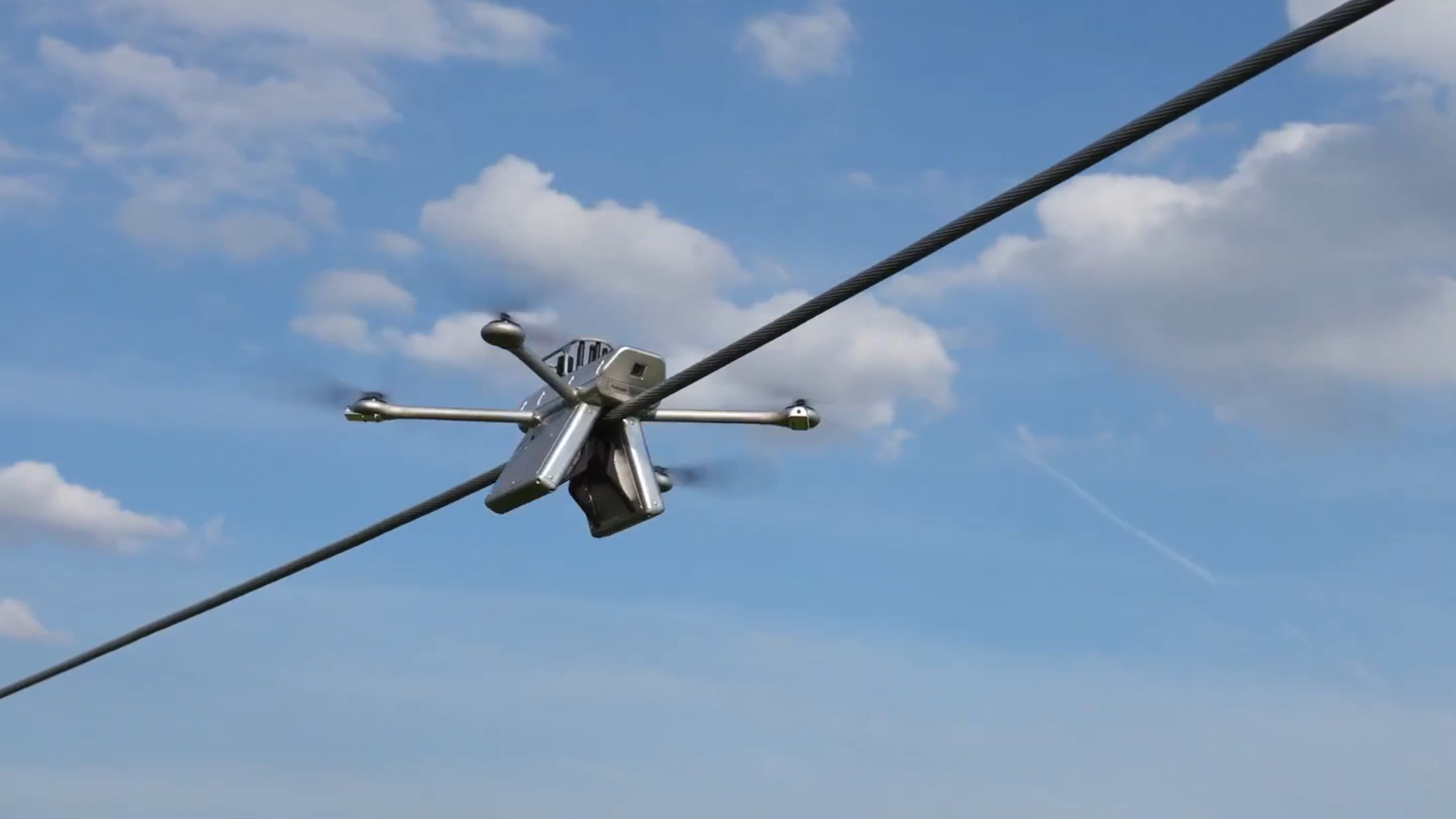
Munich-based Nomadic has developed drones that attach to live power lines and collect measurements without interrupting electricity transmission.
Each drone weighs about 4 kilograms and uses energy from the line’s magnetic field, rather than needing frequent battery changes.
Nomadic says its drones have logged more than 20,000 operating hours across electricity networks in Germany, Norway and the United States.
Each can monitor about 25 kilometers of transmission infrastructure, helping operators spot faults and sections with limited capacity.
That matters because renewable energy projects, factories and data centers are increasing demand for grid connections, while expanding infrastructure takes time.
Nomadic has raised $6 million in seed funding to expand deployments with electricity providers in Europe and the US.
The company plans to add remote relocation next year, so customers can move drones between sections of power line without retrieving them in person.

Nomadic says its autonomous drones attach to energized power lines and use energy from their magnetic fields to monitor transmission conditions.
The Munich company reports more than 20,000 operating hours across electricity networks in Germany, Norway and the United States.
Each drone weighs about 4 kilograms and can monitor approximately 25 kilometers of transmission infrastructure.
The drones have operated on lines carrying up to 420 kilovolts and in temperatures as low as minus 25 degrees Celsius, according to the company.
Nomadic has secured $6 million in seed financing to expand deployments and develop remote relocation capabilities.
- Who
- Nomadic, a Munich technology company, developed the drones.
- What
- The autonomous drones attach to energized power lines, draw power from their magnetic fields and collect measurements to help identify faults and capacity limits.
- When
- Not stated.
- Where
- The company reports operations in Germany, Norway and the United States.
- Why
- To help grid operators monitor transmission conditions and identify faults and sections with limited capacity.
This story does not have two clearly opposing sides.
Nomadic reports more than 20,000 operating hours in Germany, Norway and the United States.
The company secured $6 million in seed financing to support expansion and remote drone relocation.
Nomadic plans to introduce remote relocation capabilities for commercial customers.
- Drone weight
- Approximately 4 kilograms
- Monitoring range
- Approximately 25 kilometers of transmission infrastructure per aircraft
- Operating voltage
- Up to 420 kV
- Operating temperature
- Tested to minus 25 degrees Celsius
- Reported operating hours
- More than 20,000 across Germany, Norway and the United States
- Seed financing
- $6 million
What people are saying
Grid operators often have a good picture of what happens at each substation. Everything in between, along kilometers of line, has been much harder to see, because installing anything on a live line is very difficult,
Landing on a line carrying up to 420 kV, in wind and at minus 25 degrees, and then running on power from the magnetic field around it, is a hard robotics problem,