

World · East Asia & Pacific · 2 hrs ago
Seoul is replacing some ginkgo trees to tackle their seasonal smell
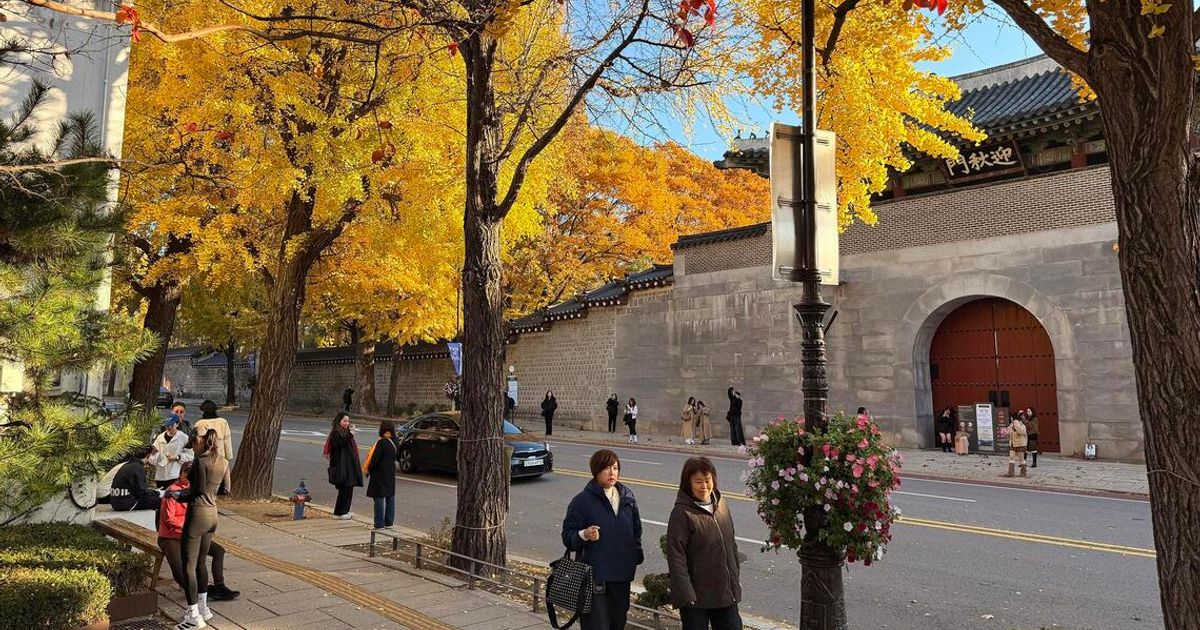
In autumn, fruit from female ginkgo trees gives Seoul’s streets a foul smell when it falls and gets crushed or rots.
The smell comes from the fruit’s fleshy outer layer, not the edible kernel inside.
Ginkgo trees make up nearly one in three street trees in Seoul, and nearly 100,000 grow along the city’s streets.
District authorities have been replacing female trees with male ones, which do not bear fruit; an environmental group estimated that at least 792 ginkgo trees would be removed across Seoul in 2026.
The share of female ginkgo trees has fallen 18.5% in four years as districts make these changes.
Environmentalists say removing mature trees to address a seasonal nuisance can harm the environment and call for decisions based on evidence and wider community feedback.
Authorities are also catching or shaking fruit from trees and clearing it from streets, offering ways to manage the smell without replacing the trees.

Seoul district authorities are replacing some female ginkgo trees with male trees to reduce the seasonal smell from fallen fruit.
Environmentalists object that removing mature trees to address a seasonal nuisance carries an environmental cost.
A July 2026 report by the Seoul branch of the Korea Federation for Environmental Movements estimated that at least 792 ginkgo trees would be removed across the city that year.
Seoul had nearly 100,000 ginkgo trees along its streets at the end of 2025, and the share of female trees had fallen by 18.5% over the previous four years.
Authorities are also using nets and mechanical harvesters to catch or remove the fruit.
- Who
- Seoul district authorities are replacing some female ginkgo trees. Environmentalists, including the Korea Federation for Environmental Movements, oppose the removals.
- What
- Some female trees are being replaced with male trees to address the smell from fallen ginkgo fruit.
- When
- The report cited removals planned for 2026. The article was published on November 14, 2026.
- Where
- Seoul, South Korea.
- Why
- The fruit from female ginkgo trees gives off a pungent smell when crushed or left to rot. Authorities are responding to residents’ complaints.
Seoul district authorities and residents who complain
Korea Federation for Environmental Movements
Tree replacement
Seoul district authorities and residents who complain
Authorities are replacing female ginkgo trees with male trees in response to residents’ complaints about the smell.
Korea Federation for Environmental Movements
The group argues that removing mature trees to address a seasonal nuisance comes at an environmental cost.
Management approach
Seoul district authorities and residents who complain
Authorities are also using nets and mechanical harvesters to catch or clear fruit.
Korea Federation for Environmental Movements
The group calls for guidelines based on data, risk assessments and broader community feedback.
Seoul designated the ginkgo as its official tree.
South Korea’s National Institute of Forest Science developed a DNA-based technique to identify male ginkgo trees at the seedling stage.
Seoul had nearly 100,000 ginkgo trees along its streets, according to city government data.
The Seoul branch of the Korea Federation for Environmental Movements released a report estimating that at least 792 ginkgo trees would be removed across Seoul that year.
- Estimated removals in 2026
- At least 792 ginkgo trees across Seoul
- Street ginkgo trees
- Nearly 100,000 at the end of 2025
- Change in female-tree share
- Down 18.5% over the previous four years
- Official city tree
- Ginkgo, designated in 1971
- Tree identification method
- DNA-based technique developed in 2011
What people are saying
The value of a single mature ginkgo far outweighs a few weeks of bad smell
the complaints of a vocal few