

Health · Healthcare & Policy · 1 hr ago
Restrictions and aid cuts limit women's healthcare in Afghanistan
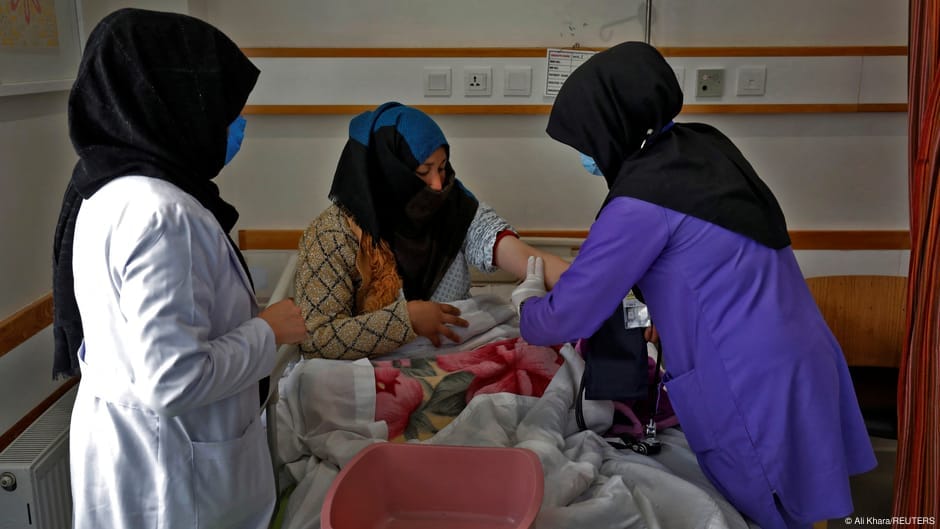
A recent United Nations report highlights how women in Taliban-ruled Afghanistan are losing access to healthcare.
In many parts of the country, male doctors are no longer allowed to treat women.
A woman in Kunar province said she suffered several miscarriages without being able to get medical care.
Pregnant women can be left without urgent treatment under these restrictions.
Cuts to international aid are also reducing access to essential healthcare.
Since returning to power in 2021, the Taliban have issued more than 100 decrees restricting women's and girls' lives, including their education and work.
UNAMA said in September 2025 that Taliban inspectors were further limiting women's access to healthcare by enforcing regulations and decrees.

Women in many parts of Taliban-ruled Afghanistan are losing access to essential healthcare because of restrictions and cuts in international aid.
Male doctors are no longer allowed to treat women in many areas, leaving some women unable to get urgent medical care.
A woman from Kunar province said she had several miscarriages without being able to access medical care.
The UN has warned that restrictions on girls’ education may contribute to early marriage and higher maternal mortality.
Afghan women’s rights activist Tamana Zaryab Paryani urged the international community to recognise what she called gender apartheid.
- Who
- Women in Afghanistan, including pregnant women, are affected. Taliban authorities impose restrictions on healthcare.
- What
- Restrictions and international aid cuts are limiting women’s access to essential healthcare.
- When
- Since the Taliban returned to power in 2021; UNAMA reported further restrictions in September 2025.
- Where
- Afghanistan, including Kunar province.
- Why
- Taliban restrictions limit women’s access to healthcare, including rules preventing male doctors from treating women; international aid funding cuts are also reducing access.
This story does not have two clearly opposing sides.
The Taliban returned to power in Afghanistan.
Taliban authorities detained Paryani in Kabul alongside her sisters.
UNAMA reported that Taliban ministry inspectors were further restricting women’s access to healthcare.
Paryani addressed the UN Security Council, describing repression of women and urging the international community not to normalise their disenfranchisement.
- Taliban decrees
- More than 100 issued since the Taliban returned to power in 2021
- Girls excluded from secondary education
- Around 2.6 million
- Afghanistan population
- Around 45 million
- Population under age 15
- Around 42%
- Median age
- Approximately 17
What people are saying
If a pregnant woman dies because male doctors are not allowed to treat her, her husband can marry another, younger woman. That is how the Taliban think.
This is gender apartheid. We expect the international community to recognise it and stand with the women of Afghanistan.